
 Gaby
Gaby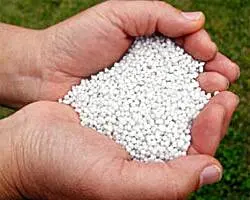
As the New Year approaches, the days grow longer, and gardeners get busier than ever. It’s time to check seed supplies, buy any missing varieties, and get to work on fertilizing. You also need to inspect stored vegetables and potatoes, winterize basements and cellars before the “Epiphany” frosts hit, repair tools, buy plastic for greenhouses and hotbeds, and even start sowing seeds on paper—a unique technique for early spring prep. As the saying goes, there’s no shortage of tasks to tackle.
Let’s talk about nitrate nitrogen levels in vegetables. Do those concentrations change during storage, or do they stay the same? The Perm Agricultural Institute found that nitrate levels in cabbage and table beets decrease over the winter. In cabbage, that drop is likely because the outer leaves—which contain about twice as many nitrates as the inner white leaves—are removed.
Processing is one of the most effective ways to reduce nitrates. For example, the nitrate content in sauerkraut is nearly three times lower than in fresh cabbage. The same holds for pickled tomatoes. When you boil carrots or table beets, a significant portion of nitrates leaches into the water. The same is true for potatoes—peel the tubers before cooking to reduce nitrate levels further.
One of the main causes of excessive nitrate buildup in crops is the application of excessive, unregulated doses of nitrogen fertilizers, as well as the use of manure, compost, peat, and green manure. The Institute of Soil Science and Photosynthesis points out that plants often cannot absorb all the nitrogen they receive, which leads to surplus nitrates. The problem gets worse with imbalanced nutrition in phosphorus, potassium, and other macro- and micronutrients, and with environmental stresses like drought or waterlogging, poor phytosanitary conditions (overcrowding, heavy weed pressure, pest damage, and disease), sudden temperature swings, and insufficient light. For instance, the longer a plant is exposed to sunlight, the fewer nitrates it retains: a 20% reduction in light can raise nitrate levels in cucumbers by 2.5 times. Giving plants an extra 12 hours of light before harvest can cut nitrate levels in root vegetables by nearly half and reduce nitrate levels in spinach leaves threefold.
Certain species and crops are more prone to accumulating nitrates. These include celery, cabbage, squash, members of the nightshade family, buckwheat, bindweed, and amaranth. Among commonly eaten vegetables, watercress, spinach, napa cabbage, lettuce, rhubarb, radishes, and parsley tend to hold more nitrates. Tomatoes, eggplants, and onions generally accumulate the least.
There are also big differences between varieties. Some potato varieties can contain ten times more nitrates than others. For example, the April cucumber variety accumulates three times more nitrates than the Moscow greenhouse variety. The Egyptian flat beet stores more nitrates than the Bordeaux variety, and Nantes carrots accumulate about twice as many nitrates as Chantenay carrots. Those varietal differences come down to different rates of soil uptake and metabolic use of nitrogen, different responses to environmental conditions, physiological specializations, and the morphology of particular plant organs. For instance, spinach with savoy, cabbage-like leaves tends to accumulate more excess nitrates than varieties with smooth, large leaves. Breeders developing new vegetable varieties need to evaluate their potential for nitrate accumulation.
Researchers established as far back as the last century that nitrates are distributed unevenly within plants. Modern studies confirm that nitrate levels are minimal in cereal grain and tend to concentrate in vegetative organs—leaves and stems—and in the fleshy fruits of vegetables and melons.
In leafy greens, the highest nitrate concentrations are usually in stems and petioles, which transport nitrates to the leaf blades. For example, nitrate content in spinach leaves is about one-third of that in the stems, while in cilantro and dill leaf blades the nitrate level is five to twelve times lower than in their stems and petioles.
Agricultural practices can be used to manage nitrogen nutrition and limit nitrate buildup in crops.
