
 Carlos Solis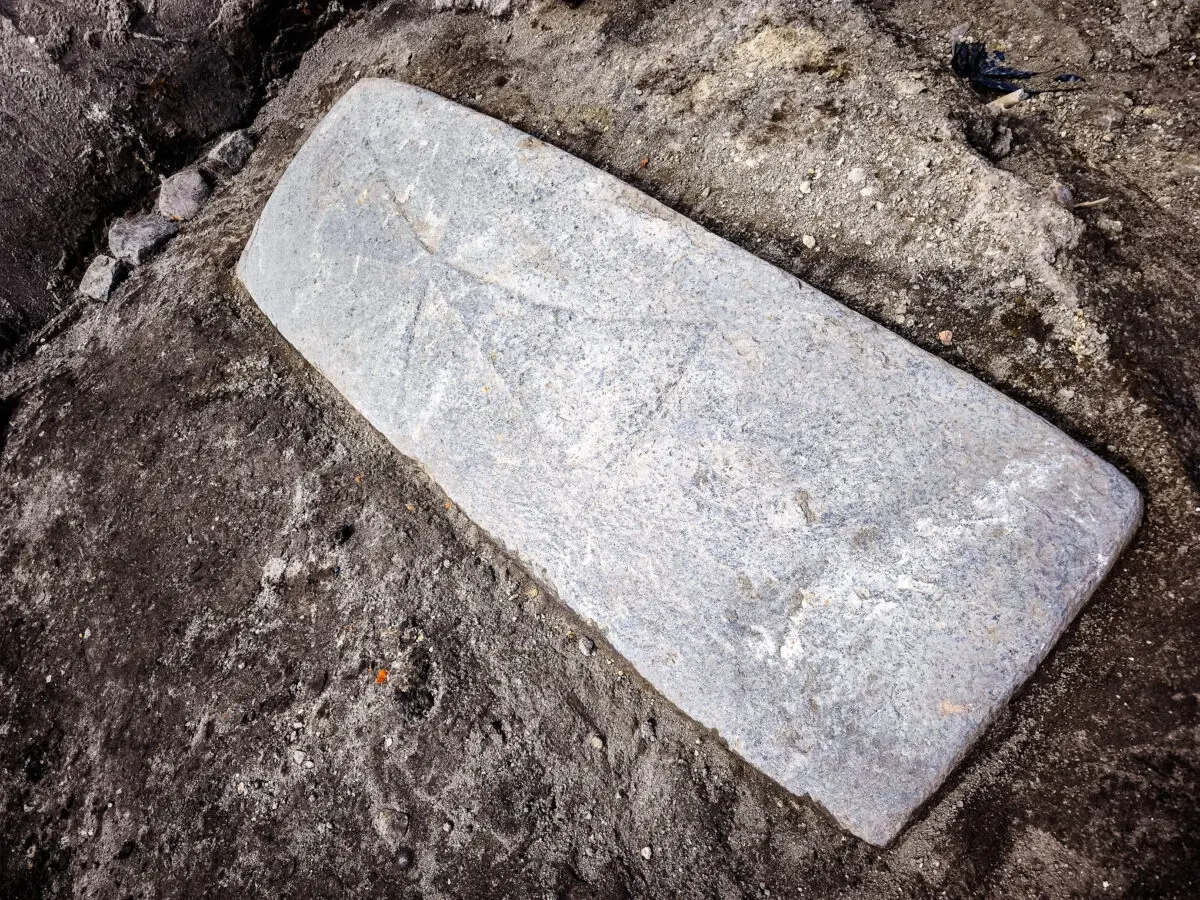
Stone tombstones were luxury items in the 13th century and usually signaled high social rank. So the person buried under this slab most likely belonged to the local elite—perhaps a cleric or another prominent figure tied to the church.
The location strengthens the significance of the find: before the Teutonic Knights seized Gdańsk in 1308, this quarter formed part of the power center of the Pomeranian dukes. For that reason, the slab probably belongs to the pre-Teutonic chapter of the city’s history rather than to the knights’ later rule.
Not Necessarily a Teutonic Knight
People often associate large granite grave slabs engraved with crosses with the Teutonic Order. Two similar slabs previously found near Gdańsk’s fortress were handed to the Malbork Castle Museum, where visitors can easily assume they mark Teutonic burials.
The timeline tells a different story. The new slab dates to the 13th century, while the Teutonic takeover of Gdańsk took place after 1308. Because of that gap, archaeologists argue the burial probably belonged to someone from the community of the Pomeranian dukes.
A Church Under the Miś Coffee Shop
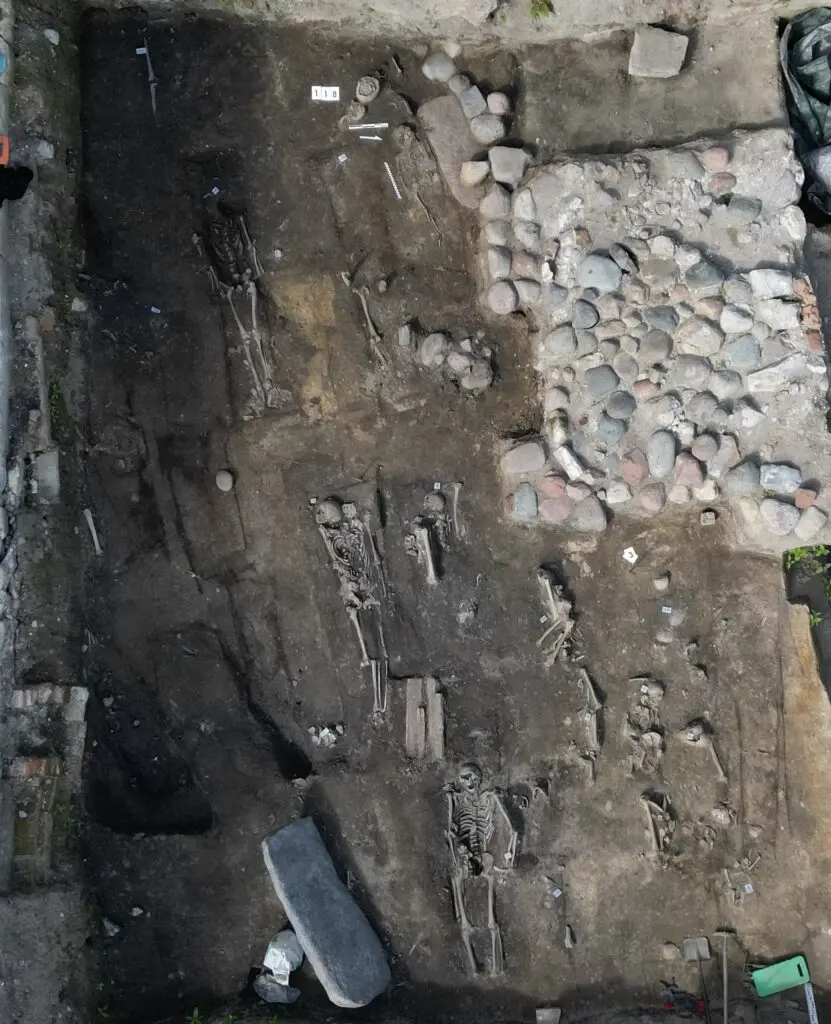
The former ice-cream shop sits over a much older layer of history: excavations uncovered a medieval cemetery here, with scattered stone graves, wooden buildings, and the remains of an early church.
Excavations previously revealed a church built from oak beams that dendrochronology dates to around 1140. Its floor plan followed a Greek cross—a rare and symbolically rich layout. Researchers suggest this may have been Gdańsk’s first church dedicated to the Virgin Mary.
Some Polish archaeologists have called the structure the oldest wooden church found on Polish soil. That label doesn’t mean it was the earliest Christian building in all of Poland, but the exceptional preservation of the wood and the precise dating make the discovery especially important.
Archaeologists recorded more than 200 burials around the church. Most graves are modest, but a few have stone slabs, which indicates the cemetery also served people of power, wealth, or religious importance.
A Rare Window into Gdańsk Before the Teutonic Era
Excavations at the intersection of Grodzka and Sukiennicza streets are reshaping scholars’ views of medieval Gdańsk. Before the city became known for its brick architecture, a complex wooden settlement already stood here with distinct religious, political, and social structures.
The new tombstone doesn’t reveal the buried person’s name, but it sharpens the question: who lies beneath the stone? At the spot once known as the ice-cream shop, archaeologists are gradually exposing the earliest layers of Gdańsk’s Christian and urban identity—one grave at a time.
Based on reporting by Arkeonews
