

What do scientists say about this? It’s hard to imagine they’d ignore such a basic part of the workday: drinking coffee or tea.
You can’t get through the workday without a cup in hand. The beverages we pour into it help us gather our thoughts and perk us up. Plus, a cup with a unique design can showcase our individuality.
A cup—or, more accurately, a mug—takes care of us. But do we return the favor? In other words, do we wash it regularly?
It turns out there are as many ways to handle an office cup as there are people. Some wash theirs daily, others rinse it after each use, some remember only at the end of the workweek, and some (imagine!) never wash it at all.
According to a recent survey of more than 2,000 British adults, most people wash their cup right after finishing their tea or coffee. Those who wash their mug only after multiple uses are in the minority. Meanwhile, three percent of respondents don’t think it’s necessary to wash it at all, according to IFLScience. For this small group of office workers, cup hygiene seems like an alien concept.
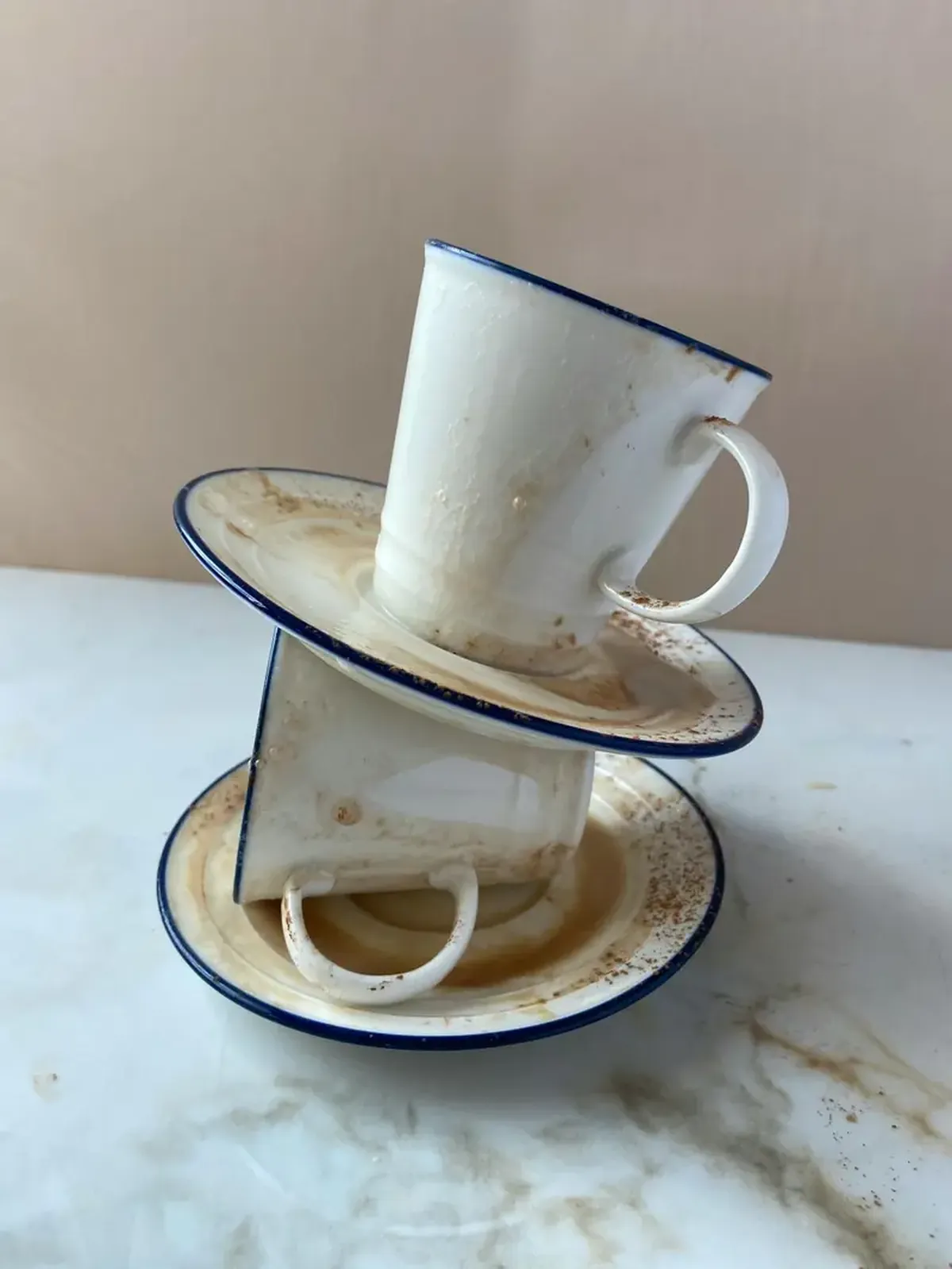
Neglecting a mug often leads to fuzzy patches of mold at the bottom. That should be a wake-up call even for that three percent.
Expert Opinions
“If I took a sample from a typical unwashed coffee cup, I would certainly find microbes in it. But the vast majority of those microbes come from the person who used the cup,” said Jeffrey Stark, an infectious disease specialist at Baylor College of Medicine in Houston, Texas.
Charles Gerba, a microbiologist and environmental health expert at the University of Arizona, is equally intolerant of dirty mugs. He says, “About 90 percent of office cups contain harmful microbes, and 20 percent harbor fecal bacteria.”
Both professors say that unpleasant bacteria lurking in your mug could result from improper washing.

The problem, Stark says, is that the break-room sponge can harbor more bacteria than anywhere else in the office. It’s used to clean a variety of items, often stays damp, and isn’t replaced frequently. “Most people would call that disgusting,” Stark said.
But is it really better to leave the cup unwashed? Most office workers would disagree with that approach.
Experts recommend washing mugs with soap and hot water, then drying them with a paper towel.
Repeat this after each use.
