
 Gaby
Gaby
Markings on an astonishing artifact—a sword dated to around 3,200 years ago—point to Egypt’s most powerful king.
A team of archaeologists from Egypt’s Ministry of Tourism and Antiquities discovered a sword among the ruins of an ancient military fort in Khush-Eissi, a city located south of Alexandria. The team also uncovered soldiers’ barracks and storage facilities for food and weapons within the fort. Ramses II, who ruled Egypt from 1279 to 1213 B.C., is credited with commanding an army of about 100,000 and was known for his military skill and strategic leadership.

Experts suggest that the ancient sword likely belonged not to the famous pharaoh himself, but to a high-ranking individual within his circle.
Elizabeth Frood, an Egyptologist at the University of Oxford who was not involved in the excavations, stated, “An item bearing the cartouches of Ramses II could have belonged to someone of high status. The ability to display such an item, even if it was likely kept in a sheath, was a sign of status and prestige.”
Mohamed Ismail Khaled, the Secretary-General of the Supreme Council of Antiquities, explained that the fortress where the sword was found protected Egypt’s northwestern borders from potential invasions by Libyan tribes and the ‘Sea Peoples.’ The ‘Sea Peoples’ were groups of aggressive seafarers who were defeated by Ramses III in 1178 B.C. when one of the tribes attempted to invade the country.
What Else Did the Archaeologists Find?
The team also uncovered a treasure trove of jewelry, scarabs, and protective amulets at the excavation site. Archaeologists found numerous personal items and artifacts belonging to soldiers, which help paint a comprehensive picture of the daily life and religious beliefs of the fort’s inhabitants.

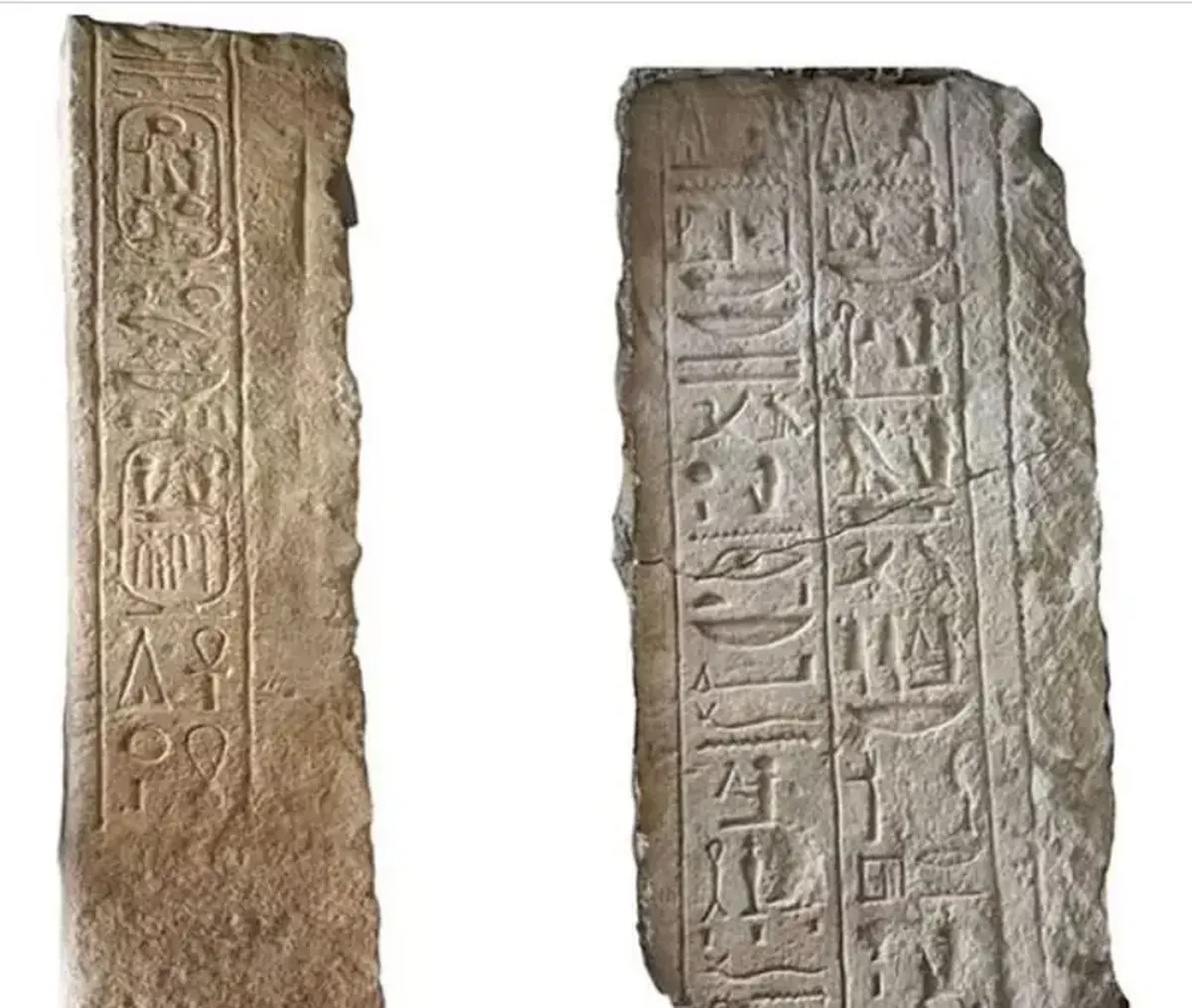
Additionally, the archaeologists stumbled upon two limestone blocks. One of them bore the titles of Pharaoh Ramses II, while the other belonged to an official named Bay.
Ramses II is remembered as the “Great Ancestor” for leading several military expeditions and expanding the Egyptian Empire. The most famous battle of his reign was the clash against the Hittites at Kadesh, in 1247 B.C., where Ramses II personally led about 20,000 soldiers. It was one of the largest chariot battles in history and ended in a stalemate, after which both sides signed a peace treaty, as reported by the Daily Mail.
Scholars have been particularly focused on Ramses II since his remains were discovered in 1881 in a secret cache at Deir el-Bahari, near Luxor.
