
 Gaby
Gaby
The vase, produced around 160–200 AD, is more than just a ceramic artifact. Scholars consider it a unique graphic and epigraphic testament to the gladiatorial games held in the ancient Roman city of Camulodunum — the first capital of Roman Britain, now known as Colchester.
The vase, adorned with images of gladiators, was discovered in 1853 during excavations in the western part of the Colchester cemetery. This artifact was part of a group of burial vases that included four vessels.
The intricate designs and inscriptions on the Colchester clay vase immediately caught the attention of researchers. They recognized it as a significant relic that provided valuable insights into the cultural practices of Roman Britain, particularly regarding gladiatorial games.
What Did the Researchers Discover?
A new study by Glynn J. K. Davis and John Pierce, working with an interdisciplinary team, found that the Colchester vase was a commissioned piece that recorded a real combat event in the city. The vessel was originally used as a decorative drinking piece but later became an urn for the ashes of a non-local man older than 40. While the deceased was probably not a gladiator, he may have had some connection to the games.
The vase sheds light on gladiatorial combat in Roman Britain, revealing complex relationships between local culture, military influence, and the gladiators who drew public attention, as reported by Arkeonews.
The study indicates the vase was made in kilns west of Colchester and decorated with designs and inscriptions that include the names of two gladiators. Those details suggest the vase was created to commemorate a specific event.
An artisan portrayed a gladiator named Memnon on the left and his opponent Valentinus on the right. Experts identify Memnon as a secutor — a heavily armed fighter — and the inscription records at least nine victories for him, marking Memnon as a notable contender in the competitive world of Roman entertainment, where status was tied to wins.
The inscription links Valentinus to Legio XXX Ulpia Victrix, a Roman legion that was stationed in the area that is now Germany.
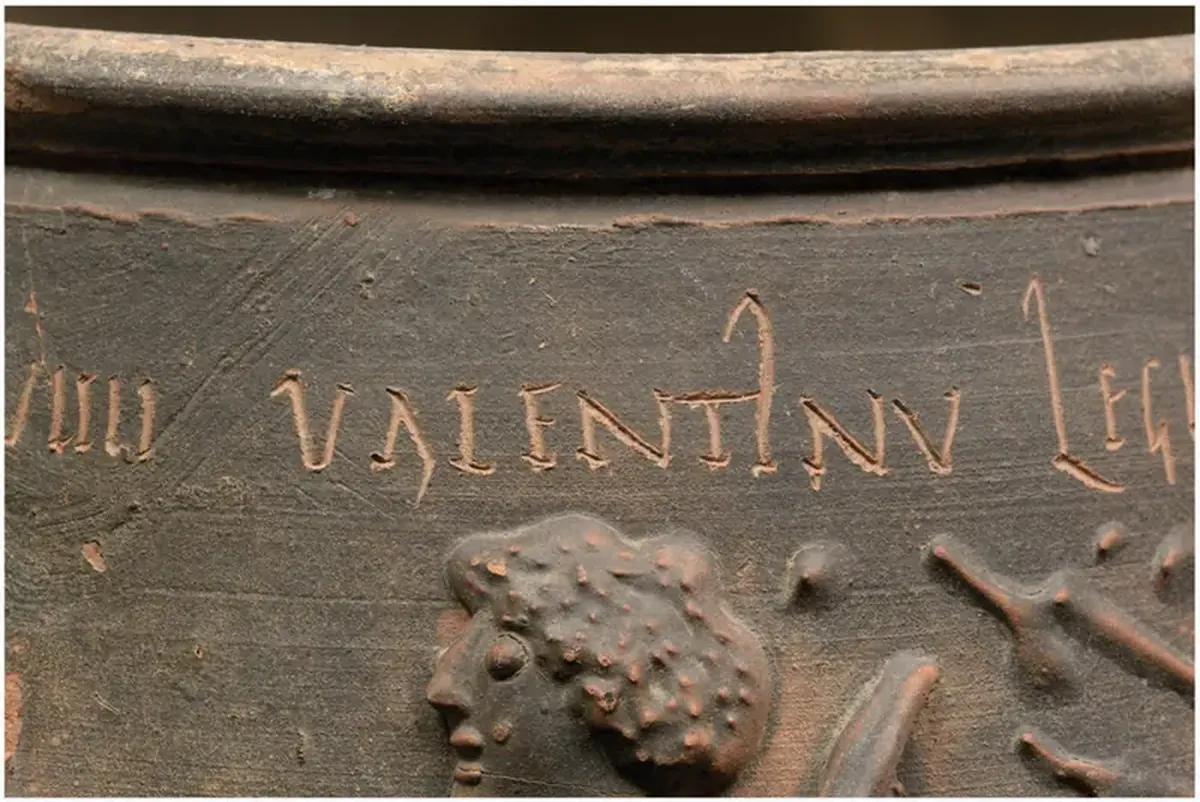
Researchers suggest some legions may have maintained their own groups of gladiators. The absence of recorded fights for Valentinus on the vase could mean he was a tiro, a novice gladiator just beginning his career. The study also questions earlier views on how the inscriptions were made: the team argues the marks were likely carved before the vessel was fired rather than after. The clean quality of the lettering and the lack of ragged edges point to work by an experienced artisan.
The Significance of the Vase
The Colchester vase is a vivid testament to the presence of Roman spectacles on British soil. Although no amphitheater has been found in Colchester, archaeologists have discovered a Roman circus — the only documented one in Britain. The vase supports the idea that the city was a hub of public entertainment and that gladiatorial contests, alongside chariot races, were part of local life.
Moreover, the vase indicates connections between Colchester and German territories, especially the movement of gladiators between those regions.
This discovery is part of a Colchester Museum project studying the cultural and social dynamics of gladiatorial games in the northwestern provinces of the Roman Empire.
