
 Gaby
Gaby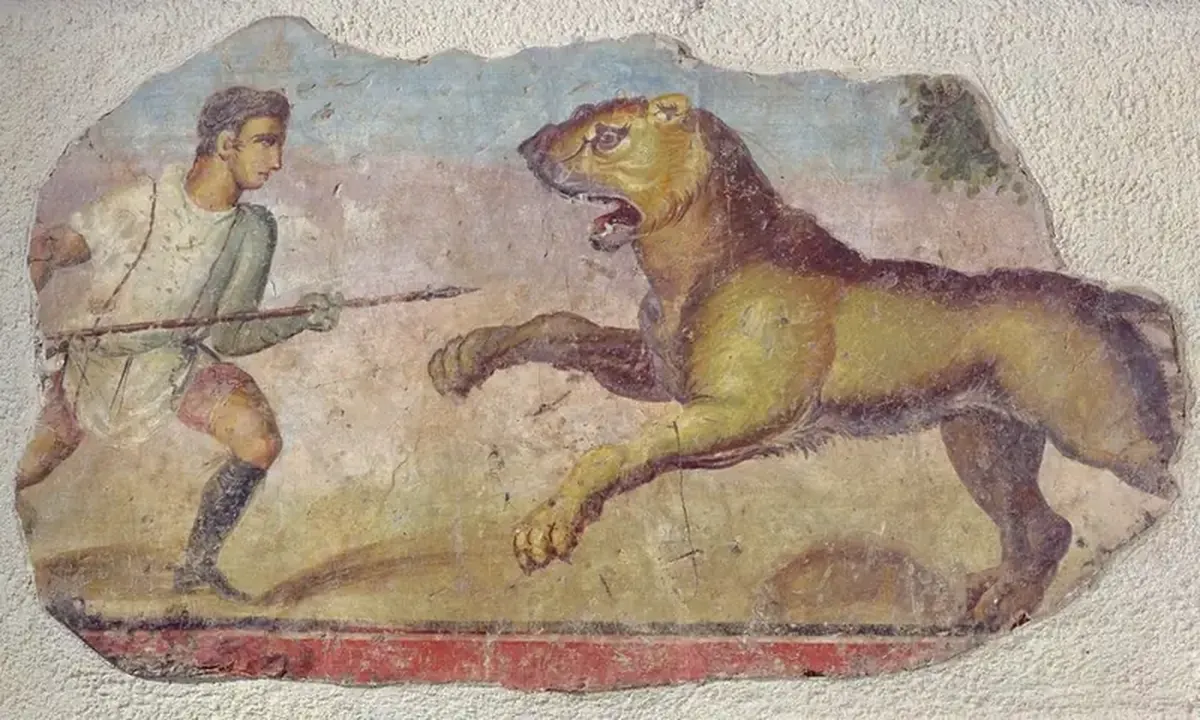
British anthropologists and archaeologists have reexamined the history of gladiatorial combat in the Roman Empire.
They analyzed bite marks from a lion on the skeleton of a man found in an 1,800-year-old cemetery on the outskirts of York in northern England. This provides the first physical evidence of battles between humans and animals in Roman Britain.
Bloody clashes between warriors, big cats, and bears are described and depicted in ancient texts and mosaics, but until now there has been no compelling evidence in human remains that these encounters were part of Roman entertainment.
Professor Tim Thompson, an anthropologist and the lead author of the study from the University of Maynooth, said, “This is the first time we have physical evidence that gladiators fought or participated in shows with big cats, such as lions, in the Roman Empire.”
The Gladiator Cemetery
Over 20 years of excavations near the center of York have uncovered around 80 decapitated skeletons. Most belonged to young, muscular men and showed signs of brutal violence. After studying the remains, archaeologists concluded they had found a gladiator cemetery.
One skeleton belonged to a man aged between 26 and 35 who was buried in a grave with two other participants in violent battles. The pelvic bones of the man bore signs of puncture wounds. It took years of intensive work for scientists to confirm that the injuries were inflicted by a large predatory animal.
The researchers reviewed stacks of clinical and forensic studies looking for descriptions of bites left by various animals. However, they found nothing about big-cat bites that Romans might have encountered, The Guardian reported. Consequently, the scientists turned to British zoos, which provided them with horse bones that had been damaged by cheetahs, lions, tigers, and leopards for comparison.
According to Professor Thompson, the bite marks on the man’s thigh match those of lions. However, big cats typically kill by biting prey on the head or neck.
“This injury can be survived; it’s not fatal,” he said. But, according to the team, the man was incapacitated: the marks suggest he had an encounter with an animal. Professor Thompson believes the gladiator may have sustained fatal injuries in battle before being attacked by the animal.
Dr. John Pearce, an archaeologist from King’s College London and a co-author of the study, noted that at the time York was both a legionary fortress and the second-largest settlement in Roman Britain after Londinium.
“These could have been gladiators training at a gladiatorial school in York associated with the Roman legion stationed there, and their arena or training-ground companions took responsibility for their burial,” the scholar suggested.
If the researchers are correct, the discovery raises questions about where gladiators fought. There is likely an arena beneath the city of York, but uncovering it will be challenging. One problem is that York has so many old buildings that excavation beneath them is not feasible, researchers say.
This isn’t the only mystery, Professor Thompson says: “Now we know these events took place in the provinces of the Roman Empire, but that raises other questions. For example, how could a lion be transported from Africa to York?”
The results of the study were published in the journal PLOS ONE.
https://www.theguardian.com/uk-news/2025/apr/23/bite-marks-on-york-skeleton-reveal-first-evidence-of-gladiators-fighting-lions
