
 Gaby
Gaby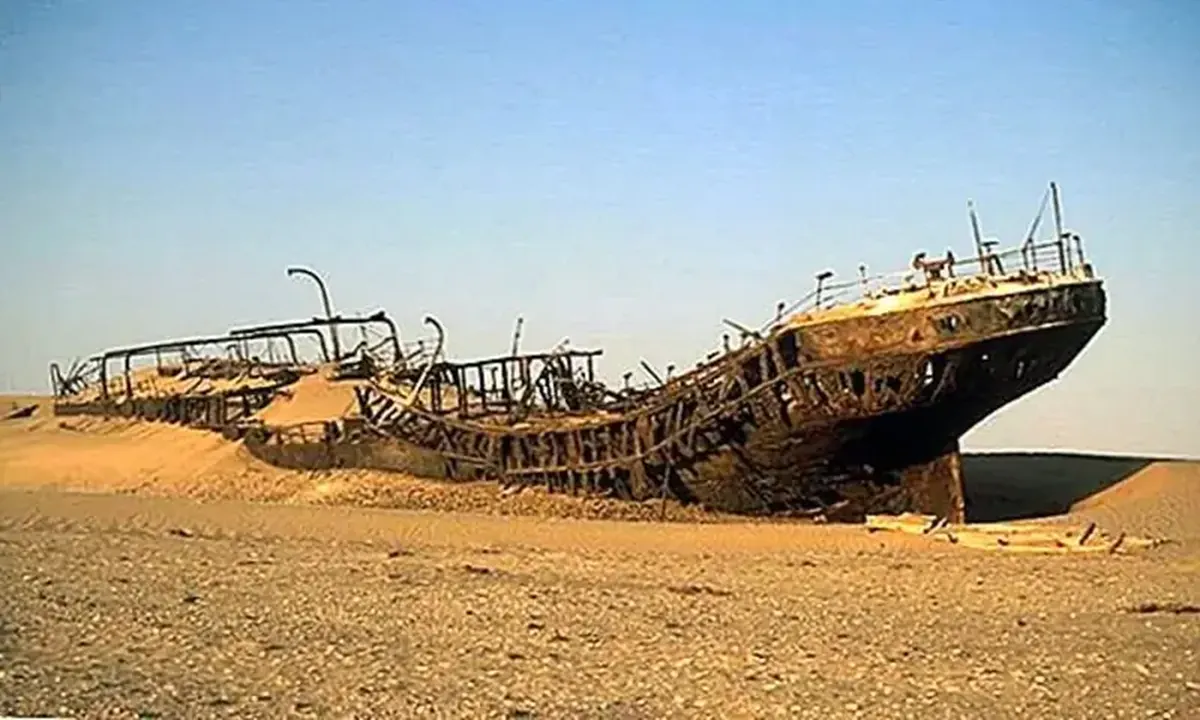
The ship Bom Jesus set sail from Lisbon on March 7, 1533, and was lost at sea during a fierce storm on its way to India. The wreck lay buried in the sands for centuries.
In 2008, diamond miners conducting geological surveys near the southwestern coast of Africa, close to the mining town of Oranjemund, stumbled upon the wreckage.
Archaeologists investigating the find recovered more than 2,000 gold and silver coins, numerous copper ingots, and other valuable artifacts from the ship. Much of the cargo remained well preserved. The discovery shed new light on the maritime history of the period and on the trade routes that underpinned the Portuguese Empire.
So how did the ship end up in the desert?
Researchers believe Bom Jesus sank after approaching too close to shore, striking a rock and capsizing. As the coastline shifted and sand built up over the centuries, the wreck became buried in the desert.
The desert’s dry, stable conditions helped protect the artifacts from decay.

Dieter Noli, the chief archaeologist at the South African Institute of Marine Archaeological Research, said the coast is notorious for storms, so shipwrecks are common there. The discovery is significant because the coins remained buried for nearly 500 years and helped researchers identify the wreck as Bom Jesus. The coins, dated to the early 16th century, gave archaeologists insights into the economic conditions and trading practices of the time.
According to Dr. Noli, the coins stayed in pristine condition because the chest containing them was buried beneath the ship’s massive structure.
Further excavations uncovered bronze bowls, cannons, swords, a musket, navigational instruments, ceramics, and textiles. Besides the coins, the most significant finds were 1,845 copper ingots weighing around 17 tons and 105 elephant tusks. These items point to the sophistication and reach of the era’s trade networks.
The ship and its cargo were classified as a state vessel belonging to the King of Portugal. The Portuguese government allowed Namibia to keep the treasure, a decision Arkeonews said reflected cooperation between the two countries.
Bom Jesus is now the oldest and most valuable shipwreck discovered off Africa’s western coast south of the Sahara. Officials are discussing creating a museum to display the artifacts recovered during the excavations. Such a museum could serve as an educational resource for future generations interested in the region’s maritime history.
