
 Gaby
Gaby
Using AI and fresh radiocarbon dating, researchers at the University of Groningen say some Dead Sea Scrolls may be older than previously believed.
In the mid-20th century, Bedouin shepherds discovered the first Dead Sea Scrolls in the caves of Qumran in the Judean Desert. The oldest manuscripts—legal documents and texts from the Hebrew Bible—have long been dated to the 3rd and 2nd centuries BCE.
Now a team led by Professor Mladen Popović has combined AI with new dating techniques to reexamine individual scrolls. Their analysis suggests some fragments may date back to the 4th century BCE, challenging long-held ideas about when, where, and by whom the texts were made.
What Did the Scientists Discover?
“It’s like a time machine. We can shake hands with those people who lived 2000 years ago,” said Professor Popović. He said some scrolls were radiocarbon-dated in the 1990s, but contamination from castor oil used in the 1950s to make the manuscripts easier to read affected those results.
In the journal PLOS One, the team describes new radiocarbon dating on 30 samples from manuscripts found at four sites. The scientists first cleaned the artifacts carefully to remove castor oil, as reported by The Guardian.
After redating, the researchers found that while two samples were younger than previously thought, most turned out to be older. One of the older fragments was 4Q114, which contains verses from the Book of Daniel.
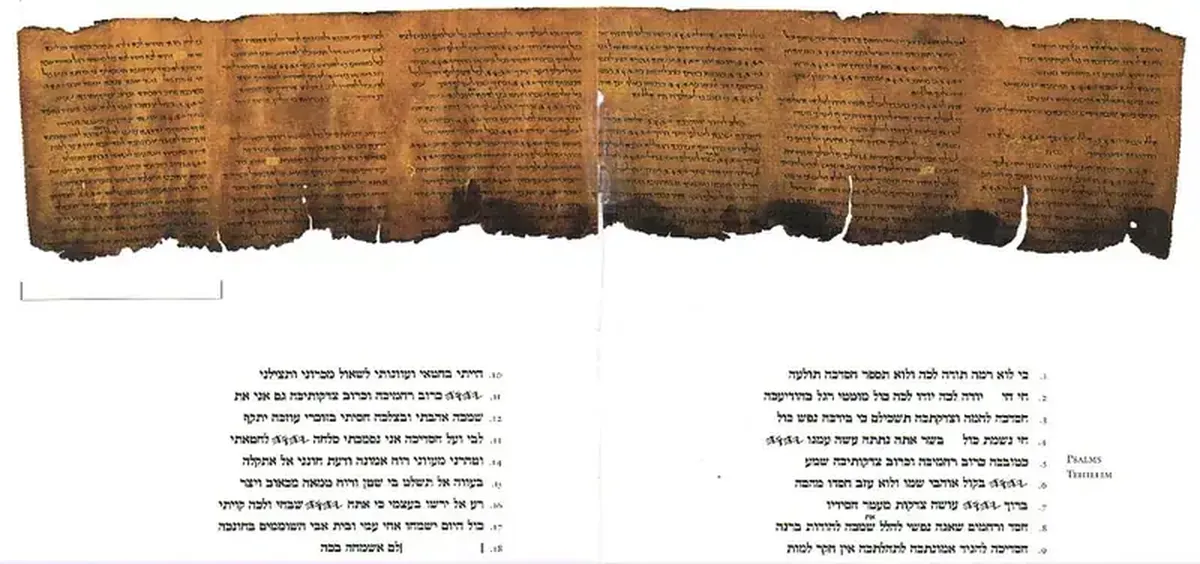
Next, the team used a machine-learning model called Enoch, training it on 62 digital images of ink traces from 24 manuscripts that already had radiocarbon dates.
The model was then tested on 13 additional images from the same manuscripts. In 85 percent of cases, the model-produced dates matched the radiocarbon results.
“What we’ve created is a very reliable tool based on empirical data, physics, and geometry,” said Professor Popović.
When the AI model was asked to date images from 135 previously undated manuscripts, it agreed with expert paleographers on 79 percent of them.
“There are over 1,000 Dead Sea Scroll manuscripts, so our work is a first but significant step that opens the door to new research possibilities,” said Professor Popović.
Dr. Matthew Collins of the University of Chester cautioned that radiocarbon dating only reveals the age of the parchment, not when a scribe wrote the text onto it. He also questioned how representative the relatively small training set was for the model.
“Overall, this is an important and long-awaited study that adds a new crucial tool to our arsenal for dating such texts,” he concluded.
