
 Gaby
Gaby
AI has generated a portrait of Jesus using the faint facial imprint on the Shroud of Turin, a burial cloth long believed to have wrapped the crucified Messiah.
In the AI image, Jesus appears fair-skinned with large blue eyes, a neat beard, and facial and bodily wounds that reflect his suffering. This portrayal differs somewhat from the traditional images seen in icons.
The Relic That Preserved the Face of Jesus
Recently, a team from the Institute of Crystallography in Bari and the University of Padua in Italy used X-ray analysis to date the Shroud of Turin at more than 2,000 years old. That timeframe overlaps with the period traditionally associated with Christ’s death, according to the outlet HouseWife. The linen cloth, measuring 4.41 by 1.13 meters and kept in the Cathedral of Turin, shows a brown imprint of a face and body that many believe are his. The marks on the body match the wounds the Bible describes Jesus sustaining during the crucifixion.
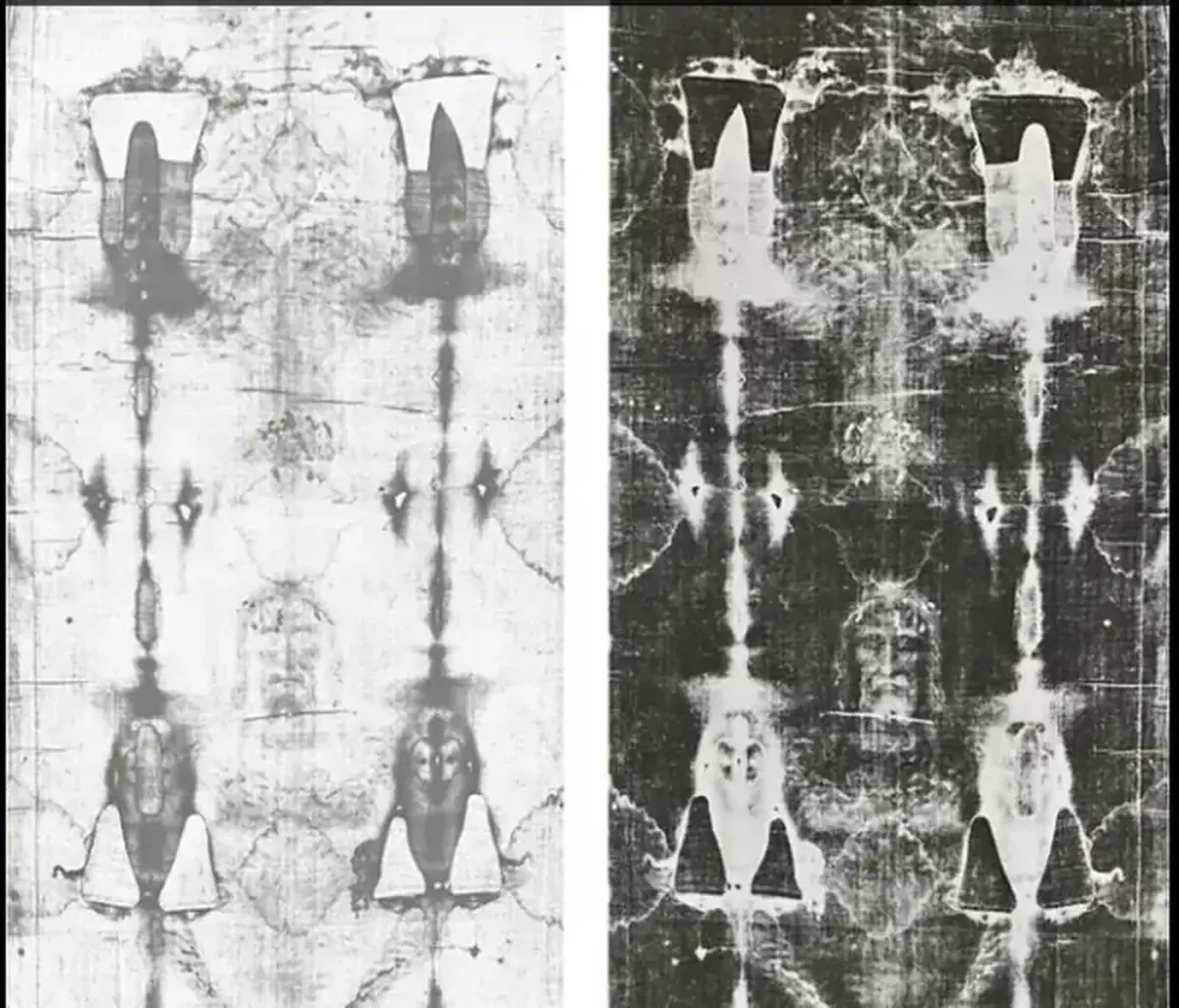
Tim Anderson, a researcher at the Georgia Institute of Technology, said there is no explanation for how the image formed on the fabric.
When the Shroud of Turin was first displayed in the 1350s, it was presented as the authentic burial cloth that had wrapped Christ’s mutilated body after his crucifixion. In the 1980s, researchers challenged the shroud’s authenticity and dated it to the Middle Ages, as reported by the Daily Mail. Only now have researchers restored some credibility to the relic and argued for a much older age.
