 Carlos Solis
Her ideas felt constrained by any single movement. Her boundless creativity kept searching for new outlets.
If Elsa Schiaparelli (1890 – 1973) hadn’t existed, we’d have had to invent her. She made the world less dull. She fit perfectly into the interwar era, which became a period of creative flourishing for her. Elsa infused it with extravagance and novelty.
The dresses, hats, bags, and perfumes of Schiap (as her friends called her) showed that fashion isn’t just clothing timed to the moment; it’s provocation, mischief, and play.
Born into a wealthy Roman aristocratic family, Elsa Louise Maria Schiaparelli had a privileged start that would help her later self-expression.
Scientist relatives, a thirst for knowledge, intellectual training, a love of art and literature, refined taste, a passion for innovation, adventurousness, and, of course, exceptional talent—this is only a partial list of what shaped Elsa into who she became.
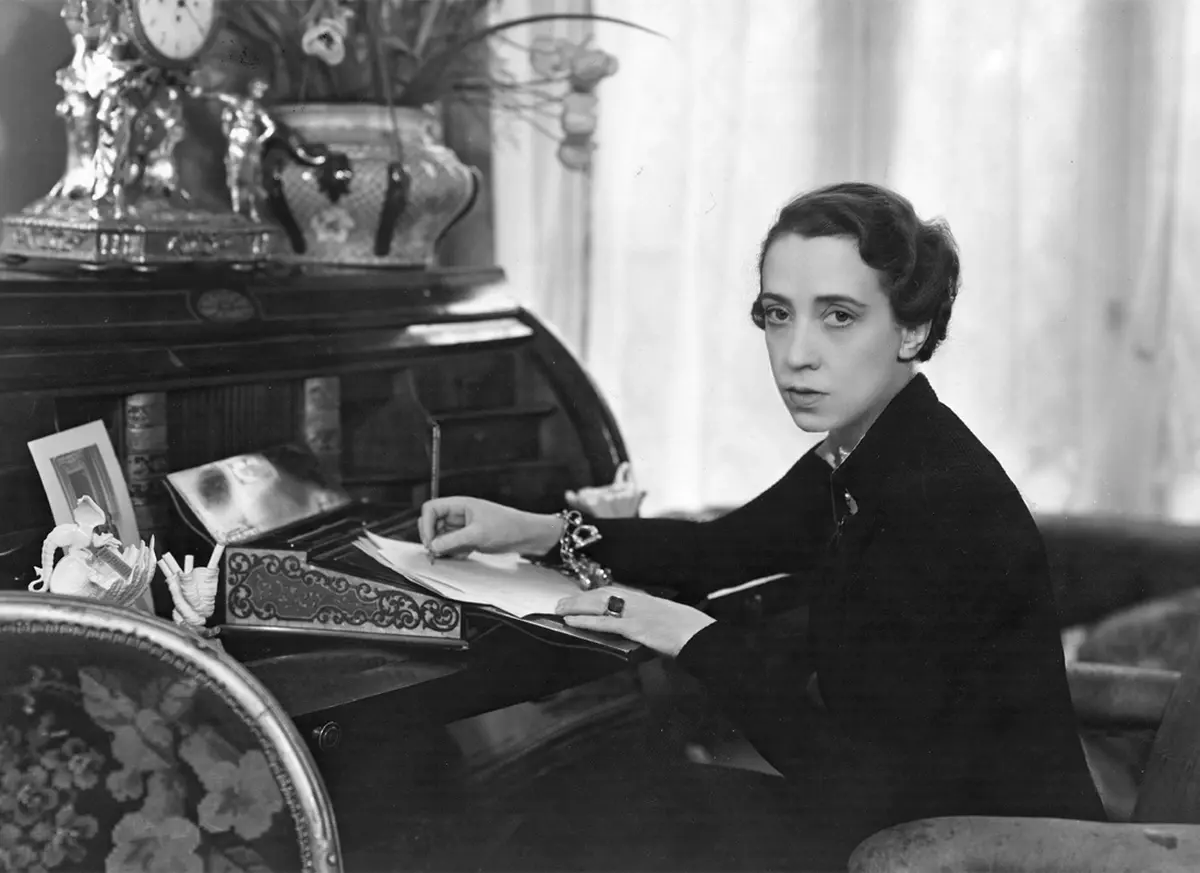
Fashion chroniclers often recall the time when a young Elsa, inspired by ancient myths, wrote rather risqué poetry. In response, her educated but conservative parents sent her to a convent boarding school in Switzerland. Elsa’s rebellious nature resisted the school (and later any system that tried to standardize individuality). It’s no surprise her parents soon brought her back home.

Elsa Schiaparelli in childhood
From an early age, she understood what she hated most and what she would never be. She despised the stifling world around her and could never be ordinary in any sense of the word.
Schiap didn’t want to simply match herself—she wanted to surpass herself. Ultimately she opened a fashion house in Paris that gained worldwide fame. She was among the first designers to collaborate with artists, and her work is often linked to surrealism. Among her friends were Jean Cocteau, André Breton, and Alberto Giacometti. Elsa also became a favorite designer of Hollywood stars, dressing Katharine Hepburn, Greta Garbo, Joan Crawford, and Mae West. Schiap attracted like-minded people.
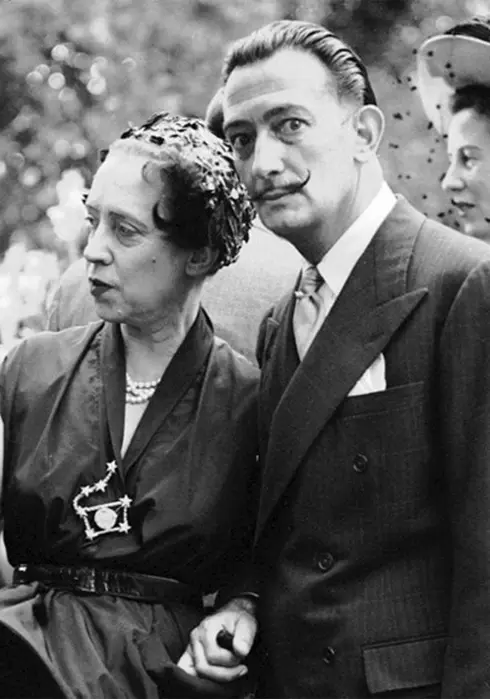
Elsa Schiaparelli with Salvador Dalí
Tests of Resilience
Long before Elsa Schiaparelli began creating outrageous clothing and accessories, fate repeatedly tested her resilience. And even afterward, it didn’t let up.
The first such trial involved little Elsa’s appearance: she was not considered beautiful in her family. Fascinated by the beauty of flowers, the girl once gathered seeds and sprinkled them on her face, nose, and mouth, hoping flowers would grow and grant her their beauty. Instead, Elsa nearly suffocated.
More than anything, she chafed against the impossibility of being herself in her “golden cage”—her parents’ palazzo. As pompous as that sounds, even then Elsa felt that the time to express herself was approaching, though she didn’t yet know how.
One day she finally broke free from her family nest and headed to London to work as a governess.
Her next trial was marrying a 30-year-old theosophist and psychic, Count Willem de Wendt, who proved to be a charlatan and a womanizer. She was 23 at the time. With her husband Elsa traveled to America, where she gave birth to a daughter, Yvonne Maria Louise (nicknamed Gogo by family). Perhaps this was the only redeeming thing about the count’s deceitful presence in Elsa’s life, because he soon distanced himself from her. The couple divorced, leaving Schiaparelli without means of support and with a sick daughter in her care. She took any job she could to stay afloat. Ultimately, in 1922 she returned to Paris, where her rapid ascent into the world of fashion—the main pursuit of her life—began.

Elsa Schiaparelli with her daughter, 1938
One could lament that Elsa spent nearly a decade on little of consequence. Or one could see fate at work: the survival skills and hard work she developed proved invaluable when she later became famous and even graced the cover of Time. For example, during World War II, while evacuating to America from occupied Paris, Elsa worked at a Red Cross hospital as a nurse and surgical assistant.
Another major test was her rivalry with Coco Chanel; contemporaries called it a “civil war.” It was usually noted that Chanel was the aggressor and master of intrigue, while Elsa answered with dignity. Their feud sprang not only from competing for high-profile clients but also from vastly different aesthetics. Chanel, classically restrained in her designs, could not accept the avant-garde antics of her competitor and condescendingly referred to Elsa as “the Italian artist who makes clothes.”

A Shocking Star in the Fashion Firmament
Between the First and Second World Wars, top-tier talent seemed to cluster like never before. Perhaps the era was the answer to the great suffering that pushed people to create.
The interwar period seemed determined to unleash as many extraordinary ideas as possible. It was the time of the eccentric visionary Schiaparelli, who refused to conform to rational, colorless reality and instead adapted it to her whims, painting it in vibrant hues.
The color pink, often seen as vulgar by her contemporaries, took on bohemian sophistication in Elsa’s hands. Her signature shade became “shocking pink,” now known as fuchsia.
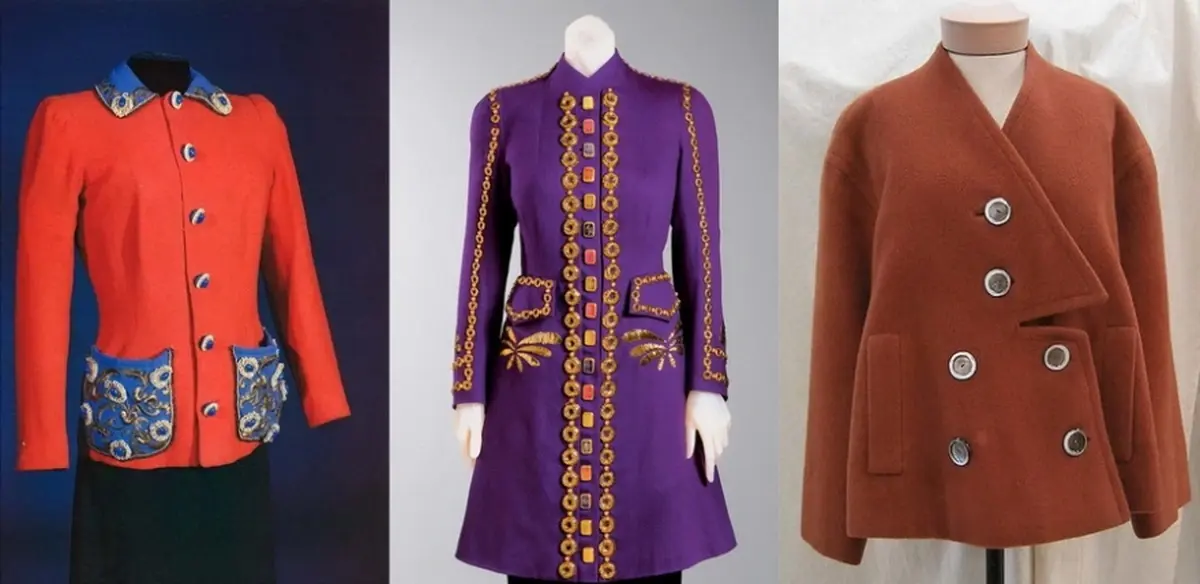
For Schiap, fashion was the realm in which she felt liberated—both as an artist and as a model. “Although I am very shy (no one believes this), so shy that the simple necessity of greeting someone sometimes leaves me paralyzed, I have never been afraid to step out in the most original outfit I designed myself,” Elsa wrote in her memoirs, My Shocking Life (1954).
As she attended Parisian social gatherings, Schiap increasingly felt she could offer fashion lovers a bolder approach to clothing. But to bring this plan to life she needed a push. The renowned designer Paul Poiret, whom Schiaparelli met by chance, inspired her future projects. He was one of the first to praise the clothing sketches she had been drawing “for herself.” He even asked her to model clothes from his collections.
It was likely thanks to Poiret that Elsa became convinced she needed to promote her ideas, even if they seemed crazy to a narrow-minded public. Meaningful work emerges when an artist trusts their instincts and ignores detractors.
In 1927, the year she began building her brand, she had her first success: a knitted pullover with a painted white bow at the neck. A knitting master made the model from Elsa’s design, and Parisian fashionistas noticed. She unexpectedly received an order for two dozen of them—her first as a fashion designer—and one of the pullovers even appeared in Vogue that year.

Soon after, she founded her own sportswear salon, a place where her wild ideas found real embodiment. One of Elsa’s revolutionary designs was a slap in the face to conventional morality, which dismissed practicality and comfort. She created cropped skirt-pants for female tennis players, provoking scandal among those who wanted to keep women constrained by conservative dress.
Her nature could not accept that most women tried to remain unnoticed and therefore dressed in gray. “It’s better to have the courage to stand out from the crowd,” Schiap believed. She wrote, “I firmly believe that women have the right to express themselves in any way they choose. I have always advocated for women’s liberation and sought to create fashion that reflects this spirit.”
The House of Schiaparelli: The Beginning of Flourishing and Blooming
Thus Elsa designed unexpected and comfortable models for sports while simultaneously planning clothes that would conquer the world. At the same time she was drawn to bohemian Paris, where new creative names kept emerging.
In 1934, in a former 17th-century hotel at 21 Place Vendôme, the House of Elsa Schiaparelli opened its doors: nearly 100 rooms housing a salon, boutique, and workshops.

The house embodied a rejection of boredom, monotony, and conformity. It became the realm of Schiap’s endless creativity, where ideas often awaited completely unexpected embodiments. As Picasso wrote, “I start with an idea, and then it becomes something else.”
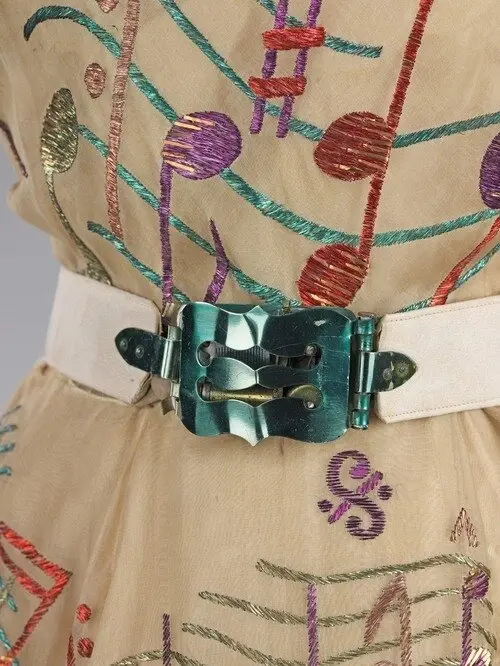
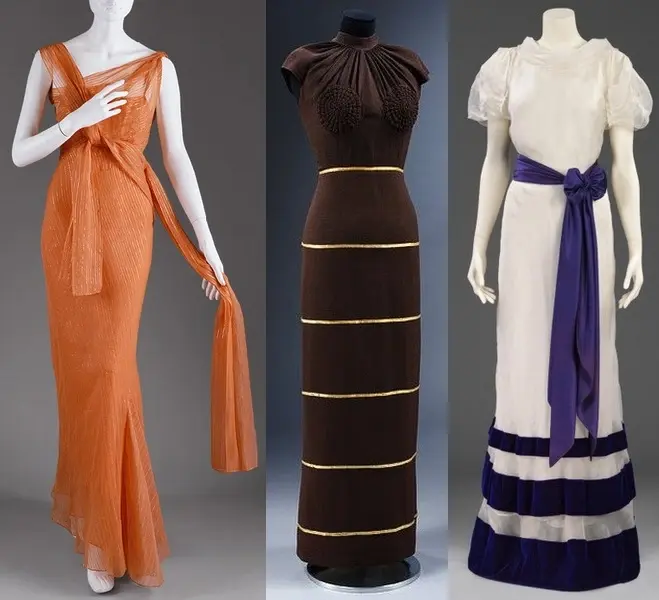
In her artistic laboratory, Schiaparelli focused on knitted swimsuits, sportswear, and evening gowns. The imaginative Elsa experimented with new materials, prints, colors, shapes, and whimsical decorations, unafraid of being accused of kitsch. She turned themed collection shows into eccentric spectacles.

Moulin Rouge with Zsa Zsa Gabor, for whom Schiaparelli created costumes
Not knowing how to sew, she often created dresses by draping fabrics directly on her body. Through that inventive approach, the skirt-pants, bathrobe dress, newspaper print (the first she made from reviews about herself), decorative zipper, bikini cups, and shoulder pads entered the wardrobe of later generations. The luxury in her pieces had a Hollywood flair. It’s no wonder she signed contracts with leading film studios, designing costumes for movies and personal outfits for actresses.

Purse and powder compact created with Salvador Dalí
At this stage, Elsa’s collaborations with artists flourished, most notably with Salvador Dalí. They were kindred spirits; it’s hard to say who inspired whom more. But the partnership produced many intriguing creations: the shoe hat with the heel pointing upward, the “Lobster” dress for Wallis Simpson, the Duchess of Windsor, the skeleton dress, the telephone bag, gloves with fake nails, the “Tears” dress that imitated torn patches of skin, a suit with drawer pockets, and the bottle design for her most famous perfume, Shocking!, whose torso-shaped bottle echoed the forms of Mae West.

Perfume ‘Shocking!’
Schiap banned the word “creativity” in her fashion house, calling it “the pinnacle of pretentiousness.” She also forbade the word “impossible,” demanding perfectionism from her team as the primary motivator.
In Place of an Epilogue
Returning to Europe after World War II, Elsa Schiaparelli, like many who rose quickly between the wars, could not regain her former glory in the new reality. Fashion had changed entirely. In 1947, Christian Dior released the New Look collection, marking a revolutionary shift in how clothing was perceived. The silhouette now featured a narrow waist and a voluminous skirt. Such clothing was costly because it used yards of fabric, and not very comfortable because it required lacing into a corset. The times simply dictated different rules.

Elsa Schiaparelli, 1953
Schiap closed her fashion house in 1954. She spent her final years between Paris and Tunisia, dedicating herself to raising her two granddaughters. She died in 1973 at the age of 83 and was buried in a shocking-pink pajama.
Perhaps the tireless inventor would have been delighted to learn that her fashion house was revived in the 21st century. More than half a century after it closed, in 2007 Italian entrepreneur Diego Della Valle bought the rights to the Schiaparelli brand from the designer’s descendants. To help restore the house he enlisted Christian Lacroix. After Lacroix, several other designers continued the work. Eventually the house once created by Elsa Schiaparelli rejoined the Syndicate of Haute Couture. In 2019 Daniel Roseberry became the creative director of the house.

Schiap’s successors have worked to preserve her surreal spirit, which likely still wanders the old corridors of the Place Vendôme building.
Click on any photo to open the full gallery of stunning dresses by Elsa Schiaparelli with large images.