
 Gaby
Gaby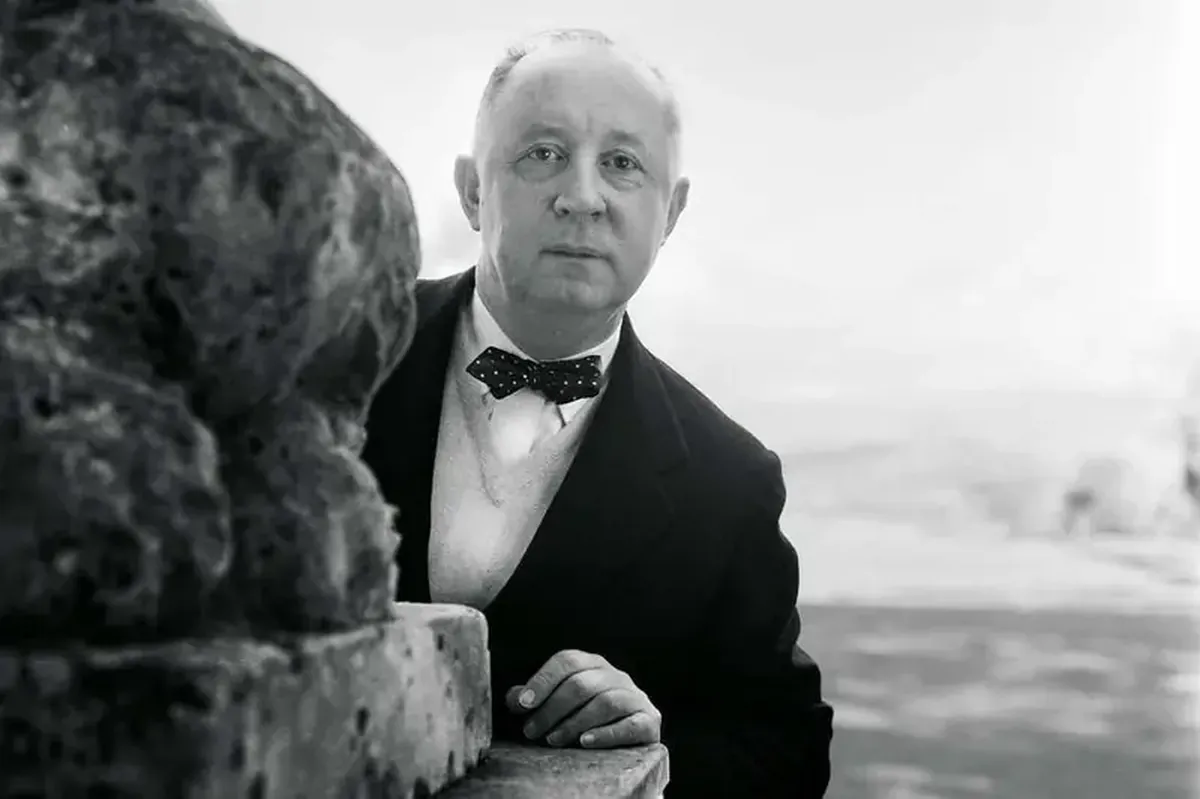
The pull of art kept the future designer from finishing his studies at the Institute of Political Studies, but it helped him conquer high fashion after he turned 40. The legendary couturier spent only ten years designing clothes, yet in that time he left an indelible mark on the fashion world. To make sure his name would echo louder after his death than during his life, the founder of the house simply stayed true to his passion.
A Leaning Towards Beauty
Christian Dior’s privileged background set his prospects apart from those of his slightly older contemporary Coco Chanel, who rose from poverty, an orphanage, and a life as a mistress. One of five children of a fertilizer merchant, Dior benefited from a wealthy father and a carefree start in life. Maurice Dior, from a prosperous family, grew the family fortune through a successful business and made sure his children wanted for nothing. Their mother, Marie-Madeleine (Isabelle) Marten, led a decidedly “decorative existence”: in the land of “wine and cheese,” she tended the household and the flowerbeds in their splendid garden. Her love of beauty passed to her children, who would go on to work with flowers, art sales, and fashion collections.

Christian Dior in his youth
Christian Dior was born on January 21, 1905, in the port town of Granville in northwestern France, and he always took pride in his Norman roots. At the age of five, he moved with his family from the family estate Villa Les Rhumbs to Paris, where his father began investing in profitable real estate. His mother’s garden, where the observant boy loved to spend time, remained on the shores of the English Channel. His dream of studying architecture at the School of Fine Arts was overshadowed by his father’s practical choice: following his father’s advice, Dior enrolled in the School of Political Science in 1923, setting his sights on a diplomatic career.

The Christian Dior House Museum in Granville
His artistic and musical training had little use in his political studies; he drew, played the piano, and composed music for his own pleasure. But it was easy to find like-minded friends in Paris. The city’s cafés always attracted a creative bohemia. Dior’s youthful circle included artist Christian Bérard, decorator Georges Geoffroy, designer Jean Ozenne, and a poet, writer, and composer. With his friend Jean Bonjac, and with financial support from his father, Christian opened an art gallery in 1928 that showed works by André Derain, Henri Matisse, and Pablo Picasso. “I had enough enthusiasm and friendships for my happiness,” Dior recalled in his memoirs.
Time for Change
The 1930s opened for Dior with a string of tragedies: his brother suffered mental illness, his mother died of cancer, his father went bankrupt in the economic crisis, the family lost their property to creditors, and Christian fell ill with tuberculosis. The gallery had to close as sales collapsed and his father could no longer provide support. While recovering with friends in the Balearic Islands, Dior became fascinated by local carpet-making traditions and hoped to sell that island exoticism in France. The idea—which entrepreneurs would realize years later—proved premature at the time: investors and buyers showed no interest.
Christian also failed in his early job search: couturier Lucien Lelong did not hire him as an administrator. Fate later changed that and brought Dior into contact with the president of the Paris Haute Couture Syndicate and the head of Elle magazine. For the moment, though, the family had to sell their Paris apartment and return to the countryside; his siblings began growing flowers and vegetables in Provence that were in demand in Cannes and Paris.

Christian accepted an invitation from fashion artist Jean Ozenne to visit. Influenced by Ozenne, Dior began contributing to sketches. He started by copying models from fashion magazines, and to his surprise Ozenne managed to sell Dior’s drawings along with his own works. The publication of the novice’s sketches in Le Figaro Illustré cemented his decision: Dior resolved to focus on drawing and never looked for another career.
By 1937, designs for dresses and hats allowed him to finally pay his rent. In 1938 the young talent caught the attention of designer Robert Piguet, and after serving in the “food army,” Christian secured a position with Lucien Lelong. He would endure the occupation before opening the Christian Dior fashion house in partnership with textile manufacturer Marcel Boussac.
Work in Crinoline
The war intruded on Paris’s “chiffon atmosphere” when news arrived that his younger sister, who used the code name Caro, had joined the French Resistance in 1941. After her arrest and torture, Catherine Dior was sent to a prison run by the Germans; Christian tried to rescue her with help from Swedish diplomat Raoul Nordling but failed. After the war, the sister who survived the concentration camps returned to her farm and answered questions about her suffering with few words: “Love life!”
Christian dedicated his famous perfume Miss Dior to her. Establishing his own perfume laboratory, which later became the Christian Dior Perfume company, was a major step in building his brand. Dior believed perfumes were integral to a woman’s image and that each dress should have its own corresponding fragrance. He called perfume “a necessary complement to a woman’s personality,” “the finishing touch for a dress,” and “the rose with which the artist Lankre signed his canvases.”

A model in a Christian Dior dress, late 1940s
“Madame in the Dior style” has always been associated with a rose. In the silhouette that debuted on the runway in 1947, Dior presented a romantic vision of femininity that sharply contrasted with wartime utilitarian clothes. Soft lines, bare shoulders, a fitted strapless bodice, and generous crinoline—this was the “New Look,” meant to celebrate a love of life. “In place of the woman with boxer shoulders, I created a delicate image of a flower woman,” the designer wrote. “I painted rounded lines of the bust, a narrow waist, and a wide skirt that opened downwards like the petals of a bud.” Critics called that first postwar collection revolutionary, though Dior insisted he was simply committed to classical aesthetics as the foundation of feminine elegance.
The “Brilliant Decade”
Fashion historians view 1947 to 1957 as not only the peak of Dior’s career but a brilliant decade in fashion. His productivity reached new heights. As if making up for lost time, Dior developed two collections a year—spring/summer and autumn/winter—with a team of professionals. He also made a name for himself as a costume designer for theater and film: he created stage outfits for Édith Piaf and Marlene Dietrich, designed costumes for Roland Petit’s ballets, and developed clothing for films by directors Claude Autant-Lara and Alfred Hitchcock. The designer earned two nominations for major film awards: for his work in Vittorio De Sica’s Termini Station he was up for an Oscar, and for the costumes in Arabesque he received a BAFTA nomination.

The couturier in his Paris office, 1947
Always searching for new ideas, starting in 1955 Dior was among the first to use impact-resistant, eye-safe plastics for sunglasses, and he collaborated with glassmakers at Swarovski to create jewelry. Whatever he undertook, he aimed for the best. Understanding that haute couture is a collective effort, Dior treated every seamstress who helped realize his designs with respect.

Christian Dior boutique in Paris, 1953
The growth of his team was helped by Dior’s organizational innovations. With partner Jacques Rouet, he was among the first in the fashion business to use licensing agreements. In 1948 he arranged licensing for women’s clothing, accessories, perfumes, and other products, transforming a local haute couture house into a multifaceted multinational brand. Soon the Christian Dior name marched across five continents, supported by joint-stock companies and multiple related productions.
Dressing Angels
“In the pursuit of constant renewal, as demanded by his capricious craft, yesterday’s amateur transformed into a respected specialist in just a few years, while the field that suddenly opened for his talent simultaneously became a graveyard for his life force,” wrote French writer, journalist, and Elle editor Françoise Giroud about Dior’s fate.

Christian Dior, 1955
When Christian Dior, 52, died suddenly of a stroke on October 24, 1957, while being treated at a Tuscan sanatorium, colleagues remembered how the burden of running a “fashion empire” had made their usually composed boss irritable. The failure of his last collection had taken a toll on his health, and the stress of trying to lose weight troubled the beauty-obsessed designer: he was unhappy with his appearance, which he felt fell short of his aesthetic ideals. Some said he believed his looks kept him from finding personal happiness. He lived alone in a beautiful villa, never married, and kept his relationships private. It is known that he was not interested in women “for the purpose of love and marriage.”
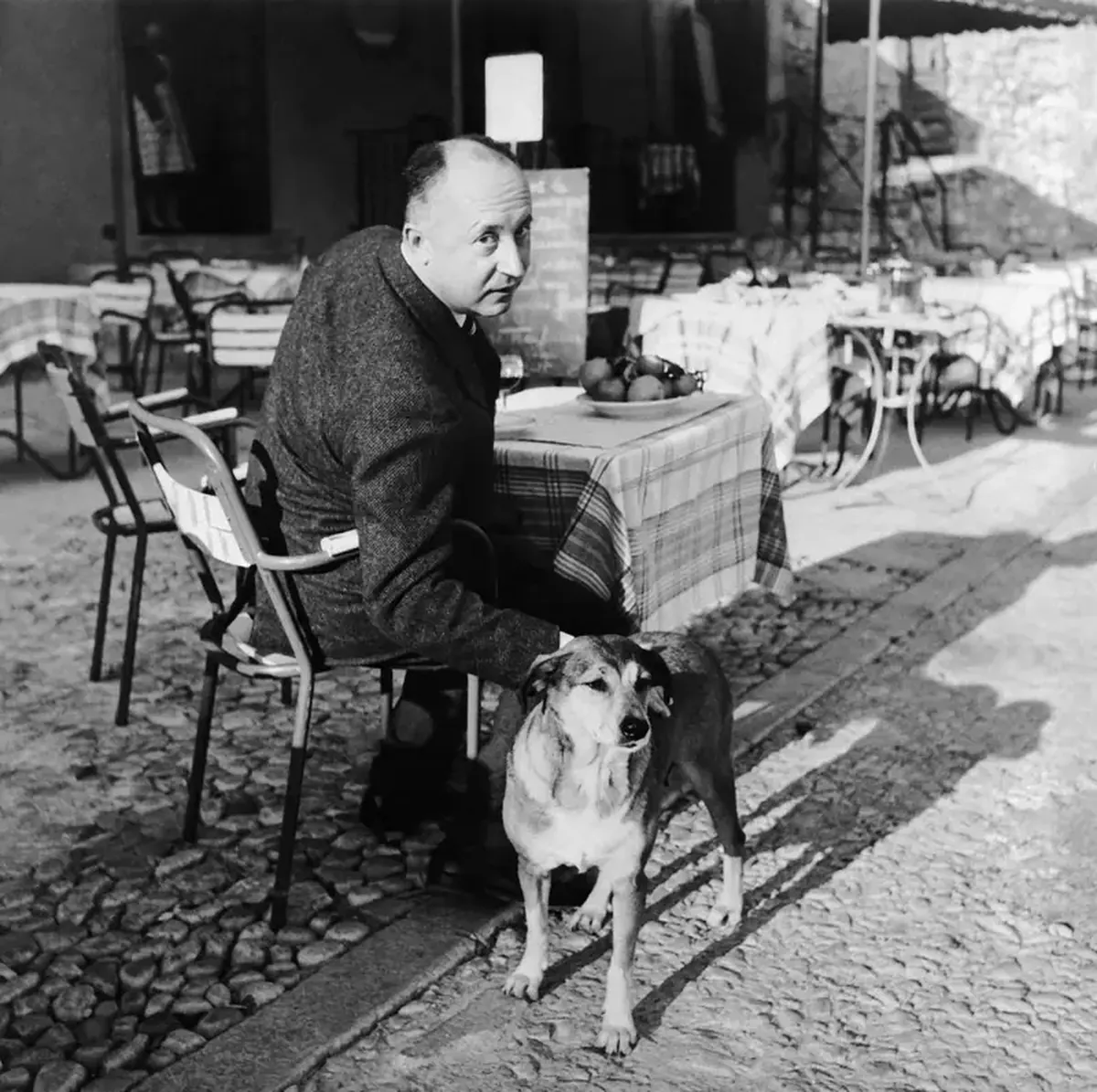
Christian Dior with his dog, 1950s
Biographies of Christian Dior include rumors about his relationships: with his personal driver, an Italian named Perrotino; with Pierre Cardin (according to Cardin himself); and with an Algerian-born model named Jacques Benita. Dior met the 25-year-old Benita in 1956 and even appeared publicly with him. It was said that for this partnership the fashion guru wanted to get himself in order, but he ran out of time. A year later, as a priest said at his funeral, Christian Dior “went to heaven to dress angels.”
