
 Gaby
Gaby
Yves Saint Laurent was born on August 1, 1936, in Oran, Algeria. He might as well have been born a girl—slender and with delicate features, Yves was far removed from the rough-and-tumble games of boys. From a young age, he delighted in flipping through his mother’s fashion magazines, cutting out models, sketching outfits, and dressing paper dolls as if he were the head of a fashion house. “At three years old, he cried if he didn’t like my dress,” recalled the couturier’s mother.
Conquering Paris
At school, Yves faced bullying from classmates who suspected he was gay. At the first opportunity, he left for Paris at 17 to study at the Syndicale de la Couture fashion school. In his very first design competition, he won a prize for his work. The young talent caught the attention of Christian Dior, who invited him to join his fashion house.

18-year-old Saint Laurent at a cocktail dress competition
The master praised his creations: “Yves Saint Laurent is young but has immense talent. In my last collection of 180 models, 34 were created by him. I think it’s time to reveal this to the press. My prestige won’t suffer,” the great couturier said, genuinely rejoicing for the young man. When Yves turned 21, Dior unexpectedly passed away, and the young designer was appointed artistic director of the renowned fashion house.

Yves Saint Laurent, 1958
A new chapter began in the couturier’s life. Along with his promotion, Dior’s death brought Yves into contact with a man who would become central to both his business and personal life: Saint Laurent first met Pierre Bergé at the master’s funeral.
The Little Prince of High Fashion
While the world mourned Christian Dior’s death, Yves Saint Laurent presented a Spring-Summer 1958 collection for Dior just a few months later. It was a triumph: the reviews were ecstatic, and the press dubbed Saint Laurent “The Little Prince of High Fashion.” Major fashion magazines interviewed the young designer, and grand dinners and receptions were held in his honor. It was at one of those events that his romance with businessman Pierre Bergé began, a relationship that lasted for 50 years.
From 1958 to 1960, Yves Saint Laurent created six collections for Dior. But with each new collection he faced increasing criticism. Critics said his line was losing its traditional style because the couturier drew inspiration from street fashion while designing clothes for contemporary women.
Yves suffered from feeling misunderstood, and then another blow came—a draft into the army. In the ranks of the French army, Saint Laurent had to serve in Algeria, his homeland. The horrors of war took a toll on his mental health: Yves was hospitalized in a psychiatric clinic. During this time, only his loyal friend Pierre was by his side. The owners of the Dior house terminated the contract with their artistic director, citing his mental health and their inability to understand his creative ideas.
In those difficult times, Pierre Bergé offered his support and suggested they start their own fashion house together. Thus, the idea for the famous brand YVES SAINT LAURENT was born within the walls of the psychiatric clinic.
All the Colors of the Rainbow
To regain his strength and recover from the nervous breakdown, Yves and Pierre traveled to Morocco. There, they bought a house. It was one of the happiest periods in the lives of the unconventional couple. In Marrakech, Yves and Pierre created a bohemian circle that included the rich and famous: Paul and Talitha Getty, Fernando Sanchez, Loulou de la Falaise, Andy Warhol, Mick Jagger…

The home of Saint Laurent and Bergé in Morocco
For Yves Saint Laurent, Morocco became an endless source of inspiration: “It was then that I became more sensitive to light and color… The local men and women simply mix pink, blue, green, purple…” the couturier recalled. It was there that he sketched the first collection of his new fashion house.
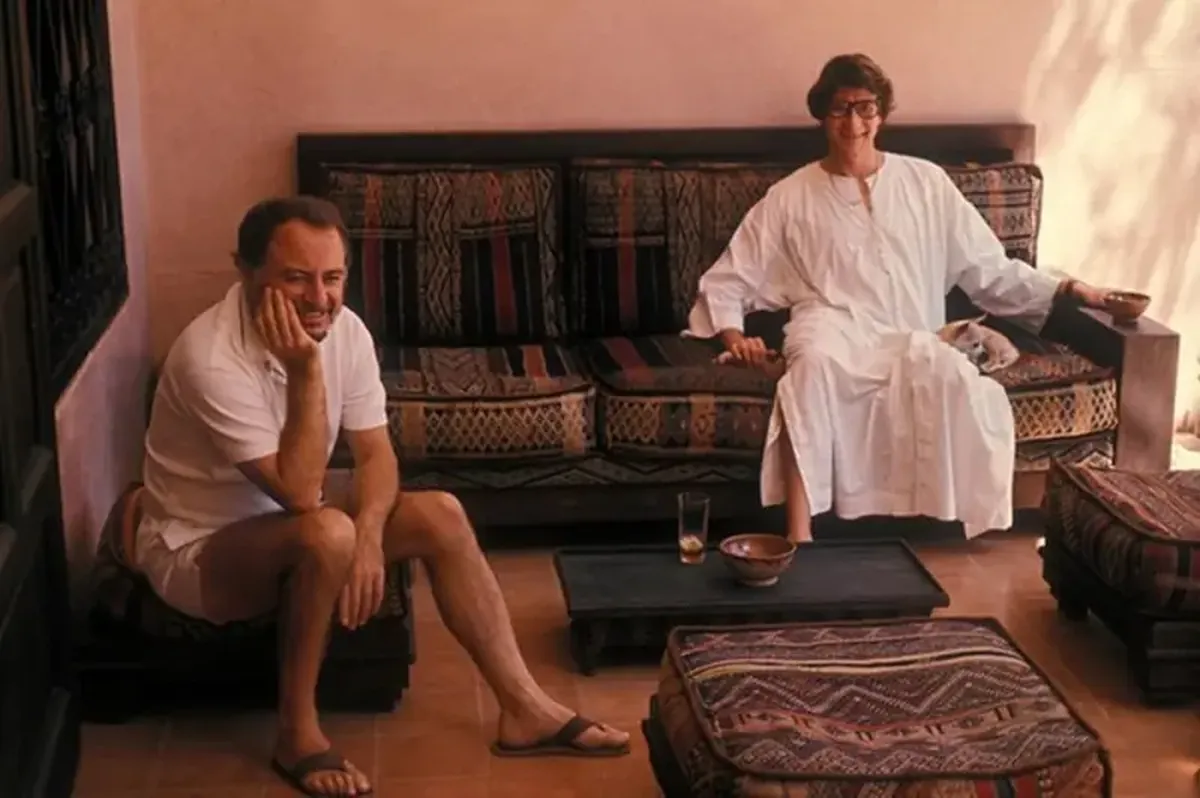
Pierre Bergé and Yves Saint Laurent
The runways of Paris welcomed the new brand’s collection with applause. The Little Prince of High Fashion had returned triumphantly!
Love Affairs
The love story between Pierre Bergé and Yves Saint Laurent was not always idyllic and nearly ended in the 1970s. After 15 years together, Pierre grew weary of his partner’s nervous breakdowns and struggles with alcohol and drugs, while Yves began seeking other relationships. It was during this time that he met Jacques de Bascher, a Parisian dandy who had been close to Karl Lagerfeld. The episode turned the two couturiers into lifelong enemies.
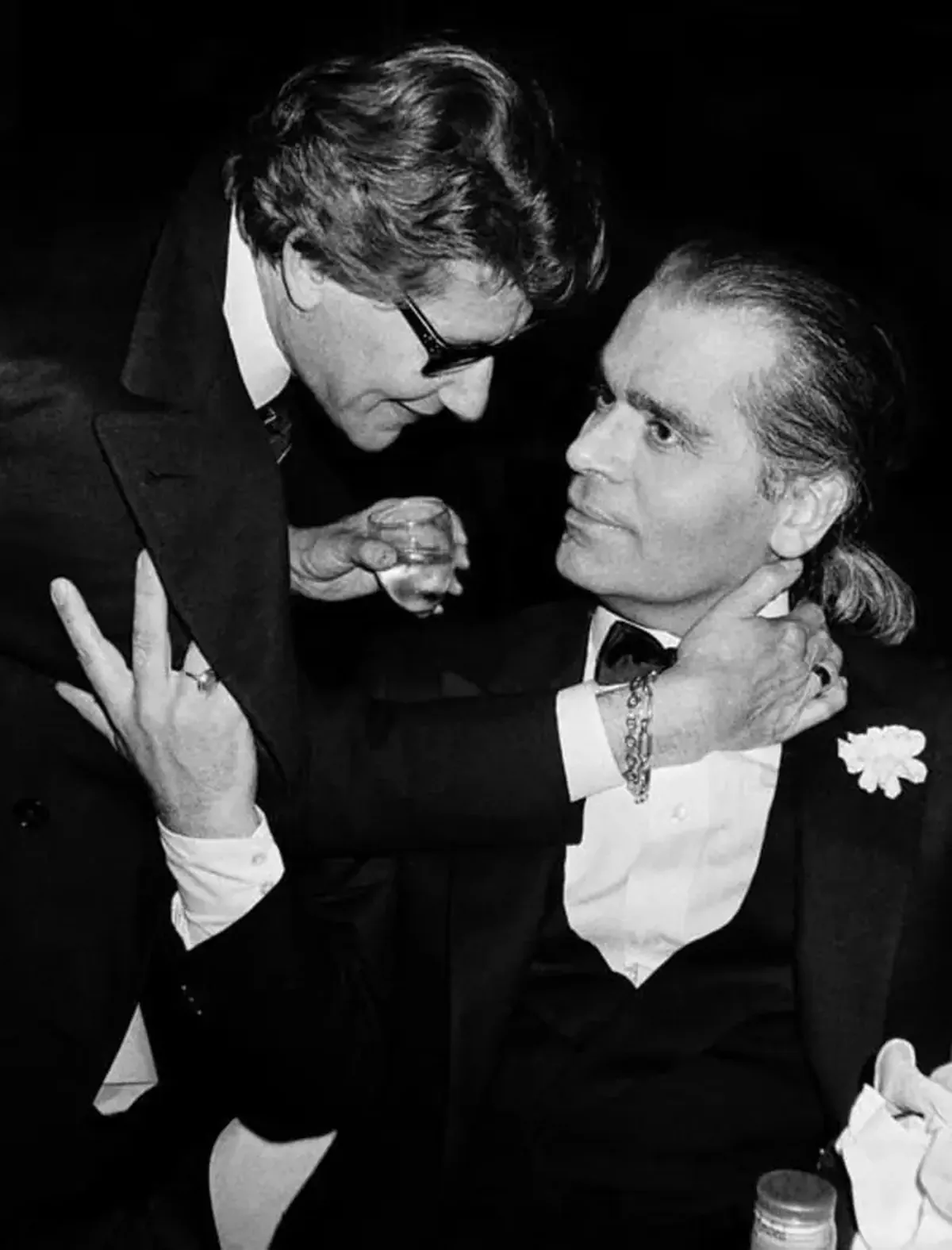
Yves Saint Laurent and Karl Lagerfeld
Jacques and Yves plunged into a toxic relationship fueled by drugs and orgies. Pierre Bergé was fiercely jealous of Yves and repeatedly threatened Jacques with physical harm. Ultimately, Jacques could not endure the situation and ended his relationship with Saint Laurent in 1975. The break deeply wounded the designer: “Come back! You can do anything you want with me!” Yves pleaded. Jacques did not return.

Yves Saint Laurent and Pierre Bergé
Pierre Bergé never fully forgave Saint Laurent, but he remained loyal to the designer until the end of his days. He served as Saint Laurent’s mainstay, advisor, and friend, and he founded and managed the YSL brand for 40 years.
Fashion Evolution or Revolution?
Pierre Bergé said Yves Saint Laurent “accompanied the evolution of women.” “If Chanel gave women freedom in the first half of the 20th century, Saint Laurent gave them power,” he added.
The fashion anarchist Yves Saint Laurent was unafraid of bold experiments. He dressed his models in workwear—safari suits, men’s tuxedos, camouflage—pairing them with sheer blouses or sometimes skipping the blouses altogether, and women loved it. His invention of the trapeze silhouette, which allowed movement while remaining as sexy as a fitted bodice, changed the fashion world. His clothing made women feel freer and more confident.

Yves Saint Laurent with models Betty Catrou and Loulou de la Falaise, wearing safari dresses from the couturier’s collection. London, 1969
Yves Saint Laurent, an art lover who bridged French fashion and global cinema, believed it was important not just to wear beautiful clothes but to be a personality: “Clothing should be subordinate to a woman’s personality, not the other way around.”
The Muses of the Great Couturier
Many of Yves Saint Laurent’s collections were inspired by specific women: friends, muses, and collaborators. For instance, the Scandinavian blonde Betty Catrou inspired him to create the women’s pantsuit. Betty also joined him on exuberant nighttime escapades through Paris’s seedier spots.

Yves Saint Laurent and Loulou de la Falaise creating a new model
The elegant Loulou de la Falaise, a designer, close friend, and creative partner of Saint Laurent, looked stunning in colorful dresses and turbans inspired by his Moroccan influences.
By his last collection in 2001, the fashion icon and ambassador of Saint Laurent’s style was Catherine Deneuve. Their relationship began in 1965 when the budding actress first approached the couturier for an outfit for a reception with the Queen of England. Over time he created outfits for her films, and his work on Belle de Jour—where the tightly buttoned, restrained costumes of the main character only highlighted Deneuve’s passionate nature—helped propel the actress to stardom. It was a symbiosis of a talented designer and a remarkable actress: she became his prized muse at subsequent shows.
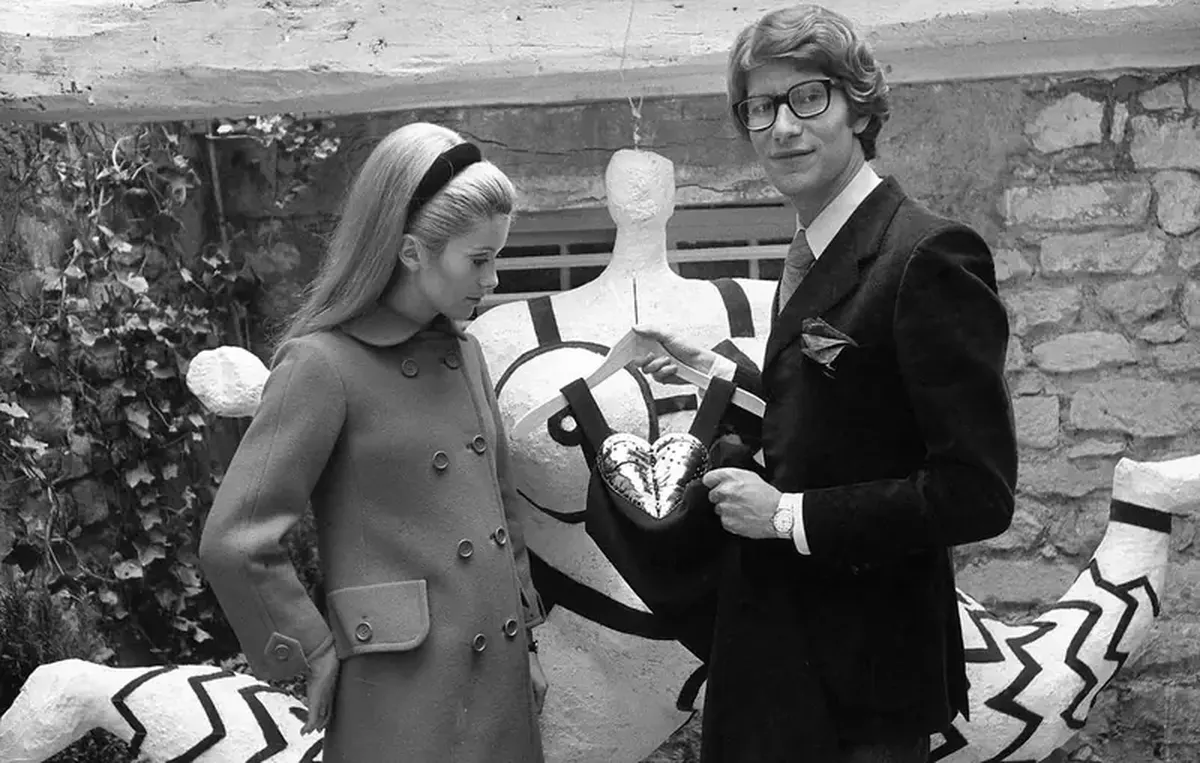
Saint Laurent and his muse Catherine Deneuve
Among Yves Saint Laurent’s favorite models were the exotic Mounia, the Indian model Kira, and the sophisticated Verushka. He was among the first to recognize the charm of a young Laetitia Casta. The couturier dedicated more than one collection to his eccentric muse Paloma Picasso (Pablo Picasso’s daughter).

Yves Saint Laurent and Paloma Picasso
The maestro was friends with many of the most famous, beautiful, and intriguing women of his time—actresses, dancers, writers, artists, models, and first ladies. For Yves Saint Laurent, few people understood women the way he did.
Stylish Advice from Yves Saint Laurent
Yves Saint Laurent clearly articulated what a stylish woman should be. His advice remains relevant today.
- “To look beautiful, a woman needs a black sweater, a straight black skirt, and a man who loves her.”
- “Even the most exquisite outfit needs at least a drop of perfume. It adds a sense of perfection and gives a certain charm to the image.”
- “Fashion comes and goes, but style is eternal. It emphasizes all the strengths and hides the imperfections of a person. Therefore, one should not blindly follow fashion trends; the main thing is to find your own style.”
- “The most beautiful makeup a woman can wear is her passion. But cosmetics are easier to buy.”
- “The most important thing in clothing is the woman who wears it.”
