
 Gaby
Gaby
140 years ago, a French woman was born whose compatriots would call Art de Vivre – “the art of living.” She was a mistress, a collaborator, and an exile; never married, she returned to business at 71 and reconquered the fashion world, eventually passing away in a hotel room with $15 million in her account. The founder of the House of Chanel and a revolutionary in women’s fashion built her success on a childhood of poverty, a respect for money, a hunger to improve herself, fierce independence, personal determination, and a love of life.
Wallets Without Coin Compartments
On her path to social parity with the aristocrats, Gabrielle Bonheur (Coco) Chanel offered a “luxurious simplicity” as an alternative to the trappings of wealth. Better suited to the modern century, the aesthetic of le luxe de la simplicité became part of women’s liberation. By freeing fashionable women from uncomfortable corsets, towering heels, handheld reticules, and heavy jewelry, Chanel proposed practical alternatives: trousers, sleeveless tops, the now-iconic “little black dress,” pencil skirts, jockey caps, ballet flats, chain-strap handbags, affordable costume jewelry, and her legendary perfumes.
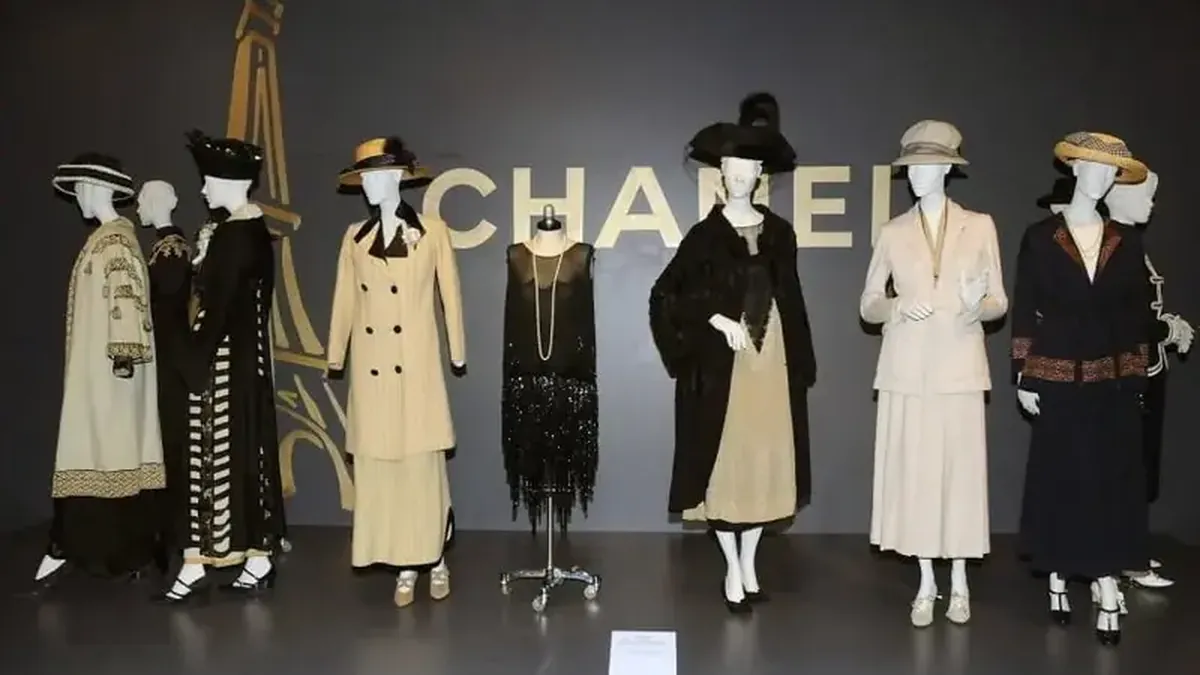
Coco Chanel’s dresses on display at the FIDM Museum & Galleries on the Park in Los Angeles, 2009.
The resourceful designer repurposed austere pieces from the men’s wardrobe and brought them into the closets of her benefactors. As Coco Chanel once said, every man taught her something and gave her something. And she deliberately kept company with those who had what she called “wallets without coin compartments.”
The name of the creator of the famous brand is inseparable from Paris: the fashion house on Rue Cambon, where Coco Chanel moved just before the 1920s, still belongs to the House of Chanel she founded a century later. But before she reached Paris, the daughter of a laundress and a seller of work uniforms and underwear had a long road to walk. The future fashion icon was born on August 19, 1883, in the provincial town of Saumur – in the charitable hospital where her impoverished mother washed sheets.
Her father moved frequently for his market trading, so he was listed as a “traveler” on his daughter’s birth certificate. Because of a mistake in the family name, the newborn girl was recorded as Chasnel, which later let Coco claim a different city as her birthplace. For a rootless provincial girl who repeatedly revised her own biography, hiding the fact that she was born in a poorhouse mattered. Still, she could not escape her fate and ended up in an orphanage after her mother’s death.

The sign of Coco Chanel’s first boutique
Choosing a Path
Jeanne Devol and Albert Chanel had six children in quick succession. Gabrielle was the second, and the age gap between her and her older sister was less than a year. The large family squeezed into a one-room home in Nouvelle-Aquitaine in southwest France. One of her brothers died in childhood. After their 32-year-old mother died in childbirth, their father placed the children “in good hands”: he sent two sons to work in the village and confined three daughters to an abbey orphanage.
Gabrielle was about 11 or 12 at the time, though she often downplayed how young she was when she became an orphan and later shaved years off her true age. During six years at the orphanage, the diligent girl learned to sew, a skill that would support her later. It was no coincidence that the logo of her fashion house was inspired by the chapel at Aubazine Abbey: that symbol of protection for the underprivileged was proposed by Gabrielle herself.
While later attending a Catholic girls’ boarding school in Moulins, the 18-year-old Chanel found work at a local haberdashery. By day she sewed and sold clothes; by night she entertained guests at a café-chantant. At the La Rotonde pavilion, Gabrielle worked as a poseuse — a performer who filled the pauses between acts.

Chanel clothing, 1917.
It was during the songs “Ko Ko Ri Ko” and “Qui qu’a vu Coco” that Chanel earned the nickname Coco. Although it was linked to the word cocotte, meaning “little hen” in French, the girl adopted it as her name. It never appeared on posters; the experience did not lead to a professional singing career. Instead, it became a stepping stone into the life of a mistress. In the cabaret, Chanel seized the chance to find a personal sponsor — men would repeatedly play a key role in solving her problems and financing her projects.
Hot Body
The first patron of the 23-year-old slim beauty, who weighed 121 pounds at a height of 5’6″, was Étienne Balsan, heir to a textile-factory fortune, owner of elite stables, and a former cavalry officer. His new mistress pushed aside his previous favorite, left her job, and settled in the wealthy man’s chateau, where she spent three years in luxury.
It is known that Chanel had abortions and remained childless, but one of her biographers, Justine Picardie, recently suggested that André Palas, her nephew, might actually have been Coco’s son with Balsan.
The lover introduced Chanel to his industrialist friend Arthur Capel, who became her next patron starting in 1908. Chanel later recalled that “two gentlemen tried to outdo each other in competing for my hot body.”
Captain Capel belonged to the English elite, and his investments opened doors for her in fashion. Thanks to him, the trained milliner moved to a Paris apartment and debuted in 1910 as a designer, opening her first hat boutique in the city.
Arthur showed Coco off at fashionable resorts and paid her bills, but one could not expect fidelity from a mistress: Capel had a reputation as a womanizer. Rumor has it that Chanel even made a dress for his fiancée, an English aristocrat he married in 1918. A year later the fiancée became a young widow: Capel died in a car accident. The unexpected loss shook Chanel, who again had to find ways to survive. Perhaps it was then that she coined her famous aphorism: “A married woman stops worrying about the future, while a married man starts.”
A year later, an émigré prince, Dmitri Romanov, entered Chanel’s life. The cousin of Emperor Nicholas II was 30 while Coco was 37. The brief romance (the aristocrat left for America and married there a year later) also served Chanel’s business: the prince introduced her to perfumer Ernest Beaux, who created the original scent that became Chanel No. 5 (of ten fragrance samples presented, Chanel chose the fifth, hence the name).

Gabrielle Chanel, 1928.
Agent Westminster
The next chapter was her relationship with the twice-divorced Duke of Westminster, Hugh Grosvenor. Their connection lasted at least ten years, possibly as long as fourteen, beginning after they met in Monte Carlo in 1925. The duke gifted Chanel a luxurious London mansion and a plot of land on the Côte d’Azur, where she built the villa La Pausa.

Chanel and the Duke of Westminster, 1920s.
One later romance nearly cost Chanel her life’s work: it led to accusations of aiding the enemy. In an attempt to free her nephew André Palas from German captivity in 1940, Chanel sought help from an old acquaintance — Baron Hans Gunther von Dincklage. The prisoner was released at the price of a love affair between the 56-year-old Chanel and the 44-year-old attaché of the German embassy. Thus began her ties to the German government: whether knowingly or not, the French mistress of a Wehrmacht colonel became his informant.
According to various reports, Chanel traveled to Berlin for a personal meeting with Walter Schellenberg, the head of German foreign intelligence, and the Abwehr used her British contacts (including a 1920s acquaintance with Winston Churchill) to try to arrange secret negotiations. In declassified documents, Chanel is referred to as “Agent Westminster.”
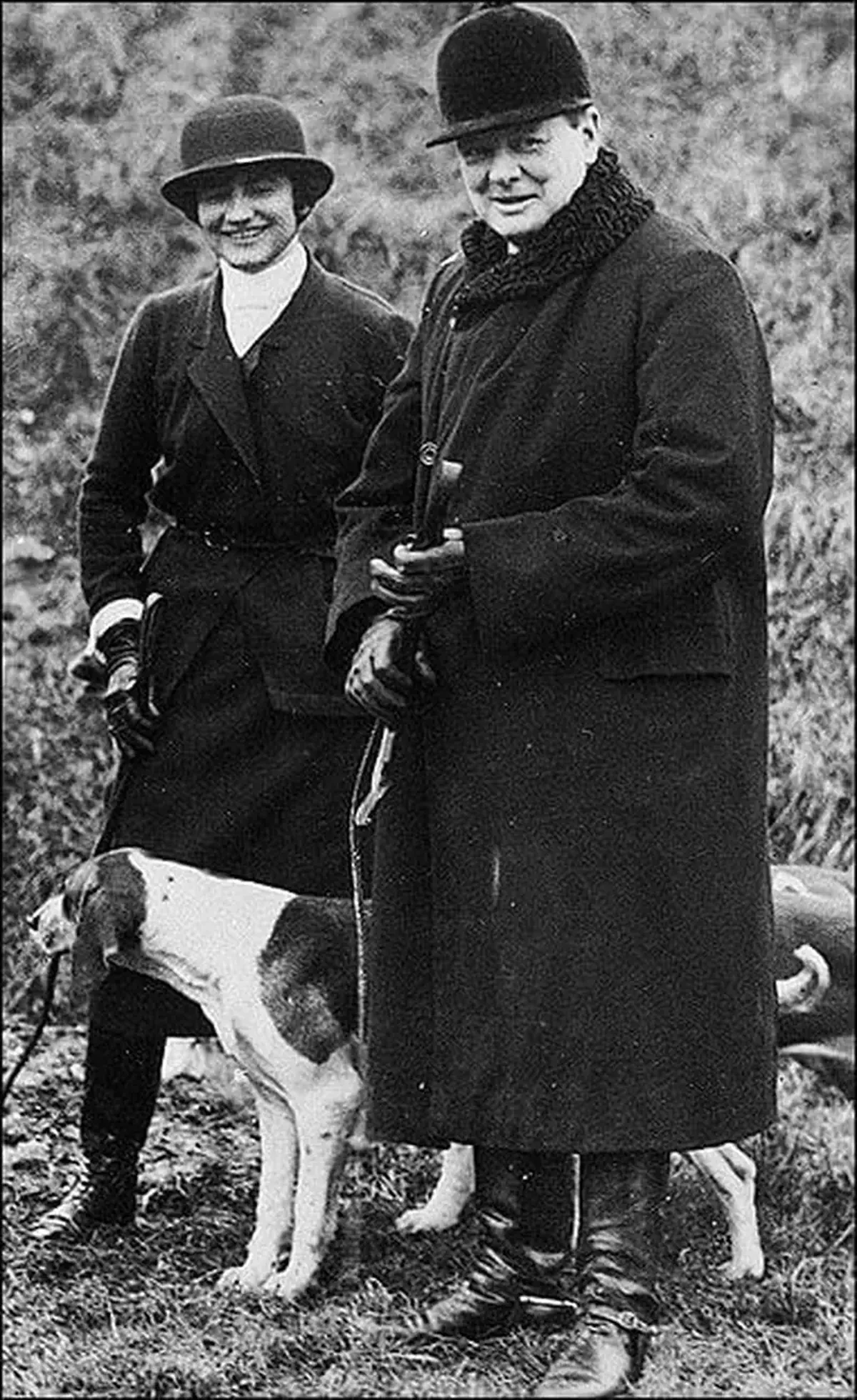
Coco and Winston Churchill
Although Coco denied involvement in alleged espionage missions, her connection to the fascists led French authorities to view her as a collaborator, and she risked arrest. The complexities of international politics spared her: in 1944 she was allowed to move from France to neutral Switzerland, where she lived with her German lover on the shores of Lake Geneva until 1953.
Nothing More to Add
The “orphan from the poorhouse” arranged her life so that she would never want again. She closed all her stores during the war but made sure she still profited from the business that survived. During the occupation of France, the founder of the fashion house took advantage of anti-Jewish laws to try to seize the Wertheimer brothers’ shares. The Wertheimers had controlled production of her perfumes since 1924, when Pierre Wertheimer founded Les Parfums Chanel.
But the business-savvy mademoiselle did not succeed: the clever entrepreneurs emigrated to the U.S. and formally transferred the factory to a French friend whom the law could not touch. After the war, the partners’ paths crossed again. The 71-year-old Coco Chanel returned to fashion in 1954 with a new collection financed by the Wertheimers, and after her death that family became the sole owner of the brand (today it is owned by brothers Alain and Gérard Wertheimer).

The famous Chanel No. 5 perfume
Until the end of her life, the couturier, who outlived all her lovers, kept working on new collections while smoking up to 50 cigarettes a day. She had principles that kept her from accepting the mini-skirt trend. “Chanel’s style” remained a status symbol; its advocates in the 1950s and ’60s included “the epitome of elegance” Jacqueline Kennedy and Hollywood stars Audrey Hepburn and Elizabeth Taylor.
Coco financially supported people to whom she felt indebted, investing in artists and painters. Among those she sponsored were Salvador Dalí and Pablo Picasso. Picasso called Chanel “the most prudent woman” he had met.

Coco Chanel and Pablo Picasso
“I would never have become famous without men,” Coco Chanel reflected. “But I don’t know if I was happy…”
Coco Chanel passed away on January 10, 1971, at the age of 88 in a luxury suite at the Ritz Hotel in Paris. Her boutique was just a few steps from the room where she lived for 34 years. Mademoiselle Chanel was laid to rest in Lausanne, Switzerland, where the renowned Frenchwoman — named by The Times as one of the hundred most influential people of the 20th century — spent a quarter of her life. Her tombstone, decorated with a relief of five lion heads and her dates, bears only two words: “Gabrielle Chanel, 1883–1971.”

Coco Chanel, 1960s.
