
 Carlos Solis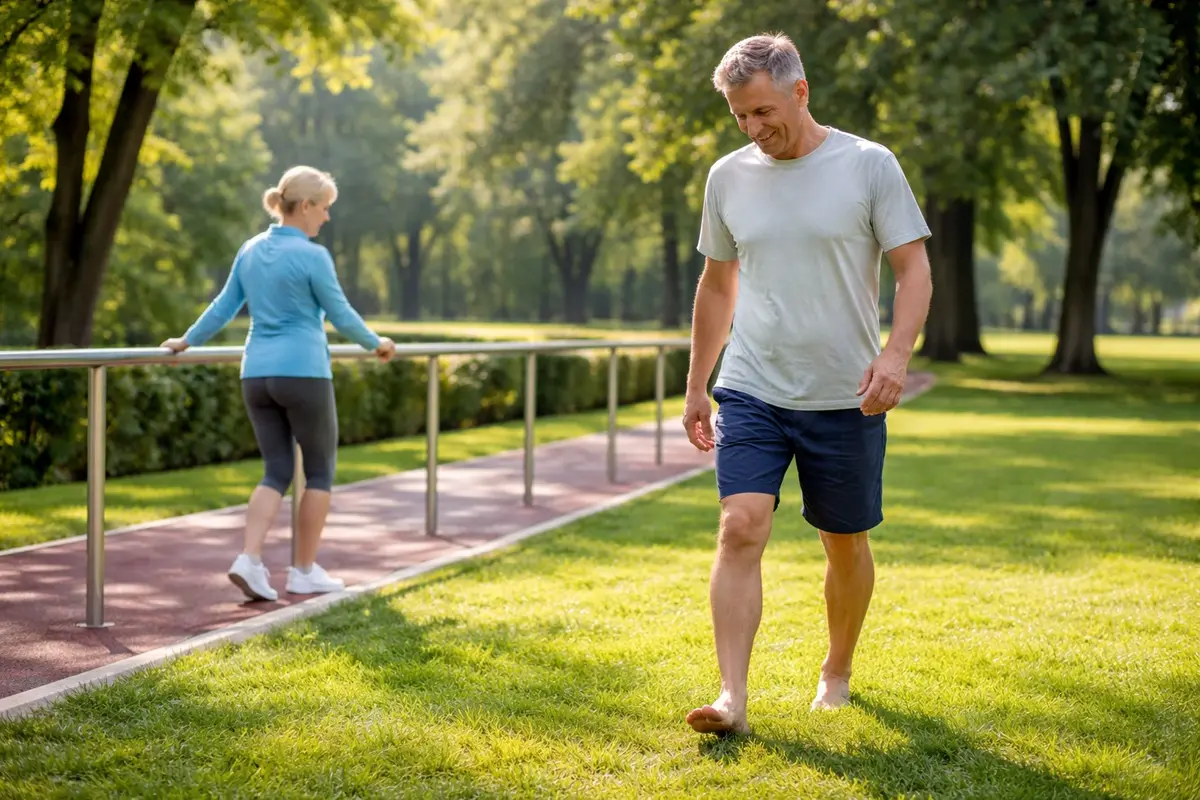
Try walking backward or barefoot — both moves can help people who suffer from knee pain or plantar fasciitis. A coauthor of the book “Walking: Your Life Depends on It” told Harry Bullmore about these techniques.
Walk backward to strengthen weak knee muscles
Walking backward often helps people with knee pain. The movement changes muscle-activation patterns and shifts more load onto the quadriceps and the core — muscle groups that are weak in many patients.
People who complain about their knees often have underactive quads or a weak core. Walking backward changes the sequence of muscle activity and recruits those weaker groups.
Evidence-based physiotherapists sometimes put a patient with knee pain on a treadmill and have them walk backward for a few minutes — this is safer because the patient can hold the rails and control the pace. Then the therapist switches the patient back to normal forward walking. This exercise gradually strengthens lagging areas and helps even out body mechanics, which reduces pain.
Specialists recommend adding backward walking to regular walks gradually:
- If you walk for 20 minutes, try walking backward for two to three minutes;
- Start in a safe place — on a treadmill or a track where you can control speed and space;
- Hold the rails or walk slowly to avoid falls.

Barefoot on the grass
For people with heel pain or a diagnosis of plantar fasciitis, specialists recommend a surprising option — walking barefoot. It seems counterintuitive; you might think, “My foot hurts, so I should wear the most cushioned shoe,” but studies show a different picture.
When we walk barefoot, we tend to land more softly. People with plantar fascia problems often overload the foot and wear narrow shoes, so the foot muscles don’t activate. When those muscles don’t work, the tissues take the extra load and you feel a tug-of-war across the sole.
Most studies examined barefoot walking on soft surfaces, such as grass. So if you want to try this approach, choose a safe, clean, soft place to walk.
- Start with short walks on grass or sand;
- Don’t switch abruptly to constant barefoot walking — let your muscles adapt gradually;
- If you have reduced foot sensation, consult your doctor before trying this.
A quick warning
Both techniques — backward walking and barefoot walking — are simple and accessible, but perform them carefully and in appropriate conditions. If you have serious joint, vascular, or nervous system issues, consult your doctor or a physical therapist before changing your usual activity.
Based on reporting by The Independent
