
 Gaby
Gaby
Dozens of carved human faces dot the rocky banks of the Amazon River near the city of Manaus. These carvings have emerged because a severe drought has pushed the river’s water level to a record low not seen in 121 years. In just the past week, the water level has fallen by 43 feet.
Rare Art Hidden Beneath the Waters
The site where ancient artists left their creations is called Ponta-das-Lajes. It sits on the northern bank of the Amazon, where the Rio Negro and Solimões rivers converge.
The last time these carvings emerged for local residents and archaeologists was in 2010, during a similar drop in water levels. Since then, researchers haven’t reached a consensus on who made the images or why.
The faces show a range of forms and expressions. Some images slightly protrude from the stone surface—what art historians call bas-relief.
A Manaus resident, Lívia Ribeiro, who has lived in the city for 27 years, told archaeologists she’d heard plenty about the images, but she didn’t believe they existed until she saw the carvings herself.
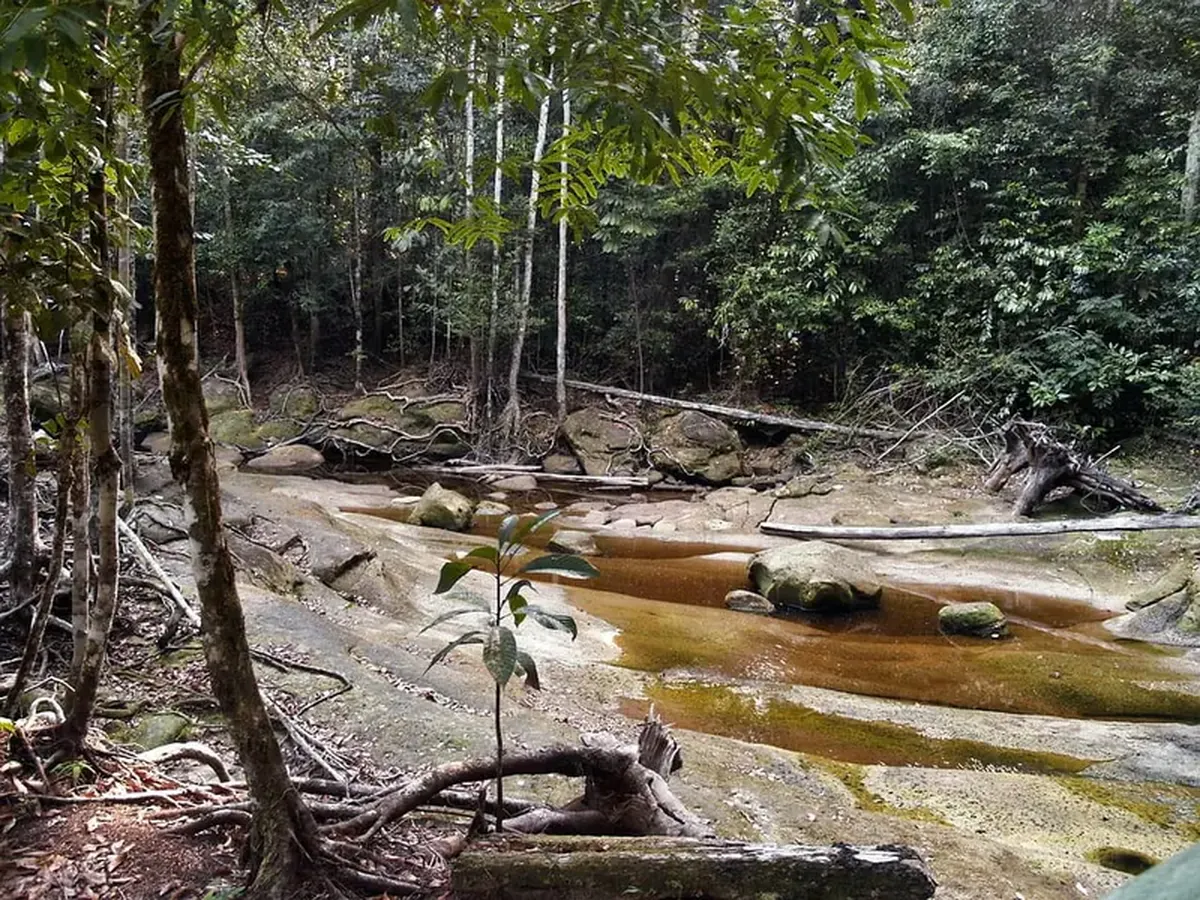
The rocky banks of the Amazon River near the city of Manaus
Archaeologist Jaime de Santana Oliveira from the Brazilian Institute of Historical Heritage said the current drought has exposed even more anthropomorphic images than before. While he cannot yet pinpoint which pre-Columbian culture created the works, they may date back around two thousand years.
Alongside the carved faces, archaeologists found a grooved stone. Those grooves could have been left by ancient hunters or warriors sharpening arrows, IFLScience reported.
Rock Art — Harbingers of Irreversible Climate Change
This year’s drought in the Brazilian Amazon has already had catastrophic effects. By the end of September, more than 120 freshwater dolphins died after water temperatures rose extremely high. The situation has been worsened by El Niño, which has pushed rainfall in the tropical forests well below historical averages.
Experts predict global warming will make droughts in the Amazon more frequent, as it will elsewhere. That raises the possibility that these rock carvings are a reminder of the kinds of irreversible changes climate change could bring.
“We come, we look at the images, and we think they are beautiful,” Ribeiro said. She worries, though, whether this river will exist in 50 or 100 years.
