
 Gaby
Gaby“She Walks Through Life, Laughing”
You probably remember this photo, which circulated widely on social media early in the full-scale Russian invasion. It came with a poignant story meant to motivate, to inspire, or to be “cosplayed,” as some call it today.
The year was 1995, the height of the brutal siege of Sarajevo, the Bosnian capital, by Serbian forces. Every day felt like the last; a walk down the street could mean death from a sniper or a shell. A beautiful woman, dressed to the nines — in a stunning dress, wearing jewelry, and striding with an incredibly proud, in some ways defiant gait — confidently passed armed soldiers, showing by her very presence that she and her fellow citizens would not be easily defeated.
The photo was taken in the Sarajevo suburb of Dobrinja, which, because of relentless shelling and destruction, was called “Little Hiroshima.” It was shot by British photographer Tom Stoddart, and the courageous woman is Meliha Varešanović. Seventeen years later, in January 2012, Stoddart returned to the same street and photographed Meliha again — still holding her head high, still standing proud — symbolizing both her spirit and the community’s: “We won, and I assured everyone by my very appearance that we would not be defeated, and that this terrible time would one day end, like a bad nightmare.”

The Famous Photo by Tom Stoddart
The Siege of Sarajevo — a city that had hosted the Winter Olympics less than ten years earlier — lasted 1,425 days, almost four years. Sources estimate that between 10,000 and 15,000 people died in the city during that time. Ukrainians know all too well what a humanitarian catastrophe looks like, and not just from hearsay or online videos.
During the siege, residents survived on little more than bread and water, which wasn’t always available. They suffered shortages of medicine and electricity, and sometimes even candles, which people improvised from whatever they had. Cemeteries became overcrowded; bodies were buried in stadiums and parks.
The Mission of Reporter Carter
In the winter of 1993, American journalist Bill Carter arrived in Sarajevo. Two years earlier he had come to the Balkans on a humanitarian mission, delivering food and medicine. He found a small refuge in a bombed and burned office building and survived for six months on canned baby food washed down with river water and, as he later recalled, sometimes water drawn from sewage drains. His main task was to “build bridges” and create any possible connection between the besieged city and the Western world.
Carter’s target audience wasn’t Western politicians, NGOs, or institutions like the UN. He deliberately focused on people who influenced public feeling — those who were listened to and loved. Today we might call them “influencers,” but then they were rock stars.
“The idea was simple,” Carter later recalled. “I wanted the youth of Europe to see the people in the war. I didn’t want them to see politicians, religious figures, or military personnel.” So he reached out to Bono and the band U2.
On the last day of winter 1992, U2 set off on their worldwide Zoo TV Tour, which ran for more than a year and a half. It was a massive multimedia show built around dozens of giant screens, part satire of modern television — already feeling empty, sensational, and propagandistic — and part deliberate sensory overload for the audience.
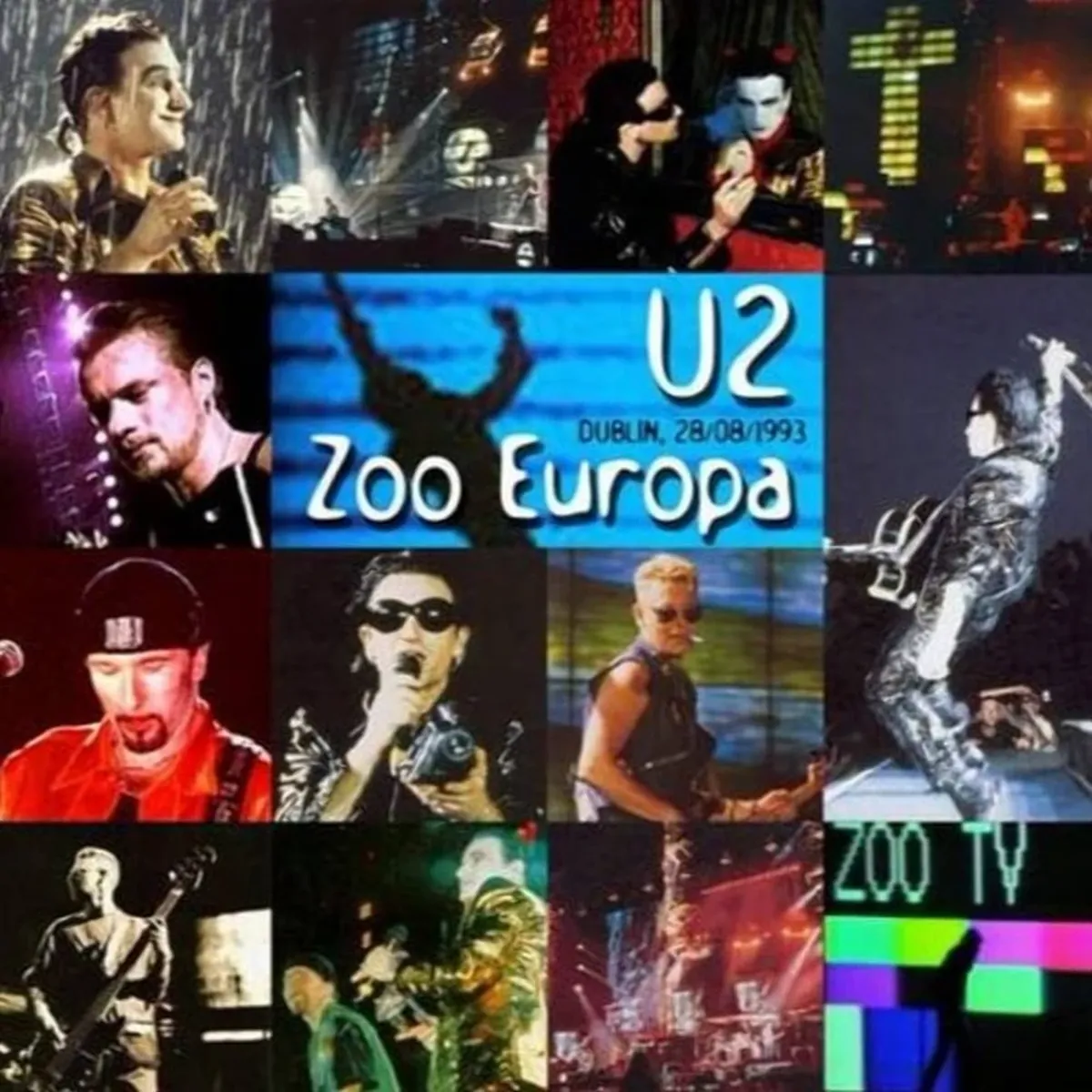
The screens showed random TV programs, clips, visual effects, and flashing phrases — little “memes,” as we’d call them today. It was like a live version of Reels or TikTok for thousands of people. The show also featured constant interaction with the audience: satellite calls, Bono flipping channels with a remote, and live phone-ins that brought people into the “concert broadcast.” Remember, this was before the internet era and before mobile communication was widespread.
That kind of interactivity was exactly what Bill Carter needed. He connected with Bono during the tour and recorded several filmed segments from besieged Sarajevo — not live, but sufficient to move the U2 frontman. Bono planned to come with a concert, but Carter discouraged him because of the danger: famous musicians could become hostages, and thousands of local spectators would risk being hit by shelling.
Carter’s stated goal was to show the human side of the conflict and to expose Western media’s indifference to that human aspect. The parallels with today’s Ukraine are hard to miss.
Beauty Will Save the World and Sarajevo
Meanwhile, something extraordinary was happening inside Sarajevo, cut off from the world. On May 29, 1993, in a basement shelter deemed relatively safe, locals organized a beauty contest. It was called “Miss Besieged Sarajevo ’93,” and sixteen young women took part. This was a proper contest: a jury, makeup, dresses, high heels, swimsuit rounds — and smiles. That smile was the most powerful element: a deliberate, defiant smile in the face of fear, sorrow, and the enemy nearby. The occupiers expected the night to pass in darkness and terror, but instead the contestants and audience declared, “We will have fun, rejoice in life, and celebrate beauty.” It was a fierce, unforgettable act.
The winner was 17-year-old Inela Nogić. When reporters asked what she planned to do next, she answered, “I have no plans, because I might be killed tomorrow.”
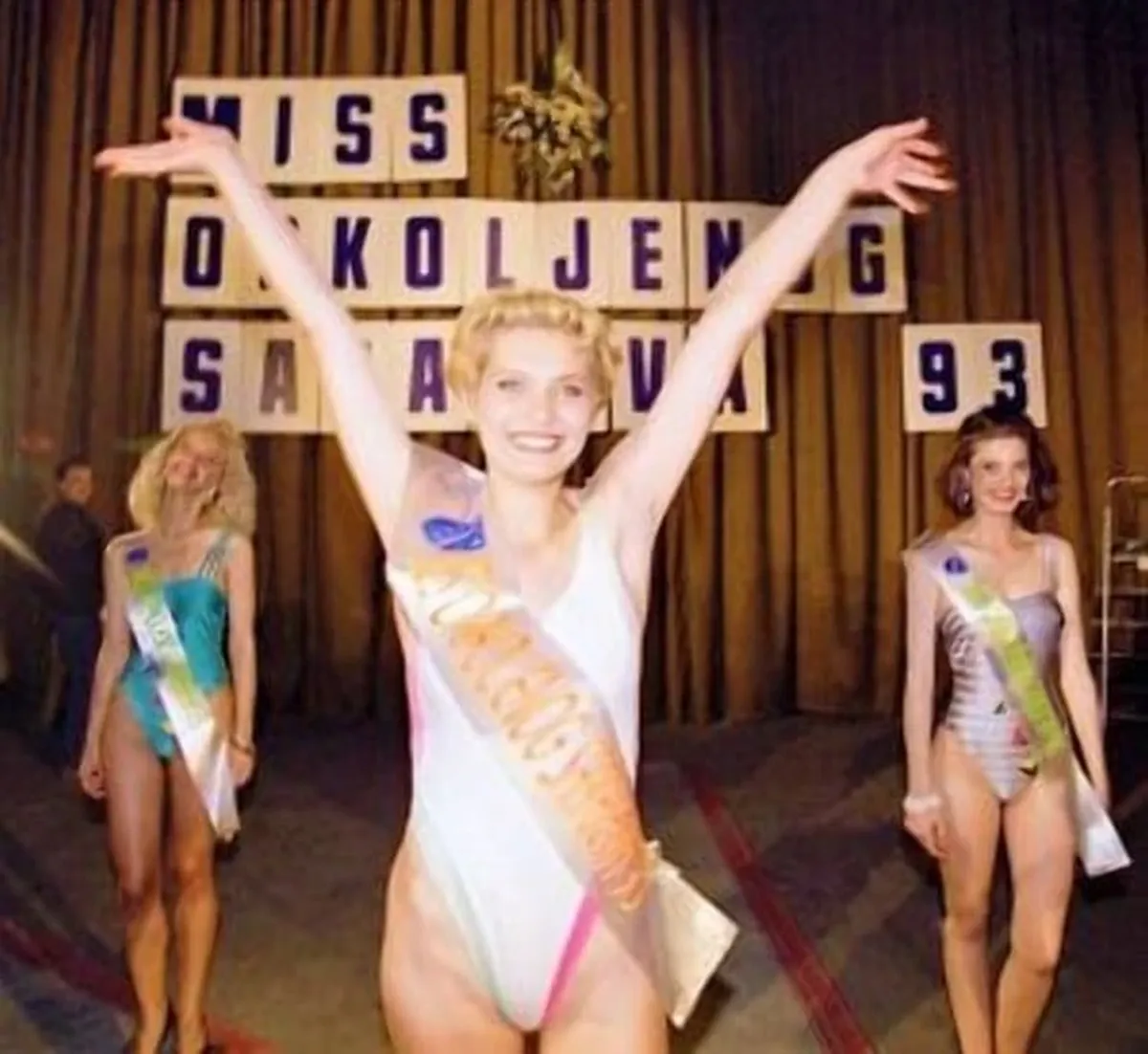
The winner of the “Miss Besieged Sarajevo ’93” contest was Inela Nogić.
Today, Inela lives in Amsterdam with her second husband, has two children, and worked in the European modeling industry. At the contest finale, Bosnian women carried a huge banner that read: “DON’T LET THEM KILL US.”
By a stroke of luck, Bill Carter got his hands on a small handheld video camera sent from the United States and used it to record the contest. That footage later became the 33-minute documentary Miss Sarajevo.
Moved by the story, Bono, U2, and the band’s then-producer Brian Eno recorded the song “Miss Sarajevo” under the project name Passengers. One of the music videos for the song stitches together footage from the beauty contest, images of burning Sarajevo, and images of civilians making quick, perilous dashes through the besieged streets. Here is that video:

Legendary tenor Luciano Pavarotti sang on the track, a pairing that brought powerful attention to what was happening in the heart of Europe. A few years later George Michael also performed the song.
The Passengers single was released in September 1995, with a photo of Inela Nogić on the cover. Six months later, on February 29, 1996, the four-year siege of Sarajevo ended — almost exactly four years after U2 began the Zoo TV Tour.
On September 23, 1997, U2 played the Koševo Olympic Stadium in Sarajevo, the first foreign band to perform there after the siege. Inela Nogić was invited to the concert.

The cover of the single Miss Sarajevo
This story is also a reminder of a strange, sobering fact of modern history: after two world wars in the 20th century — the first of which began in Sarajevo — a siege and humanitarian catastrophe happened at the century’s end in a European capital. Tens of thousands of people appealed to the world, to politicians, and to the press with the same plea: “Don’t let them kill us!” They sent that message in many ways, and perhaps, in part, music helped it be heard.
It’s a story about not losing hope — even in the worst circumstances — and sometimes meeting those circumstances with a broad smile and a proud head held high, as Meliha Varešanović did.
In early May 2022, less than three months after Russian forces moved on Kyiv, Bono and The Edge unexpectedly visited the city and performed in the Kyiv metro. Even before the war, a U2 performance in Ukraine was a dream for many. We hope that dream will come true again soon — after our victory.
Bono and The Edge’s performance in the Kyiv metro, May 2022

