
 Gaby
GabyThe video’s creator is a molecular biologist by training, a director by passion, and a dreamer by nature. Hashem Al-Ghailli, a Berliner, is also a well-known video blogger, so he knows how to grab public attention with provocative projects.
Al-Ghailli’s concept, called EctoLife, has already stirred conversation in the media and scientific communities. Still, there’s nothing wrong with dreaming—especially when global population growth is slow, childbirth often leads to complications, and many couples can’t become parents.
The biologist says his so-called “childbearing farm” would be the next step after IVF (in vitro fertilization) in addressing infertility.
In his video, Al-Ghailli proposes a new perspective: having children grown in capsules. His project, EctoLife, developed with the help of artificial intelligence, offers expectant parents a relatively safe alternative to natural childbirth by eliminating many of the fatal complications associated with pregnancy.
How a science fiction baby production center works
About 300,000 women worldwide die each year from pregnancy-related complications, according to the World Health Organization. Al-Ghailli says EctoLife is designed to ease the suffering of expectant mothers and reduce the need for cesarean sections.
EctoLife is imagined as a massive, sci-fi-style center with 75 modern laboratories, each holding 400 capsules. The capsules are designed to precisely replicate the conditions inside a woman’s body. In a sterile laboratory where infections can’t enter, up to 30,000 babies could be born each year.
Each capsule is equipped with sensors that monitor the baby’s heart rate, oxygen saturation, temperature, breathing, and blood pressure. The artificial intelligence system detects potential genetic anomalies, Designboom reported.
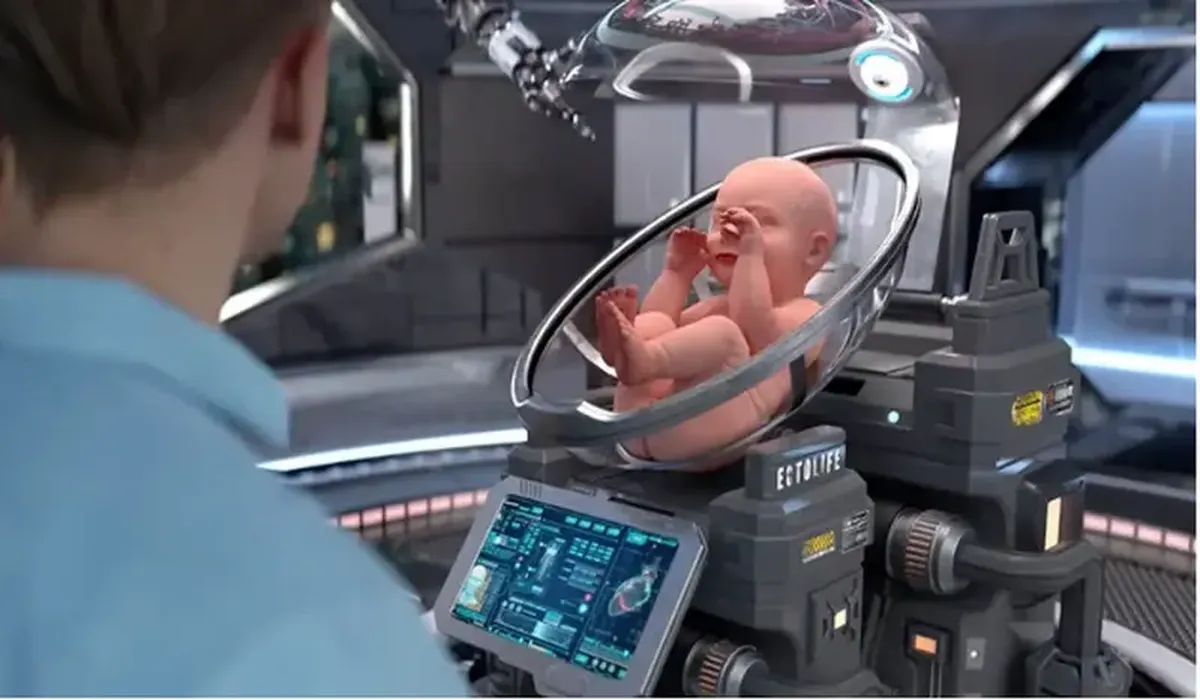
Al-Ghailli says the presence of such anomalies could be reduced to zero. Parents would “design” a viable, genetically healthy embryo using AI-powered gene editing, removing harmful genetic factors from the future child’s life.
Throughout the fetus’s development, parents can watch every stage in real time. They can record its development in slow motion and share the footage with friends. Each artificial womb is even fitted with internal speakers so the baby in the capsule can hear music or the voices of its parents.

A single button press would be enough to bring a child out of an artificial womb. That click triggers the release of fluid from the capsule and initiates birth.
Al-Ghailli says EctoLife farms could be in demand in countries with low population growth, such as South Korea, Bulgaria, and Japan.

