
 Gaby
GabyA new study by researchers at Brown University (USA) and the University of Bern (Switzerland) shows that iron in Martian rocks oxidized because of water—rather than by dry hematite oxidation, as previously thought.
“We tried to recreate Martian dust in the lab using different iron oxides. We found that ferrihydrite mixed with basalt best matches the minerals spacecraft have found on Mars,” said planetary geologist Adomas Valantinas.
Mars is well known to be iron-rich. It looks red because ancient iron-bearing minerals broke down and covered the planet in reddish dust—so much that Mars’ ruddy color is visible to the naked eye. There are several ways rocks can rust. Which one made Mars turn red?
What did the researchers report?
There’s no doubt that water once existed on the surface of the Red Planet. Rover evidence shows Mars was once marshy. But analyses of Martian dust collected by spacecraft have found no direct signs of that water.
Previously, scientists thought the color came from hematite, a mineral that can form in dry conditions and look red. In that model, hematite formed after surface water vanished.
Valantinas and his colleagues show that ferrihydrite — an iron oxide that forms rapidly in the presence of cold water — is a strong candidate for Mars’ color. Until now, researchers lacked evidence for ferrihydrite’s role on Mars, Science Alert reported.
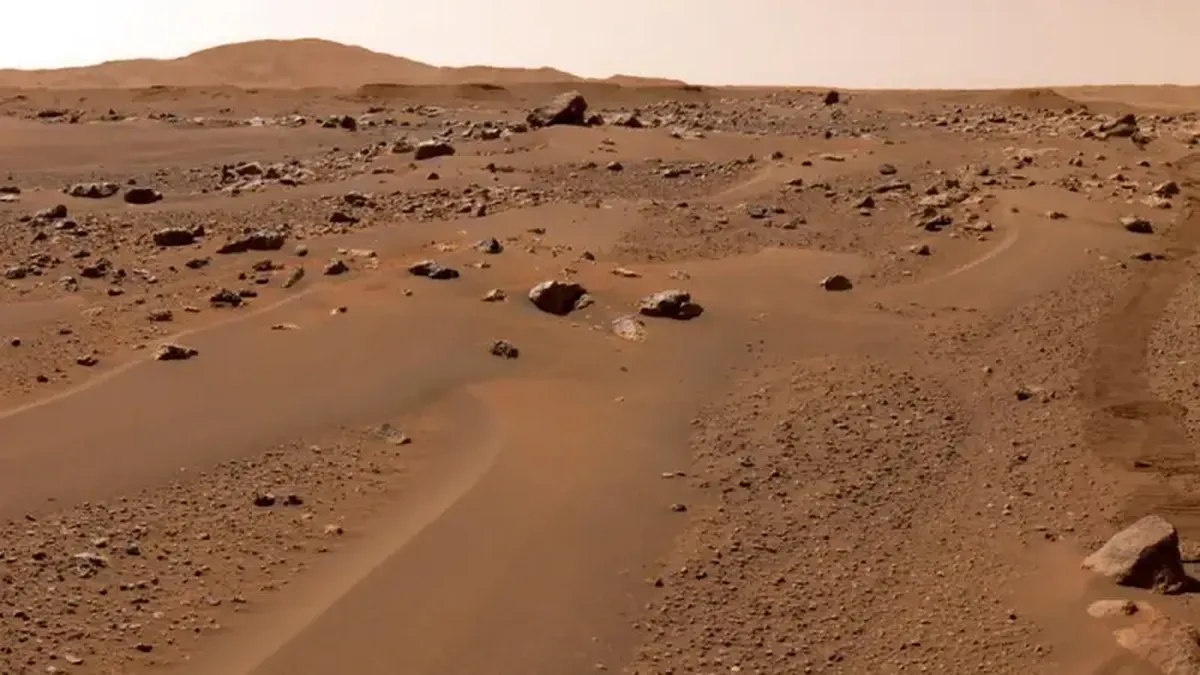
Martian dust
What did the experiment show?
Researchers analyzed data from several orbiters and compared their findings to Martian meteorites and long-term rover measurements. The results point to ferrihydrite as a likely contributor to oxidized iron on Mars.
Using a powerful mill, they ground samples of oxidized iron down to dust-sized grains like those on Mars, then analyzed them with the same techniques used on Martian dust.
The crushed samples matched ferrihydrite (Fe5O8H · nH2O) better than hematite. That suggests the minerals formed when Mars still had water, then were broken down and spread across the surface while retaining a water-related signature.
So now scientists will have to adjust their understanding of the geological history of the Red Planet.
“Mars is still a red planet; our understanding of why has changed. Since ferrihydrite can only form when surface water is present, Mars started rusting earlier than we thought. Ferrihydrite also remains stable under current Martian conditions,” Valantinas said.
The findings still need confirmation, but that may come soon: samples of Martian rocks have been collected and await return to Earth labs.
“By analyzing these samples, we’ll be able to measure how much ferrihydrite the dust contains and what that means for the history of water — and for the possibility of life on Mars,” said Colin Wilson, a physicist at the European Space Agency.
The results of the study were published in the journal Nature Communications.
