
 Gaby
GabyResearchers at Lund University found that the bogong moth—an Australian species known scientifically as Agrotis infusa—navigates by the stars. Each year these insects embark on an epic journey across Australia. When spring warms, billions of bogong moths take to the night skies, traveling approximately 1,000 kilometers to the cool, high-altitude caves in the Australian Alps, places they have never visited before. There, they enter a state of summer dormancy (estivation) to wait out the heat before dispersing to mate in the fall. Scientists have long been fascinated by how bogong moths reliably find their way to these caves. With a lifespan of only one year, their route must be somehow precisely programmed.
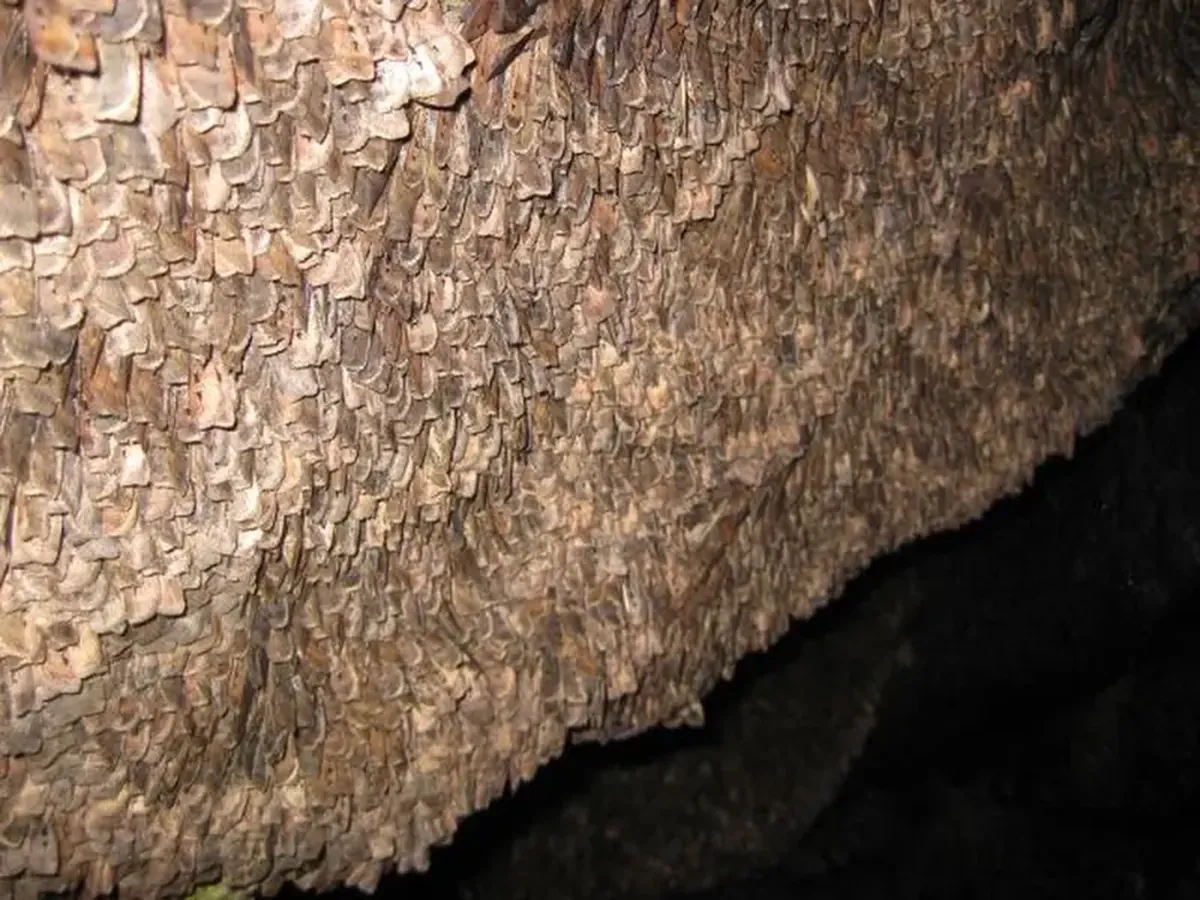
The puzzle is solved: they are guided by the stars
For long-distance navigation, animals rely on different cues. Previous studies by the university team, led by David Dreyer and Eric Warrant, showed that bogong moths orient themselves in flight using the Earth’s magnetic field and visual signals. However, recent findings indicate that magnetoreception plays a less significant role in this process than researchers previously believed.

The team conducted a series of experiments to determine which visual cues this moth uses. They employed a Helmholtz coil system to neutralize the Earth’s magnetic field and then projected a starry sky onto the ceiling of a closed chamber—essentially a “planetarium.” They observed that the moths flew north, just as they do in natural conditions. While displaying images of stars, the researchers simultaneously recorded the brain activity of the insects. ‘A very fine glass electrode (thinner than a human hair) is inserted into specific areas of the moth’s brain, penetrating the cell membrane of certain neurons associated with navigation. The signal or electrical activity of such a neuron is amplified and recorded for further analysis,’ Dreyer explained. Thus, the moths’ neurons responded to changes in the starry sky, allowing the insects to confidently fly in the correct direction, as reported by Science Alert.
The journey of the bogong moth lasts several weeks. If a moth does not reach the cave by summer, it will not survive to the next breeding season. Researchers are still uncertain which stellar cues the bogong moth relies on for navigation. However, the team’s research demonstrated that without a magnetic field—but with a starry sky—the moths can still find the right path. Several unanswered questions remain for future studies. First, how does the Agrotis infusa moth know which direction to move? Second, how does it know when to stop? ‘It’s astonishing that such a tiny insect, with a wingspan of 5 cm and a brain the size of a tenth of a grain of rice, manages to fly about 1,000 km at night, simply using the stars to determine its course,’ Dreyer said. The results of the study were published in the journal Nature.
