
 Gaby
Gaby
The discovery was announced by members of the Egyptian-American mission to preserve the monuments of South Asasif, operating under Egypt’s Ministry of Tourism and Antiquities.
In the South Asasif necropolis in Luxor, researchers discovered a tomb dating back to the Middle Kingdom (2040-1783 BC). This is the first Middle Kingdom tomb found in this area. The burials date to between the 20th and 18th centuries BC.
Archaeologists uncovered an astonishing collection of burial artifacts that reflect the wealth of those interred there.
What Did the Researchers Reveal?
The tomb, hidden for millennia near the Temple of Hatshepsut, sat right under the noses of tourists and archaeologists — and contained 11 burials of men, women, and children.
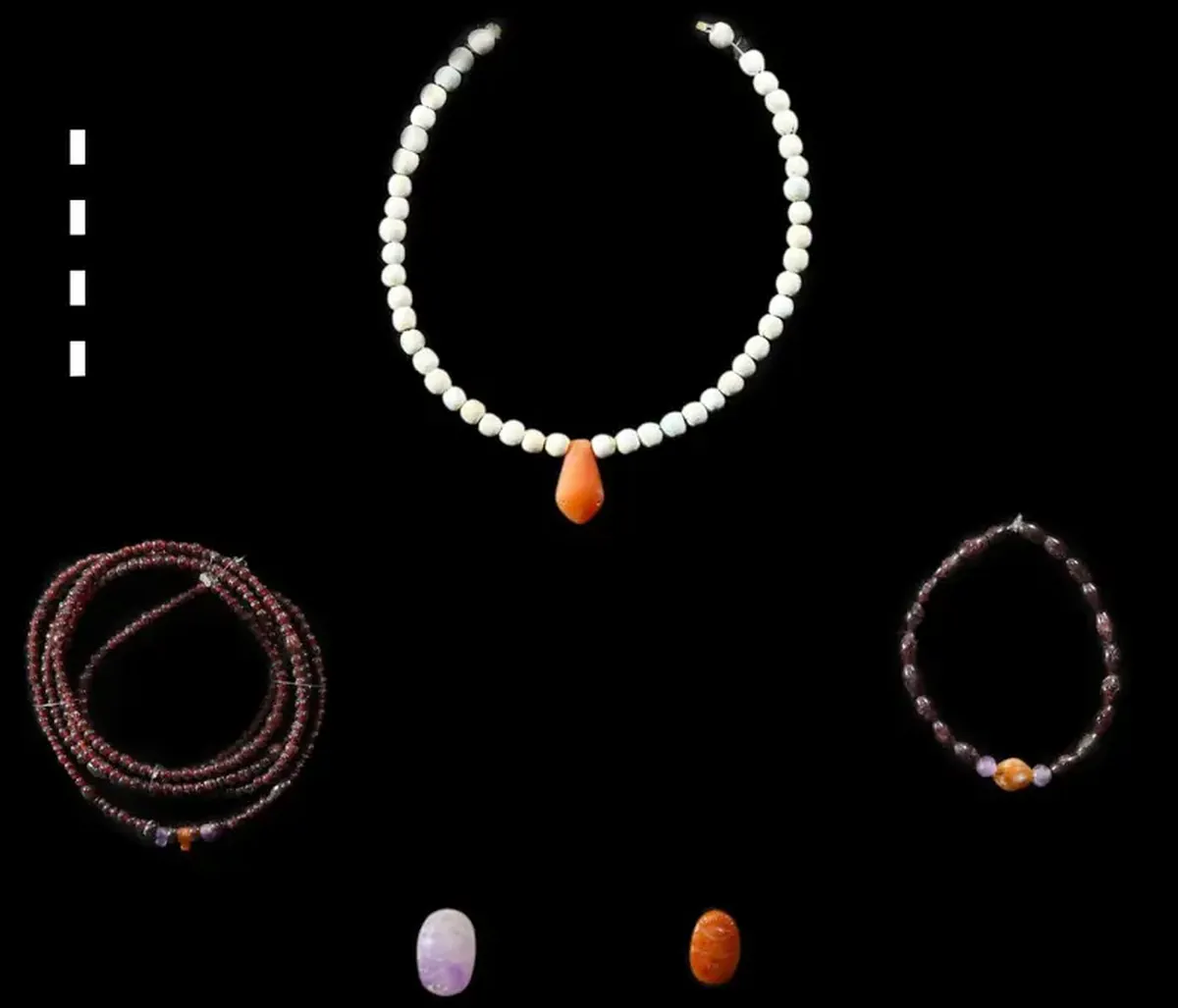
The female graves held exquisite jewelry in excellent condition. Among the items were necklaces, amulets, scarab rings, belts, two copper mirrors with ivory handles, and bracelets made of semi-precious stones.
Elena Pishikova, head of the excavation and director of the South Asasif Cultural Heritage Preservation Project, said in a press release, “One of the mirrors found has a handle shaped like a lotus, while the other features a rather rare depiction of the four-faced goddess Hathor, shown as a woman with pronounced facial features.”
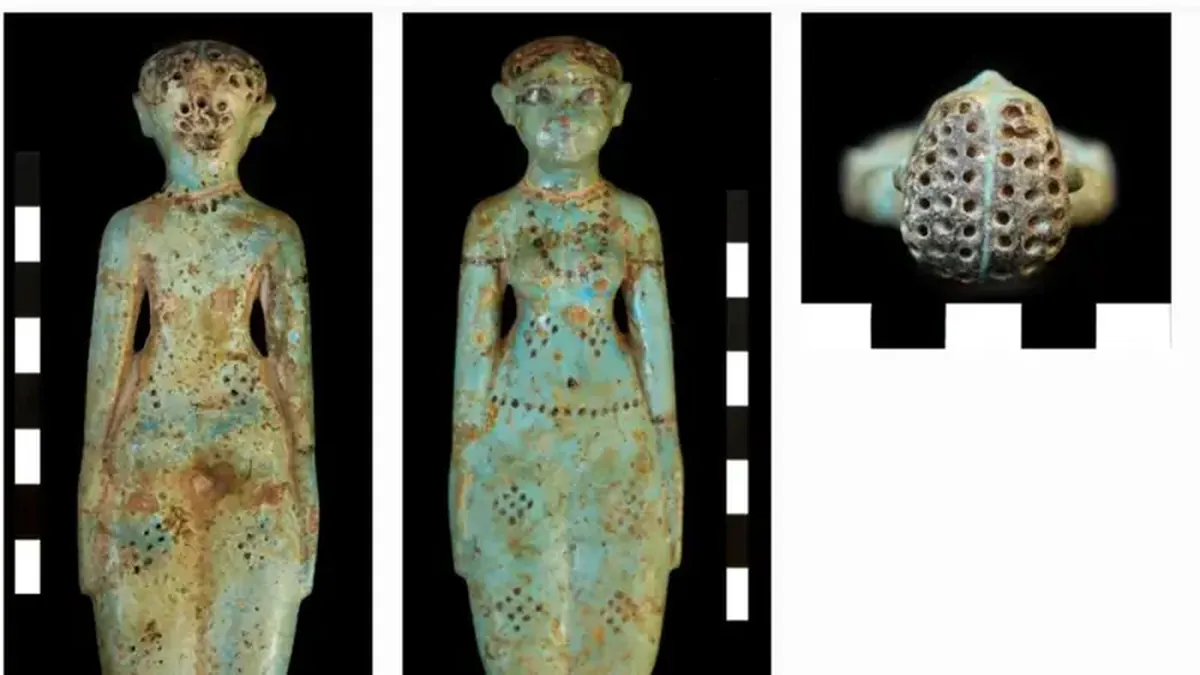
The team found amulets shaped like a hippopotamus head, a hawk, a snake, and other Egyptian deities. They were particularly struck by a necklace of 30 amethyst barrel beads with an amazonite amulet at its center, and a belt of round carnelian beads. Another notable find was a faience figurine that likely symbolized fertility, Arkeonews reported. The excavation leader said the figurine is well crafted and richly decorated; its head is pierced with holes for attaching “hair” made from roughly 4,000 clay beads found nearby.
The team suggests the tomb served as a family burial site for a wealthy household over several centuries. Most of the jewelry came from the female graves, while one man and the children were buried without grave goods.
In contrast, one male burial contained another stunning necklace made of 40 faience spherical beads and two cylindrical carnelian beads, framing an amulet in the shape of a hippopotamus head.
