
 Carlos Solis
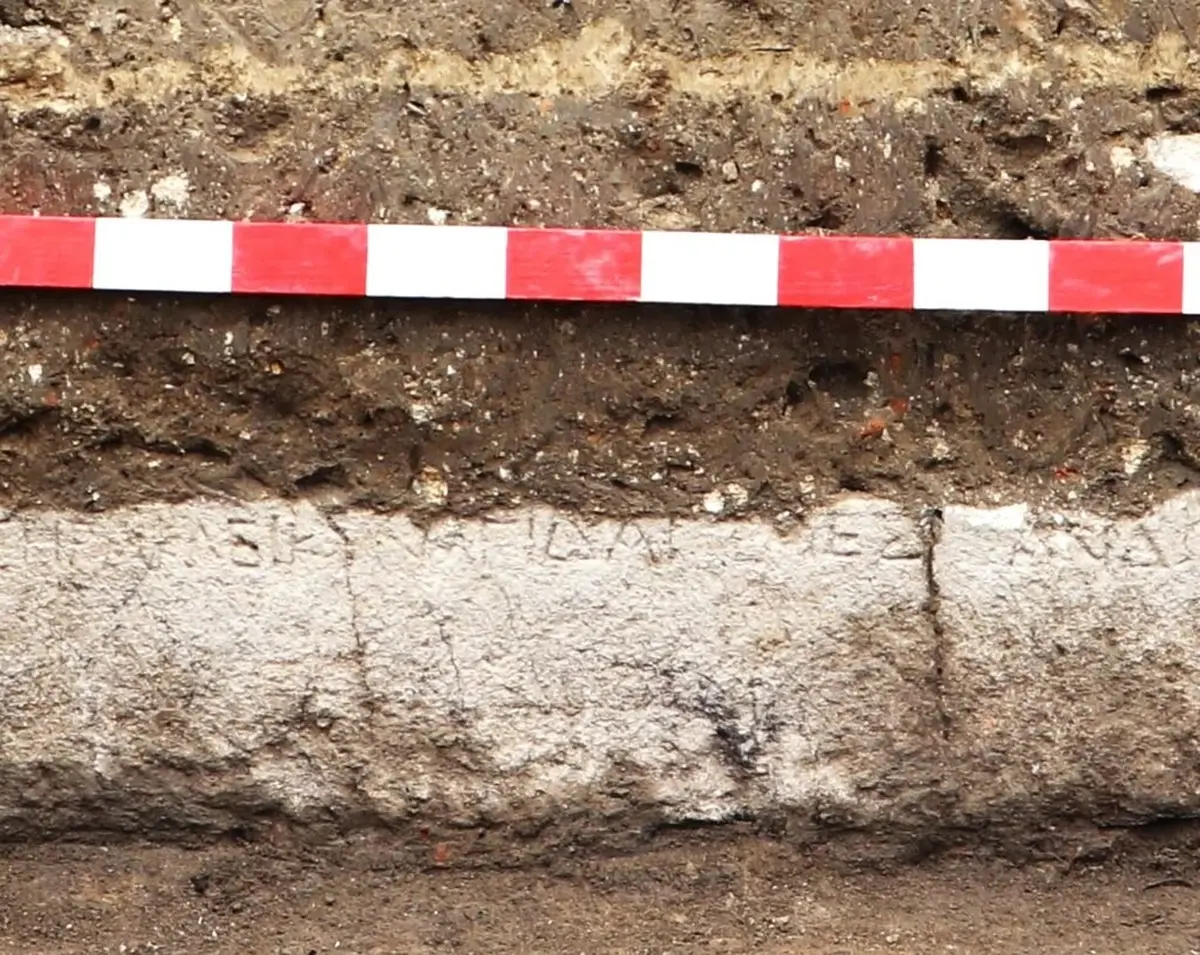
Archaeologists found an inscription cut into a large stone cup. The vessel is only partially preserved, but the text is clear enough to identify the dedication with confidence.
Beneath the inscription, archaeologists noticed a shield relief typical of ancient Macedonian iconography. Similar shield shapes appear on Macedonian coins and other artifacts. On the opposite side of the vessel, archaeologists saw part of another figure — likely a horse’s head or a boar.
That combination — the hemispherical animal motif alongside a Macedonian shield — suggests the cup wasn’t a household object but part of ritual equipment and a planned cult display.
Archaeologists found the cup near an altar where they had deciphered another inscription a few days earlier. That text contained a dedication to Heracles the Hunter. The excavation team estimates both monuments probably date to the same period and may have belonged to the same ritual complex.
The Cult of Ancient Gods
The stone cup, the shield emblem, and the repeated dedication to Heracles Kynagidas tie the inscription, imagery, and ritual space into a single archaeological context. This strengthens the idea that the cult of Heracles held a visible place in Heraclea Sintica’s public and sacred life.
Heraclea Sintica sits near the village of Rupite, close to Petrich, in a region that in antiquity lay on the border between Macedonia and Thrace. The city became an important urban center in ancient times and later continued under Roman rule. Its name preserves the Sinti, a Thracian group associated with the wider Sintica area.
This site is one of Bulgaria’s most thoroughly studied archaeological projects. Earlier investigators found inscriptions, statues, public buildings, and other signs of urban planning that reveal a cultural layer blending Macedonian, Thracian, Greek, and Roman traditions.
The new find joins recent discoveries at the site, including a marble torso and part of a goddess statue. Excavations continue, and archaeologists are documenting each find’s context to date and interpret the ritual structures and associated objects more precisely.
For now, the stone cup adds another artifact to the complex picture of Heraclea Sintica as a city where older heroic cults remained part of public and religious life.
This article draws on reporting from Arkeonews.
