
 Gaby
Gaby
Archaeologists have uncovered what may be the oldest example of woodworking, created nearly half a million years ago. This remarkable find provides clear evidence that Stone Age people began constructing wooden structures from tree trunks earlier than previously thought possible.
Stone Age Woodworking Sample
Researchers discovered two interlocked logs connected by a deliberately carved notch, along with a collection of wooden tools at Kalambo Falls in Zambia. The upper log was shaped, and both logs showed clear tool marks.
Experts think those early carpenters used logs to build a raised platform or walkway to stay dry on a periodically wet floodplain. It’s also possible the wood formed an early foundation for simple dwellings.

The wooden structure, dated to around 476,000 years ago, could be the oldest known example of wood used in construction. Wooden artifacts from the early Stone Age are rarely preserved because they require exceptional conditions to avoid rotting; in this case, preservation happened thanks to a high water level.
A Discovery That Changes Our Understanding of Stone Age Humans
Professor Larry Barham of the University of Liverpool, who led the research, told the Daily Mail this discovery changes how we view our early ancestors. He urged moving beyond the label “Stone Age” and recognizing that these people made significant, new things out of wood.
Barham says our ancient ancestors used their intelligence, imagination, and skill to create objects they had never seen before—modifying their environment to make life easier, even if it was only a platform to sit by the river and carry out daily tasks. He thinks these people were more like us than previously assumed.

Until now, most evidence of human wood use was limited to spears, digging sticks, or fuel for fires. The idea that wood was used to build platforms or foundations challenges the common belief that Stone Age people were strictly nomadic.
The age of the finds was determined by experts from Aberystwyth University (Wales) using new luminescence-dating methods that indicate when the minerals in the sand around the finds were last exposed to sunlight. Professor Jeff Daller of Aberystwyth University says these dating techniques let researchers reach much deeper into the past, helping piece together sites that illuminate human evolution.
A Brief History of the Stone Age
The Stone Age is a prehistoric period defined by the earliest development of stone tools and covers more than 95% of human technological prehistory. It begins with the earliest known use of stone tools by hominins—our ancient ancestors—around 3.3 million years ago.
Between roughly 400,000 and 200,000 years ago, innovation in stone-tool technology picked up speed, marking the Middle Stone Age. By then, hand axes were being crafted with greater skill.
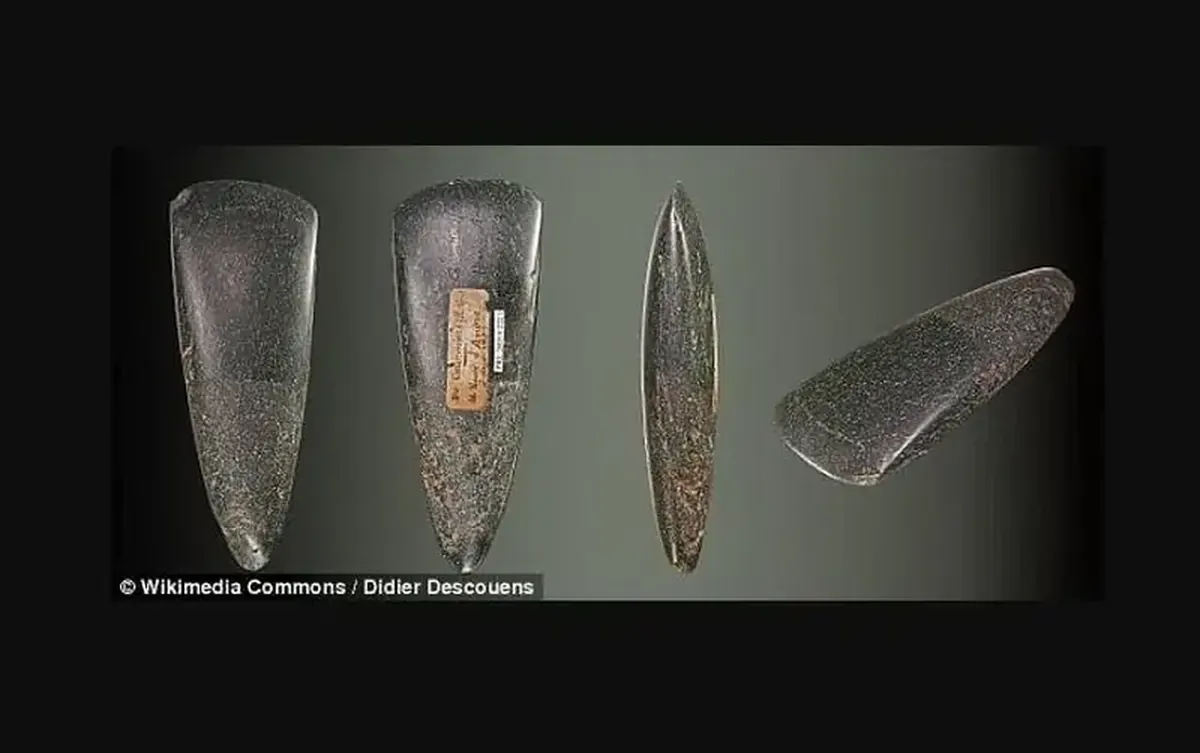
Eventually those large-core tools were replaced by smaller, more diverse toolkits that focused on flakes rather than cores. Similar toolkits appeared at least 285,000 years ago in parts of Africa and between about 250,000 and 200,000 years ago in Europe and parts of Western Asia. These toolkits persisted for between about 50,000 and 28,000 years.
During the Late Stone Age, innovation accelerated and craftsmanship improved. Homo sapiens groups experimented with materials such as bone, ivory, horn, and stone. This period, between roughly 50,000 and 39,000 years ago, coincides with the emergence of modern humans in Africa.
Different groups developed distinct cultural identities and their own manufacturing methods. Over the following millennia, Stone Age people and their technologies spread beyond Africa.
