
 Gaby
Gaby
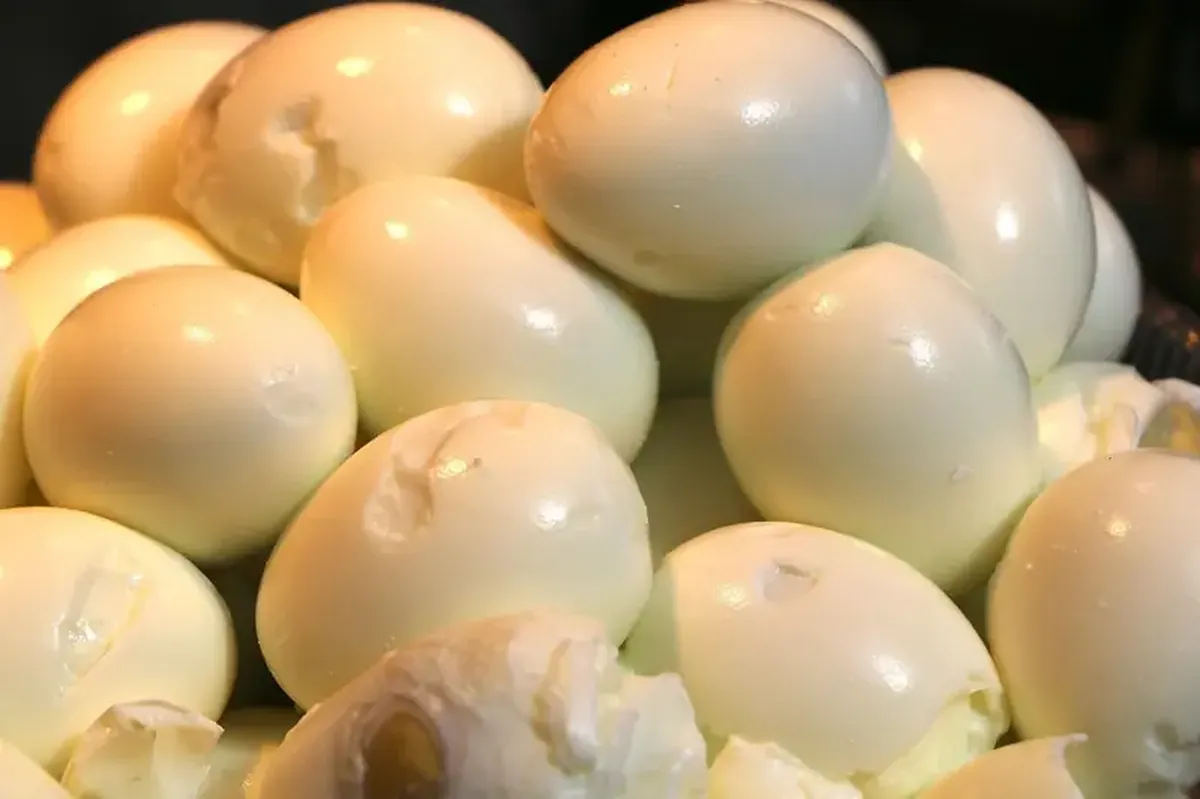
Peeling a hard-boiled egg can feel like a battle. Often the shell sticks to the white and leaves bits of sticky membrane behind.
Fortunately, science offers ways to make peeling easier. Paulomi Bery, a professor in the Department of Food Science at the University of Southern Queensland in Australia, explains why.
Factors Affecting Shell Separation
Eggs consist of a hard, porous shell, an inner and outer membrane, egg white, and a yolk encased in the membrane. Between the inner and outer membranes, adjacent to the shell, lies an air cell.
Researchers in the 1960s and 1970s looked closely at what affects how easily an egg peels after boiling. One key factor is the acidity level (pH) of the egg white. Half a century ago, researchers found that eggs are easier to peel when the pH of the white is about 8.7 to 8.9 — in other words, fairly alkaline.
Storage temperature also plays a role. A 1963 study showed that storing eggs at around 72°F (22°C) yields better peeling results than storing them at lower temperatures. However, keeping eggs at that temperature increases the risk of spoilage.
Less-than-fresh eggs tend to peel more easily than very fresh ones.
Tip One: Avoid Very Fresh Eggs
The difficulty in peeling fresh eggs comes down to a couple of factors. First, a fresh egg has a small air cell. As an egg ages, it loses moisture through its porous shell, the air cell grows, and the rest of the egg’s contents shrink. A larger air cell gives you more space to get under the shell, making peeling easier.
As eggs age, the pH of the white rises, which also makes them easier to peel.
Tip Two: Monitor Water Temperature
Some experts recommend starting eggs in hot water and then reducing the temperature as they cook. Do this only with eggs at room temperature; cold eggs are more likely to crack.
The idea is that exposing the eggs to higher temperatures at the start helps the membrane separate from the shell and the egg white.
After boiling the eggs for the desired time, cool them in ice water. That helps the egg white contract and pull away from the shell, making peeling easier.
Tip Three: Add Certain Substances to the Water
One common trick is adding salt to the boiling water. But one study showed salt helps mainly with fresh eggs and doesn’t improve peeling for eggs that have been stored a long time.
Try adding baking soda or vinegar to the cooking water. Baking soda raises the water’s alkalinity, which helps the membrane separate from the shell. Vinegar reacts with the eggshell’s calcium carbonate, loosening the shell and aiding its removal.
