
 Carlos Solis
“I’m shy, and that’s not going to change,” the actor who played some of cinema’s most iconic gangsters once admitted. Al Pacino’s biography is the story of a man who earned the rare “triple crown” of acting—an Oscar, an Emmy, and a Tony—along with four Golden Globes and many other top prizes, yet never flaunted his celebrity. Critics rank the star of The Godfather, Scarface, and Scent of a Woman among the greatest movie actors of all time, while Pacino himself called fame “a perversion of the natural human need for recognition.”
Why Al Pacino Doesn’t Have a Star on the Hollywood Walk of Fame
Colleagues often described him as an unpretentious loner, almost like someone raised by a pack of wolves. Pacino’s unusual acting style and defiant temperament in the early part of his career, especially in the 1970s, gave him a reputation as a raw rebel: he turned down promising jobs, refused to appear in commercials on principle, avoided political statements, and offered directors dozens of different takes on a scene. He wasn’t afraid to experiment, built roles on deep psychological work, was one of the first mainstream actors to play a gay character, saw a psychoanalyst, rode waves of success and drought, escaped into literature, composed music, and championed the theater.
A stage actor who helped reshape cinema, he said he “felt like an outsider in movies who somehow got inside, so he sees everything differently.” Pacino’s craft let him create unforgettable characters that left a mark on culture. Despite his massive influence on film, the 86-year-old recipient of the National Medal of Arts doesn’t have a star on the Hollywood Walk of Fame—his name on a sidewalk simply isn’t important to him. Critics see that indifference as part of Pacino’s charisma and the secret of his enduring appeal, which crosses generations, ethnicities, and social boundaries and makes him a hero to anyone who goes to the movies.
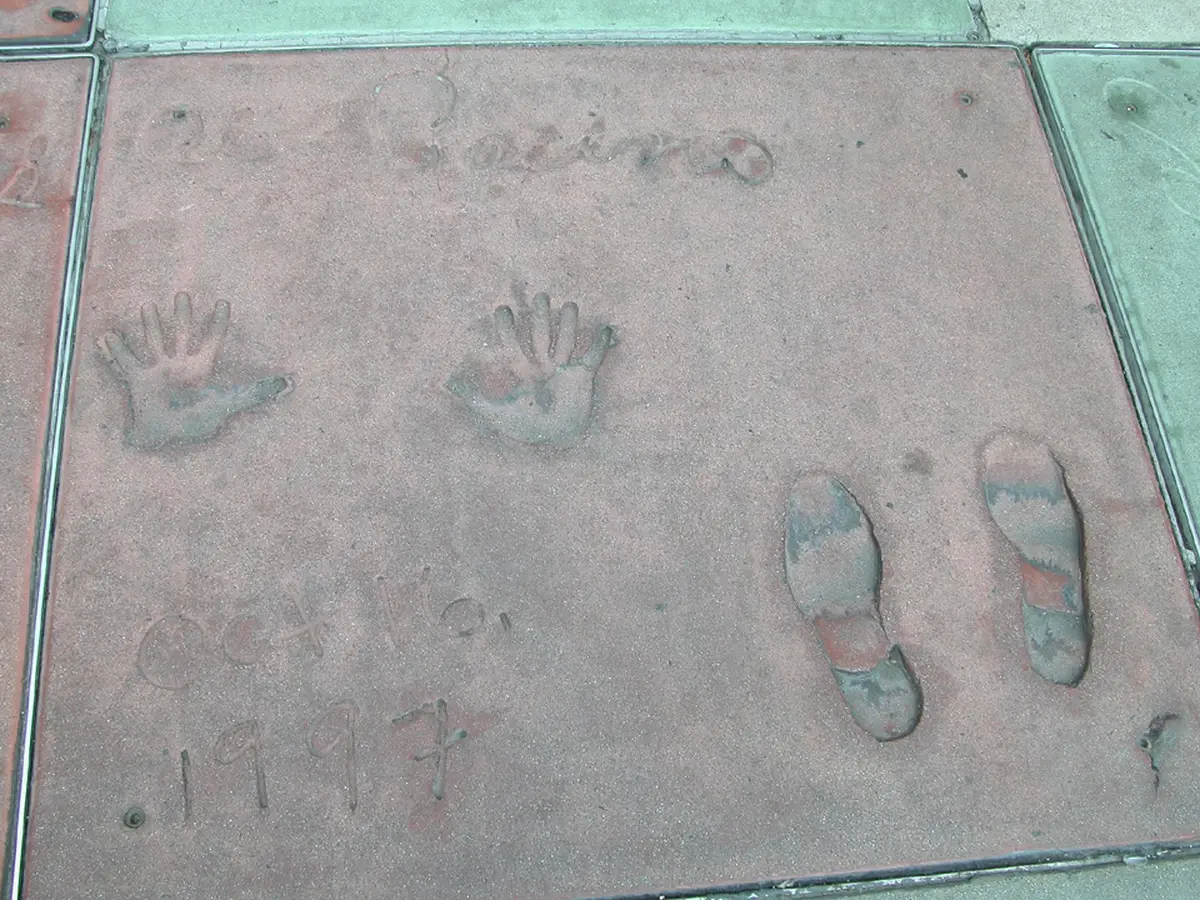
Al Pacino’s footprints and handprints at the forecourt of Grauman’s Chinese Theatre — not to be confused with the Hollywood Walk of Fame, where he has no representation
Al Pacino’s Awards and Honors
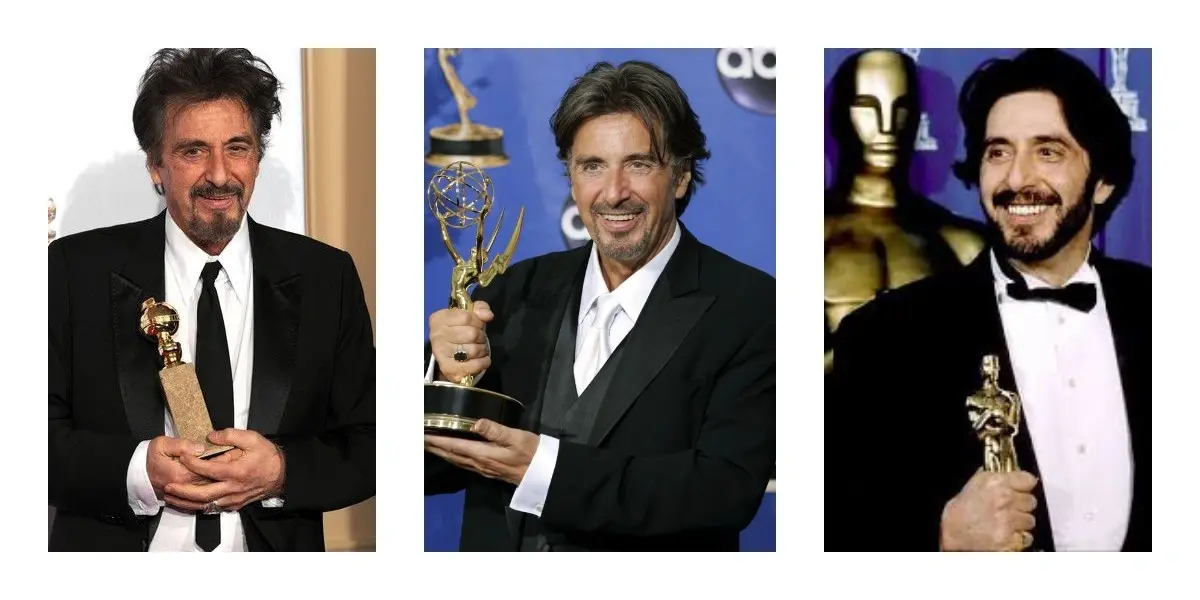
Pacino holds the rare triple crown of acting, covering the most prestigious awards in film, television, and theater:
- Academy Award (Oscar): He won the Oscar for Best Actor for Scent of a Woman (1992). In total, he has been nominated for this award nine times.
- Golden Globes: He has four Golden Globe trophies. His first win came in 1973 for playing cop Frank Serpico, and he also received a Golden Globe nomination for Bobby Deerfield.
- Emmy Awards: He is a two-time Emmy winner for Outstanding Lead Actor in a Miniseries or Movie for Angels in America (2003) and You Don’t Know Jack (2010).
- Tony Awards: He won two Tonys for outstanding stage performances in Does a Tiger Wear a Necktie? (1969) and The Basic Training of Pavlo Hummel (1977).
- Special honors:
- The American Film Institute’s highest honor for lifetime achievement.
- The U.S. National Medal of Arts.
Al Pacino’s Legacy
Pacino’s groundbreaking acting method and total devotion to his craft made him the heir to Marlon Brando, an icon of counterculture in the early 1970s, and a new American sex symbol whose Mediterranean looks and private temperament reshaped Hollywood’s idea of masculine beauty. At 83 he fathered his fourth son; he loved one woman deeply during his life but never married. The American Film Institute included Pacino on its “100 Heroes and Villains” list as a unique case—he’s one of only two actors to appear in both categories.
The Atlantic called the star’s career path “a compelling reflection of the highs and lows of the film industry itself”: “Al Pacino mirrored the fate of the rebellious New Hollywood movement that burst into the mainstream and then scaled up into blockbusters. He emerged as a commercially successful star and paid for that success with periods of creative burnout, became a master with his own acting method, and even became a frequent target of jokes—the arc of his filmography reads like an engrossing journey through the triumphs and failures of American cinema.”
What Makes Al Pacino a Great Actor
Many performers agreed to join projects only after Pacino confirmed he would appear. Keanu Reeves, Pacino’s co-star in The Devil’s Advocate, said Pacino had a huge influence on contemporary actors and on Reeves himself: Reeves even offered to take a much lower salary to help secure Pacino for the film. Modesty is a trait both actors share, which helped them win the public’s affection. Pacino’s sixty-year career in film and theater is an example of overcoming constant self-doubt about whether he deserved the audience’s attention. For that reason he long avoided interviews and always expected failure.
Pacino’s rise began on stage, where he quickly stood out and won two Tony Awards—Does a Tiger Wear a Necktie? (1969) and The Basic Training of Pavlo Hummel (1977). Two of his defining film roles in the 1970s came from director Sidney Lumet: honest cop Frank Serpico in Serpico (1973) (his first Golden Globe) and desperate bank robber Sonny Wortzik in Dog Day Afternoon (1975). The turning point in Pacino’s career was his 1972 portrayal of Michael Corleone in Francis Ford Coppola’s The Godfather. Although the studio initially didn’t see him for the role, his pairing with the legendary Marlon Brando became a cinematic benchmark, and that film forever changed Pacino’s life.
How Pacino Became a Legend
His role in an immortal masterpiece—one he habitually didn’t expect to succeed and one studio executives at first resisted casting him in—brought worldwide fame and redefined what a cinematic hero could be, making moral ambiguity and inner conflict central to dramatic storytelling. The Godfather Part II (1974) cemented his reputation as a transformative performer. Pacino became a cinema legend through his charisma and unique talent. He has also received the American Film Institute’s highest honor for lifetime achievement.
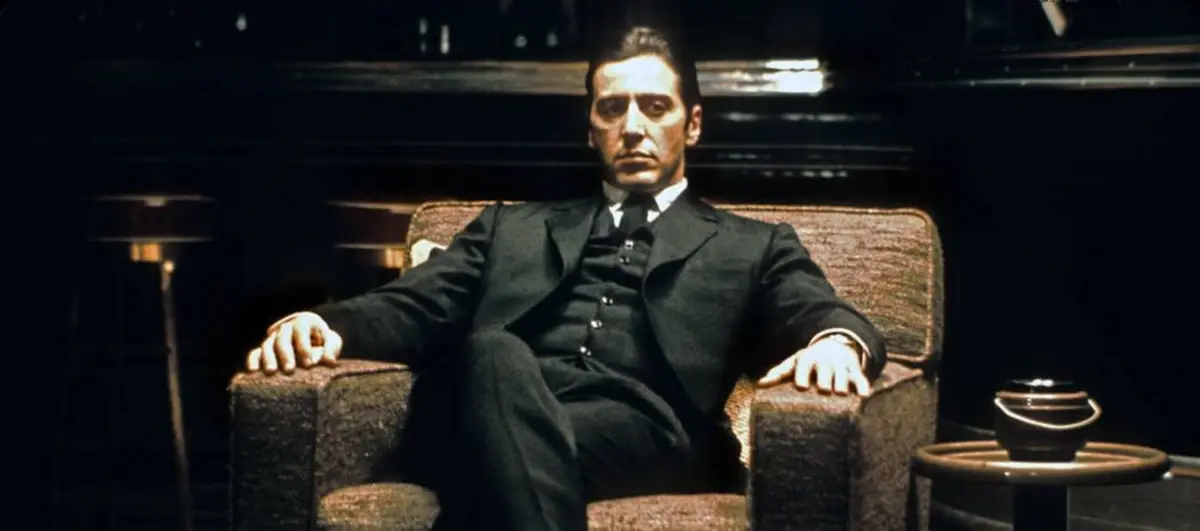
A still from The Godfather
Pacino’s acting, rooted in Lee Strasberg’s Method and taught at the Actors Studio in New York, builds on the Stanislavski system, where psychological and emotional truth comes from living the role using personal memories and emotional recall. With that approach Pacino created many signature stage and screen characters. His career spans more than five decades and continues today: since 1994 he has been a co-president of the New York Actors Studio, where he passes his experience to younger actors, and he still appears on screen well into his later years, maintaining his place near the top of the industry.
Al Pacino’s Best Roles
Beyond The Godfather, audiences remember Pacino for Scarface, The Devil’s Advocate, and many others. His Tony Montana in Scarface (1983), directed by Brian De Palma, became the archetype of the tragic antihero who will stop at nothing to succeed. Pacino’s portrayal of Carlito Brigante in Carlito’s Way (1993) embodied doomed romanticism. His role as blind Lieutenant Colonel Frank Slade in Scent of a Woman (1992) finally earned him the long-awaited Academy Award for Best Actor—Pacino’s one Oscar win after nine nominations.
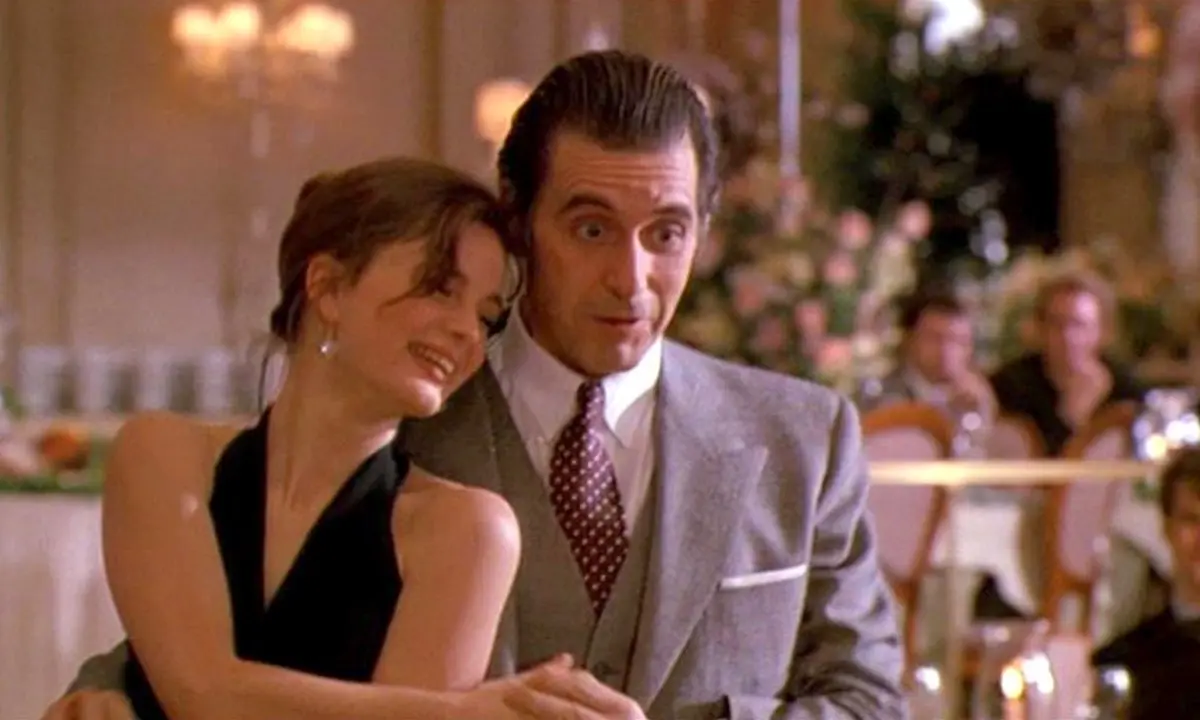
Al Pacino as blind Lieutenant Colonel Frank Slade in Scent of a Woman
Pacino constantly broadened his range. He acted in Shakespeare adaptations (including The Merchant of Venice, 2004), appeared in blockbusters (Ocean’s Thirteen, 2007), and conquered television—winning two Emmys for his portrayals of controversial lawyer Roy Cohn in Angels in America (2003) and the physician Jack Kevorkian, known as “Dr. Death,” in You Don’t Know Jack (2010). Pacino also directed: he made the documentary Looking for Richard (1996) and the feature films Chinese Coffee (2000) and Wilde Salome (2011).
Must-See Al Pacino Films
Across a sixty-year career Pacino created several iconic roles that became benchmarks of world cinema:
- The Godfather (1972) — His role as Michael Corleone was a career-defining breakthrough that brought worldwide fame.
- Serpico (1973) — He played honest cop Frank Serpico, earning his first Golden Globe.
- The Godfather Part II (1974) — The saga’s continuation where Pacino demonstrated his transformative acting as a mafia boss.
- Dog Day Afternoon (1975) — A drama about desperate bank robber Sonny Wortzik.
- Scarface (1983) — His creation of Tony Montana became the archetype of the tragic antihero.
- Scent of a Woman (1992) — His portrayal of blind Lieutenant Colonel Frank Slade won him the long-sought Academy Award.
- Carlito’s Way (1993) — His performance as Carlito Brigante embodied doomed romanticism.
- The Devil’s Advocate (1997) — A supernatural drama where his partnership with Keanu Reeves highlighted his incredible charisma.
An American Sicilian
Al Pacino is an American of Italian-Sicilian descent. His father came from San Fratello and his mother from Corleone. Pacino is a second-generation Sicilian and does not speak Italian, considering English his native language. His heritage and fiery temperament often prompted comparisons to other famous Italian-American actors. Both grew up in difficult circumstances and made their roots part of their public persona.
Alfredo James Pacino was born on April 25, 1940, in East Harlem, a tough neighborhood of New York, into a poor Sicilian immigrant family—Rose Gerardi and Salvatore Alfredo Pacino. Pacino’s emotionally fragile mother couldn’t handle the responsibility of raising him and moved back in with her parents, so for the first two years he lived with his father’s family. In 1942, when the United States entered World War II and his father was drafted, Pacino moved to the South Bronx to live with his maternal grandparents.
When his father returned from the war in 1946, he failed to rebuild the family life, moved to California, and limited contact with his son to occasional visits. Growing up without siblings made Alfredo even more withdrawn. Entertainment in his childhood was scarce: at home the boy listened to records and amused the family by mimicking what he heard. His mother nicknamed him “Sonny” after Al Jolson’s popular song “Sonny Boy” (that nickname would later appear on Pacino’s autobiography). At five, after going to the movies with his mother, he cheered adults up by imitating a scene of a drunk searching for a bottle—a spoof of the self-destructing alcoholic in the film The Lost Weekend.
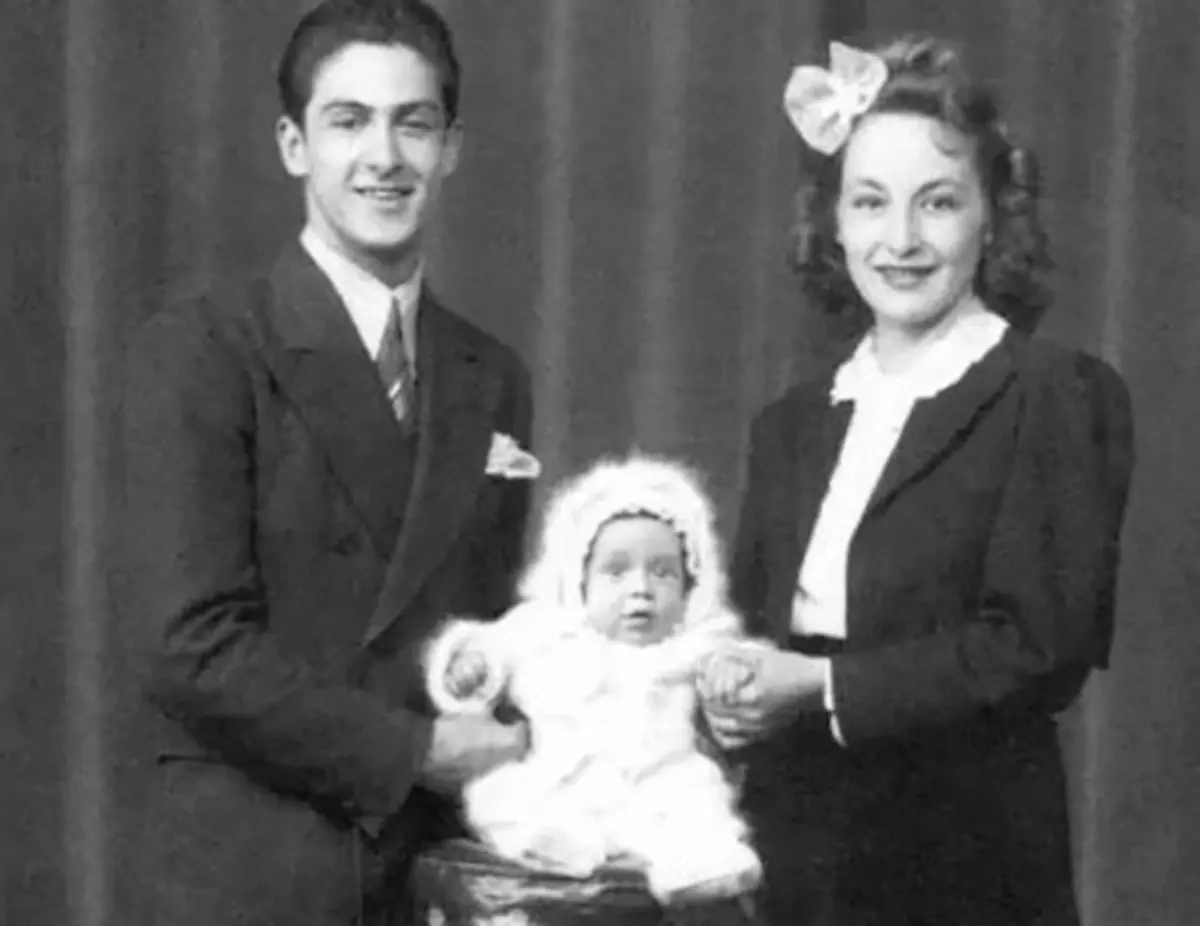
Young Al Pacino with his parents
The Nickname “Actor”
At six he witnessed an ambulance take his mother to a psychiatric clinic after she attempted suicide. By nine he was smoking with his street friends, and by thirteen he was drinking alcohol and using marijuana. Three of Pacino’s friends died of heroin overdoses, and fate steered him away from trying hard drugs; he later credited his mother for being the only person who kept him from a life of crime, violence, and needles. Pacino loved baseball—he played for a semi-pro team called the Red Wings in the Police Athletic League—and in school he earned the nickname “Actor.”
In eighth grade his drama teacher, Blanche Rothstein, spotted a spark and invited him to appear in school plays. After one performance someone in the audience called him “the next Marlon Brando.” After high school, Pacino studied for two years at the High School of Performing Arts in Manhattan. At 18 he joined Herbert Berghof’s studio, where Charlie Laughton became his mentor and taught him sensory techniques borrowed from Lee Strasberg. “He was about ten years older than me and became a friend who replaced my father,” Pacino said of his first teacher.
Early Career and Study at the Actors Studio
Pacino’s mother saw acting as “ambition for the rich” and could not support her son financially or emotionally because she suffered from an anxiety neurosis and needed treatment. Pacino worked odd jobs—handyman, dockworker, postal clerk, studio cleaner, and janitor. He often went hungry and lived off leftovers from the restaurant where he worked as a busboy. He sometimes slept at friends’ places, in theaters, or even on the street. One of the few steady spots where he stayed for years was the office of Commentary magazine. At 22 he lost both his mother and his grandfather. “When the two most important people in my life were gone, it threw me into an abyss,” he later recalled.
After a string of setbacks, in 1966 Pacino auditioned for the Actors Studio—a training ground for professional actors, directors, and playwrights—where he studied the Method (the American adaptation of the Stanislavski system) under Lee Strasberg, who later appeared with him in The Godfather Part II. Jack Nicholson followed a similar path at the Actors Studio, which helped make both actors symbols of a new intellectual approach to acting in Hollywood.
“The Actors Studio meant everything to me,” Pacino said. “After Charlie Laughton it was my second start and the most important turning point in life, when I finally left the odd jobs behind, found a place to grow, and met my people.” By 1969 Pacino had won a Tony for Does a Tiger Wear a Necktie?, made his screen debut in Me, Natalie, and attracted Francis Ford Coppola’s attention, who would launch him as a film star.
Pacino’s Early Roles and Paychecks
The global star emerged as “Broadway’s most promising new actor.” “I started in theater for $125 a week, and only at 26–27 did I finally get a steady income; before that I had no idea where my next meal would come from,” Pacino said, admitting money didn’t make him happier. “When I started earning, it was nice simply not to starve. Only many years later did I buy a house in the country. I was lucky—I never became obsessed with money and things.” Early on he wrote comic sketches and did stand-up, which he later called a freeing period. His first paycheck over $1 million came for his role as the obsessed and lonely racecar driver Bobby Deerfield in Sydney Pollack’s romantic drama Bobby Deerfield (1977); that role earned a Golden Globe nomination.
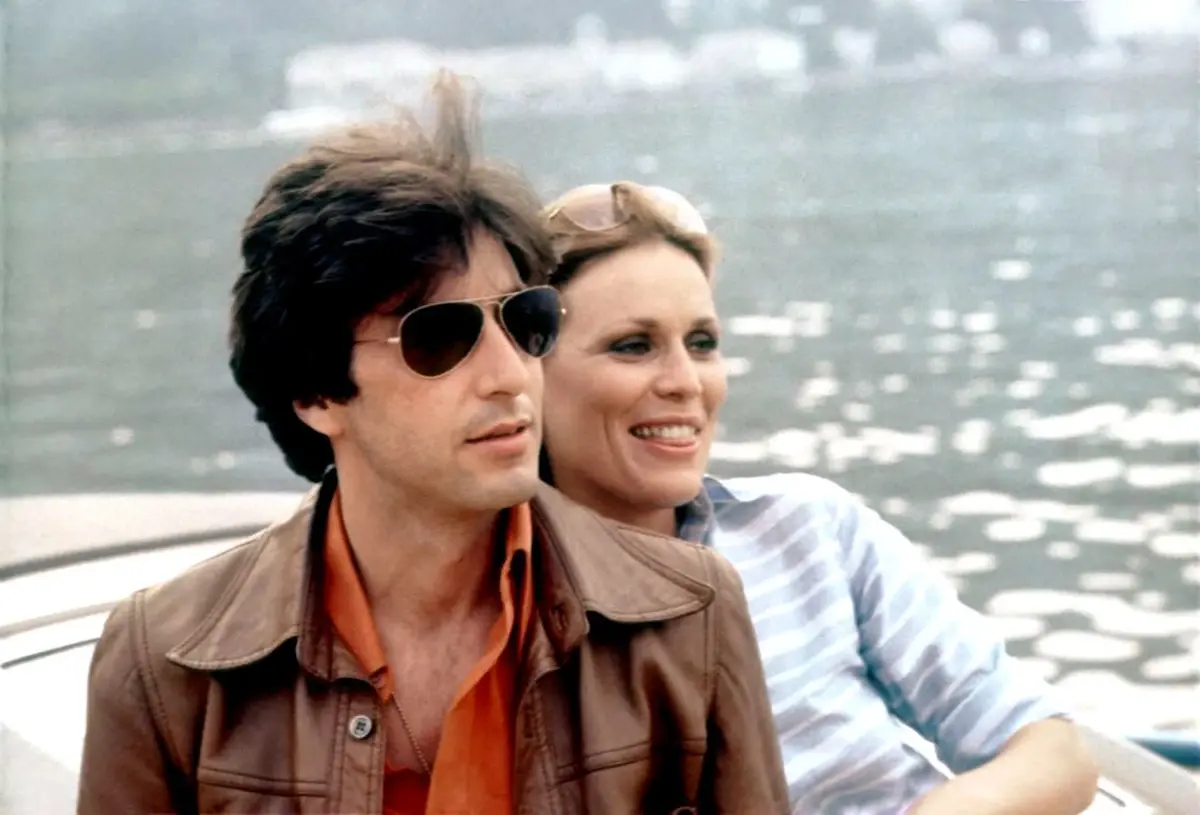
Al Pacino in Sydney Pollack’s romantic drama Bobby Deerfield
“Like my character, I felt very lost in life,” Pacino said, remembering how he would interrogate a director about a role until the director lost patience. Pollack compared Pacino’s work style to “a dog on a scent.” The actor could present twenty different approaches to a scene, akin to trying on costumes. Not chasing wealth, Pacino threw himself into roles until exhaustion and then sometimes retreated from film for years to return to the theater, which didn’t harm his movie career. “Shakespeare is one reason I keep acting,” he said. On stage he could perform up to sixteen times a week, while in film he was free to take a year off by choice. At times he turned down parts that would have made him mega-famous: he declined roles in Star Wars, Apocalypse Now, and Kramer vs. Kramer.
Al Pacino’s Life Offscreen
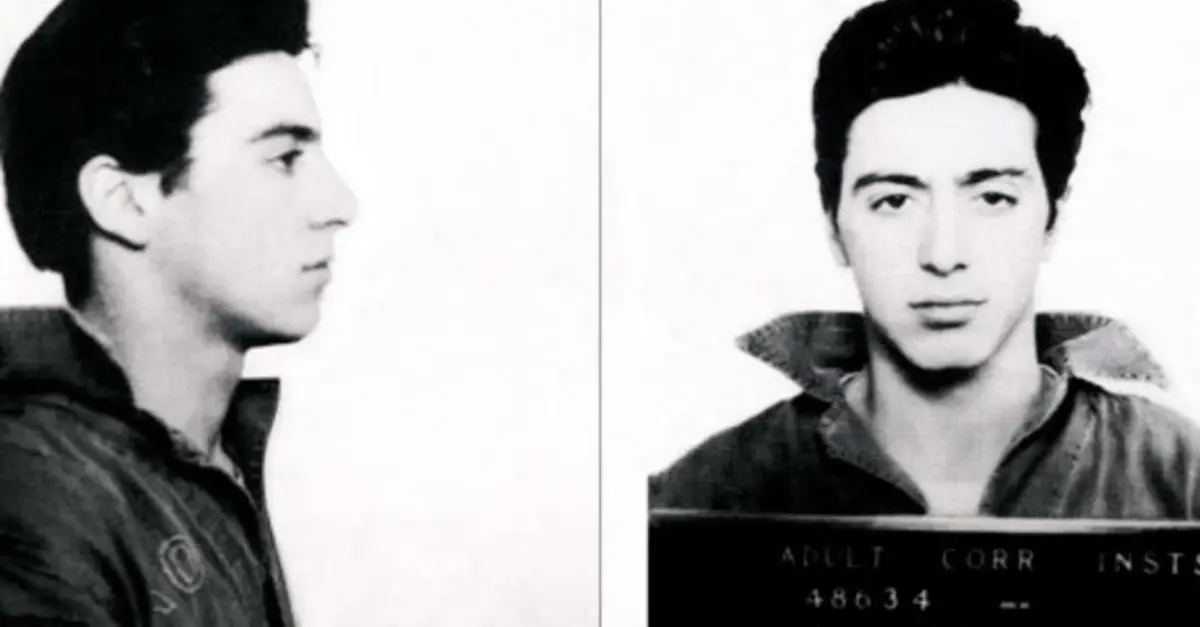
Pacino remains one of Hollywood’s most private stars—he rarely shares personal details and focuses on his craft. But he’s known for a colorful life outside the screen. At 20 he spent three days in jail after police found a gun in his car; he claimed it was a prop for a play.
Personal details occasionally surface in the press, and despite his advanced age the number of Pacino’s children has grown. The never-married actor now has four children.
Pacino’s children:
– daughter Julie Marie (born 1989) with acting teacher Jan Tarrant;
– twins Anton James and Olivia Rose (born 2001) with actress Beverly D’Angelo;
– son Roman (born 2023) with Noor Alfallah, whom Pacino began dating in 2022.
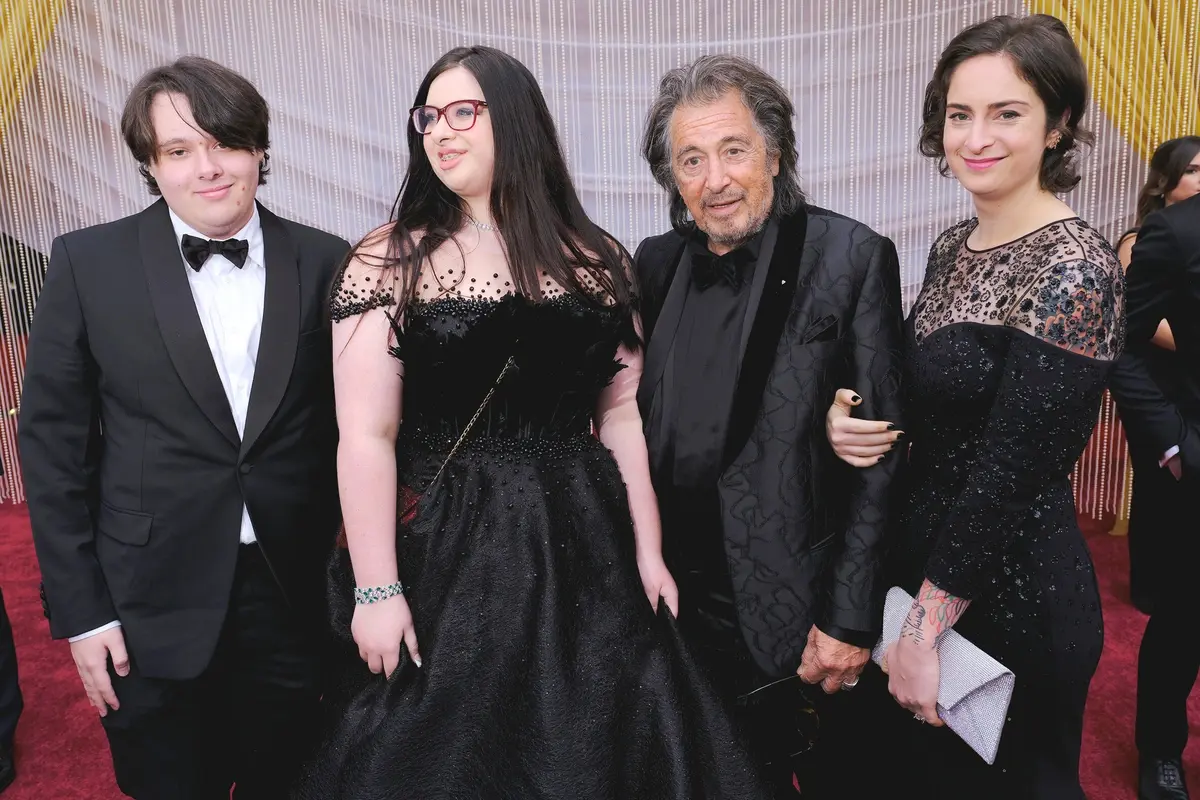
Al Pacino with his adult children
As a partner, Pacino has said, “I’m getting older, and my girlfriends are getting younger.” Actress Lucila Sola was 39 years younger than him; his most recent public relationships have involved partners many years his junior. He and some partners have split and reunited at times.
“Scent of a Woman”: Pacino’s Private Life and Defining Romances
Although he was considered one of Hollywood’s most desirable men, Pacino never married. His private life is a story of long, deep relationships—mostly with fellow actors who shared his passion for the craft.
Diane Keaton: The Love of His Life
The most significant relationship in Pacino’s life was with Diane Keaton. They met in 1971 on the set of The Godfather, where they played a married couple. Their on-and-off relationship lasted nearly 20 years. Keaton said she was struck by Pacino’s beauty and talent, seeing him as “a lost orphan.” Even after their final split in 1990 they kept warm feelings: Pacino publicly professed his love for her at awards ceremonies, and journalists still cite Diane as the most important woman in his life.
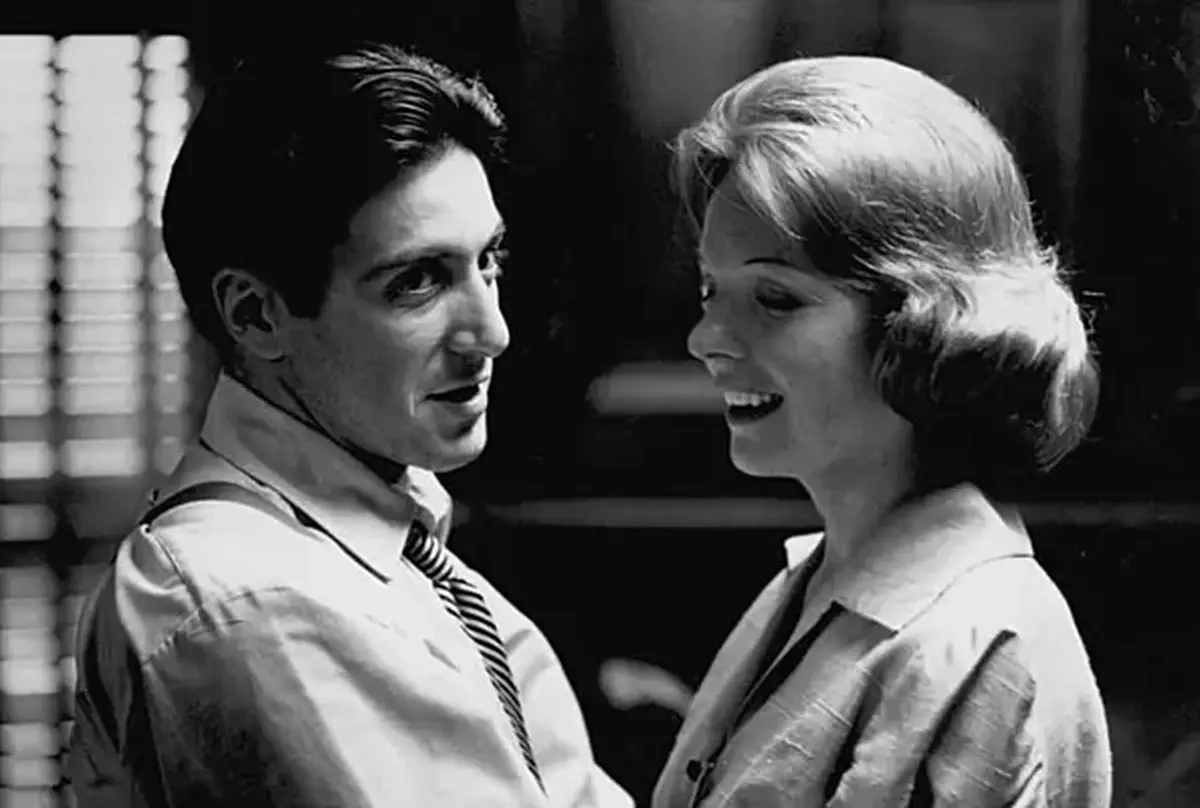
Al Pacino and Diane Keaton
Long Partnerships and Muses
- Beverly D’Angelo: Pacino began a relationship with the actress in 1996 after they met on a plane. The couple was together for eight years and had twins. After their 2004 split they remained close friends.
- Lucila Sola: The Argentine actress and Pacino had a decade-long relationship (2008–2018). Despite the large age gap, it was one of the most stable periods of his life.
- Jill Clayburgh: Pacino’s first serious relationship lasted five years (1967–1972) and ended just as his global fame exploded after The Godfather.
Other Relationships
At various times Pacino had romances with on-screen partners including Marthe Keller (Bobby Deerfield) and Penelope Ann Miller (Carlito’s Way). He’s also been linked to Australian director Lindal Hobbs, Israeli actress Meytal Dohan, and producer Noor Alfallah.
Although many relationships ended because of his difficult personality or his devotion to work, Pacino has tried to maintain contact with the mothers of his children and with former partners.
Today Al Pacino remains one of the few active titans of Hollywood, proving creative energy has no expiration date. In his determination to keep working he stands alongside other veteran screen legends who continue to make films and act, ignoring the numbers on their passports and inspiring millions worldwide.
Photos from public sources
