
 Carlos Solis
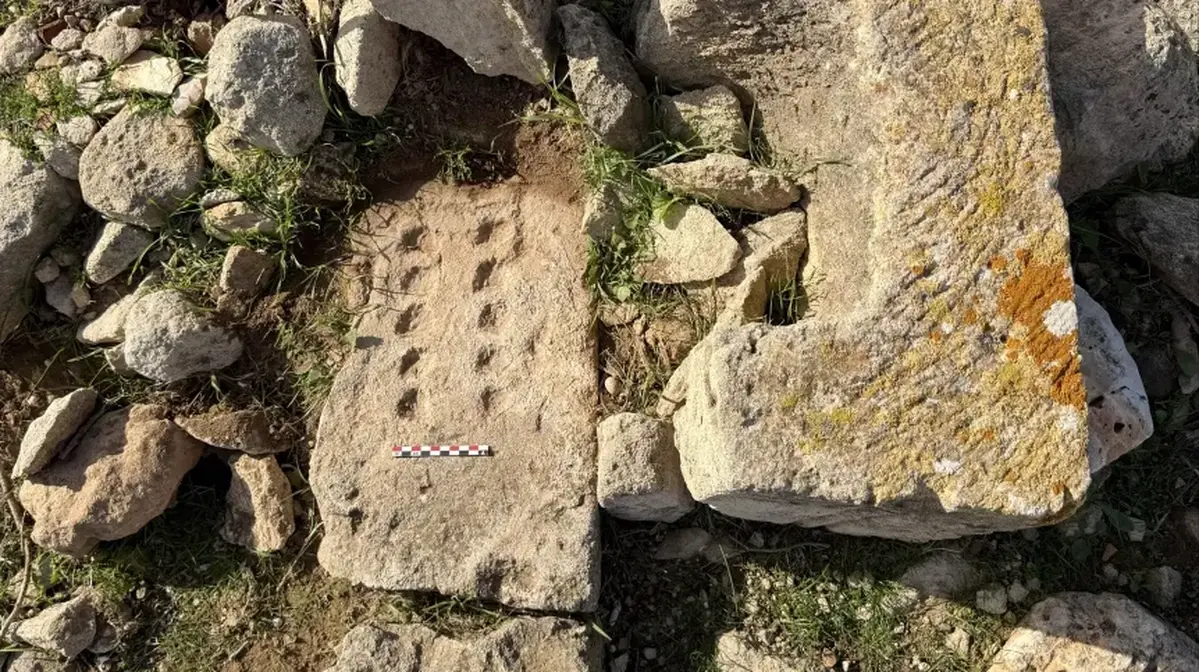 At the site of ancient Ptolemais, archaeologists are uncovering traces of everyday life rather than grand monuments of power. Instead of monumental temples or elaborate inscriptions, they are finding hundreds of game boards carved into stone.
Ptolemais sits in the historic region of Cyrenaica. The city emerged in the late 4th to early 3rd century BCE under the Hellenistic Egyptian kings and grew into one of the region’s major centers, declining and eventually being abandoned after the Arab conquest in the 7th century CE.
Modern excavations resumed in 2023 after a long pause caused by instability during the Libyan civil war. Researchers are working in several sectors of the site — on the acropolis and in coastal underwater zones, where fragments of ancient ships have also turned up. But it’s the small, repeated cuts in the stone that are drawing increasing attention.
Stone-carved game grids
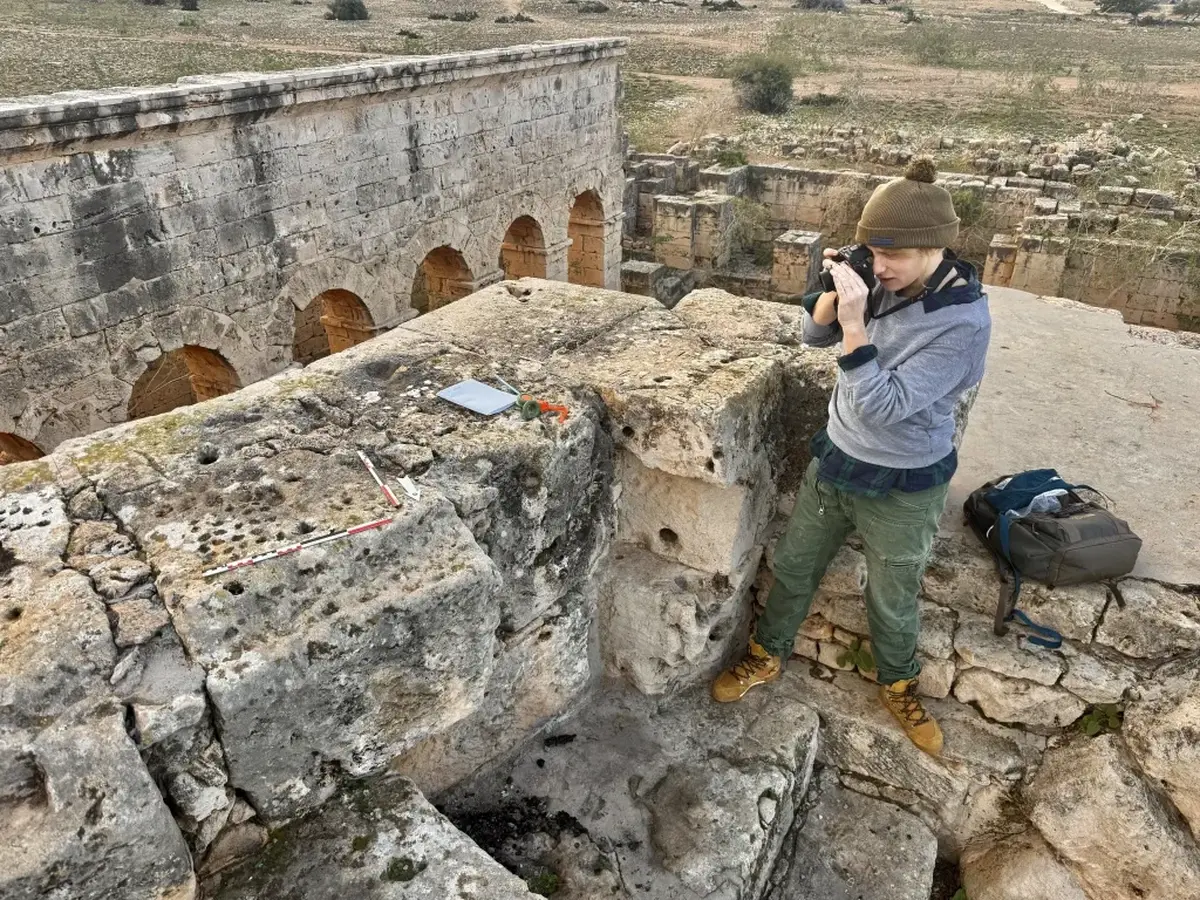
The boards look simple: a series of small round depressions arranged in square or rectangular patterns. There are 3×3, 5×5, 6×6, and 7×7 grids, and some rectangular layouts such as 4×6. The depressions vary in diameter from about 15 centimeters to several dozen centimeters. Craftsmen carved the boards onto any available surface — limestone blocks, fragments of marble columns, or projecting building walls.
In some places several boards cluster together — sometimes twenty or more within a single sector. That density points to widespread, regular practice rather than random etchings.
The main challenge is dating the boards. Unlike coins or pottery, these cuts generally lack a clear stratigraphic context: there are no well-dated layers or materials next to them that would secure a precise date.
Researchers agree on one key conclusion: the boards were carved after the city had lost its original function. In other words, people played on them amid the ruins, not during the city’s Hellenistic heyday. That shift turns Ptolemais from a classical urban center into a landscape of reuse, where later occupants adapted abandoned architecture to their own needs.
Games that crossed continents
The patterns on the stone are not unique to Libya. Similar game boards are known from North and Central Africa and, to some extent, the Near East. Some variants resemble mancala — a widespread family of strategic sowing games — while others are simpler grids close to tic-tac-toe (3×3) or layouts for capture-style games similar to checkers. Those portable, straightforward game systems spread easily among mobile groups, adapting to local conditions while keeping their core rules.
Living memory in Tolmeita
The modern town of Tolmeita lies close to the archaeological site. Although most residents no longer remember the exact rules of the ancient games, fragments of that knowledge survive.
One elderly local woman described two game variants: in the first, two players each control three pieces on a nine-square board and try to line them up; in the second, players capture the opponent’s pieces, and the winner is the player who makes more captures. The materials for pieces were never standardized — pebbles, pottery sherds, seeds, or any small objects served as tokens.
Archaeologists believe shepherds were the main users of these boards. The area around Ptolemais still suits grazing today — open spaces ideal for sheep and goats. The placement of the boards supports this: many cuts appear on elevated parts of buildings or in corners of buildings — spots with a good view of the surrounding landscape. From those vantage points shepherds could easily watch their flocks.
In that context the boards take on a practical role: they were more than entertainment; they were part of the daily rhythm. While the animals grazed, shepherds waited, kept watch, and played.
A quiet page of history
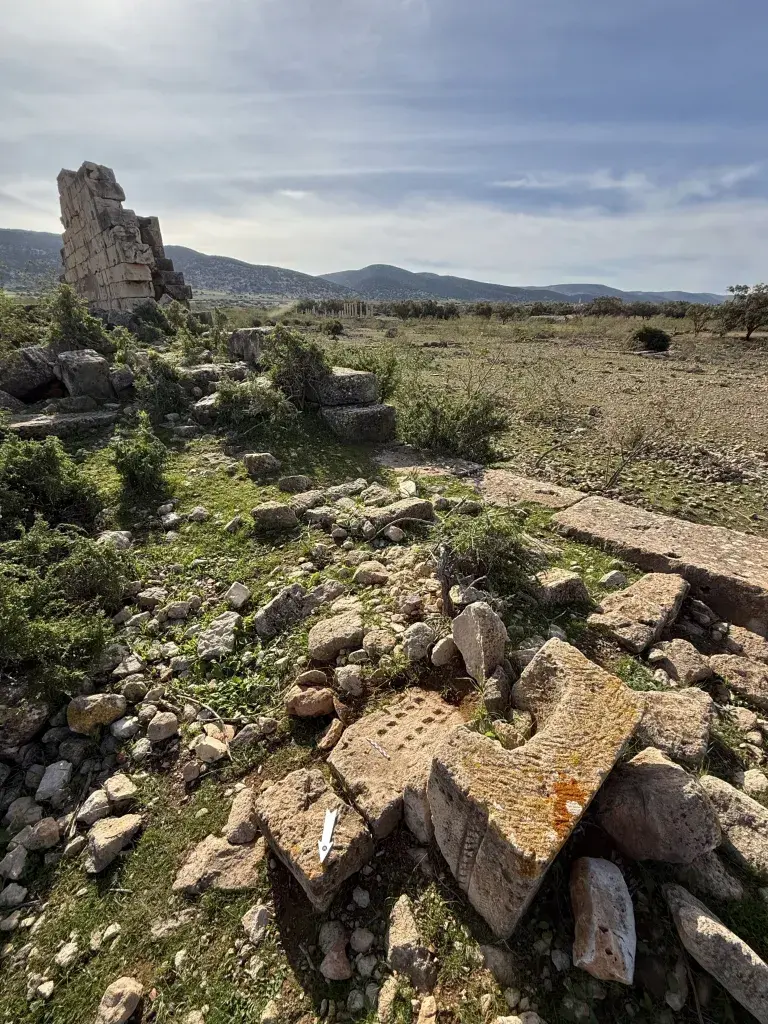
The discovery adds a new dimension to archaeological interpretation by shifting attention from the monumental to the subtle traces of everyday life. These scratched grids, easy to overlook, document a form of continuity — even when cities collapse and political systems change, human habits persist.
Maybe the sharpest contrast is temporal: a once-mighty Hellenistic city becomes, over centuries, a pastoral landscape dotted with improvised game boards. The stones remain the same, but their meaning changes.
Based on reporting from Arkeonews
