
 Gaby
GabyAvia Revivi, a student in the Industrial Design program at the Israeli National Academy of the Arts, has developed an environmentally friendly alternative to toilet paper called O-SOW. Its composition includes orange, aloe vera leaves, and seeds from various plants.
At first glance, the idea looks like an Ig Nobel Prize contender — it makes you laugh. But Avia Revivi, the product’s creator, had a serious purpose behind it.
Revivi was motivated by her love of hiking. While traveling through the desert, she repeatedly found scattered pieces of toilet paper, and she decided the problem needed to be addressed.

Don’t harm nature, enrich it.
Ultimately, a unique ecological product was born. The rapid decomposition of citrus, combined with the active E. coli bacteria present in human waste, lets O-SOW leaves break down within three to five days. They are also eagerly eaten by animals.
Another feature is that the seeds included in the sheets can sprout. Revivi has designed O-SOW to help replenish plant diversity. Each set will contain its own seed mix, so users can order sheets matched to the local flora and enrich an area in an unusual way. At the same time, human waste acts as fertilizer.
Revivi says she is currently adding seeds of mint, peony, rose, parsley, and watercress to O-SOW. She plans to include more varieties that grow in different tourist areas, so plantings can be adapted to local conditions and won’t disrupt the ecosystem.

What else do you need to know about? O – SOW
Revivi says orange (for its elasticity) and aloe (for its softness) form the ideal base for a toilet paper substitute.
Its main qualities are strength, flexibility, water resistance, softness, rapid dissolution, edibility, and the ability to disperse in water.
Revivi chose a rounded shape because she believes it is more comfortable for users. Each leaf is sized to fit the hand.
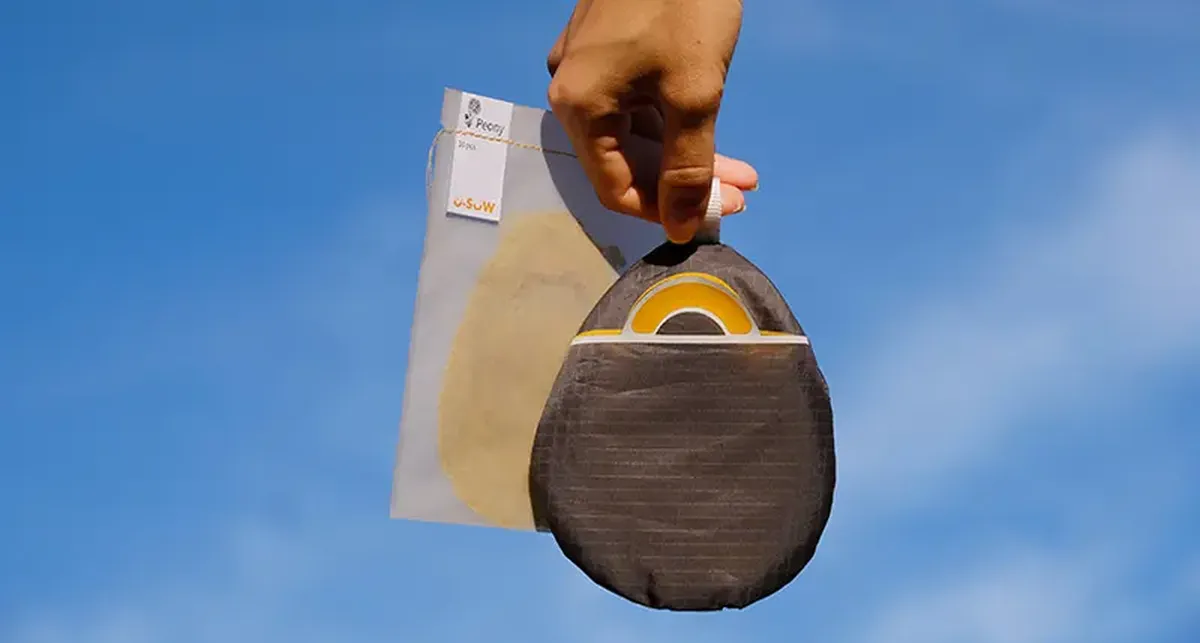
O-SOW sheets are packaged in biodegradable paper with a tear-off string similar to tea bags. The label indicates the type of seeds and the number of sheets. You can store the sheets in a protective case made from leftover parachute fabric. This case retains the product’s moisture, preventing it from drying out, and you can refill it as the sheets are used.
On the publication’s website Designboom you can watch a promotional video that demonstrates, step by step, how a hypothetical tourist would use the eco-friendly hygiene product O-SOW.
A clear drawback of the product is its considerably higher price compared to regular toilet paper. Given the apparent savings on materials and the production process, that price gap is surprising.
