
 Gaby
Gaby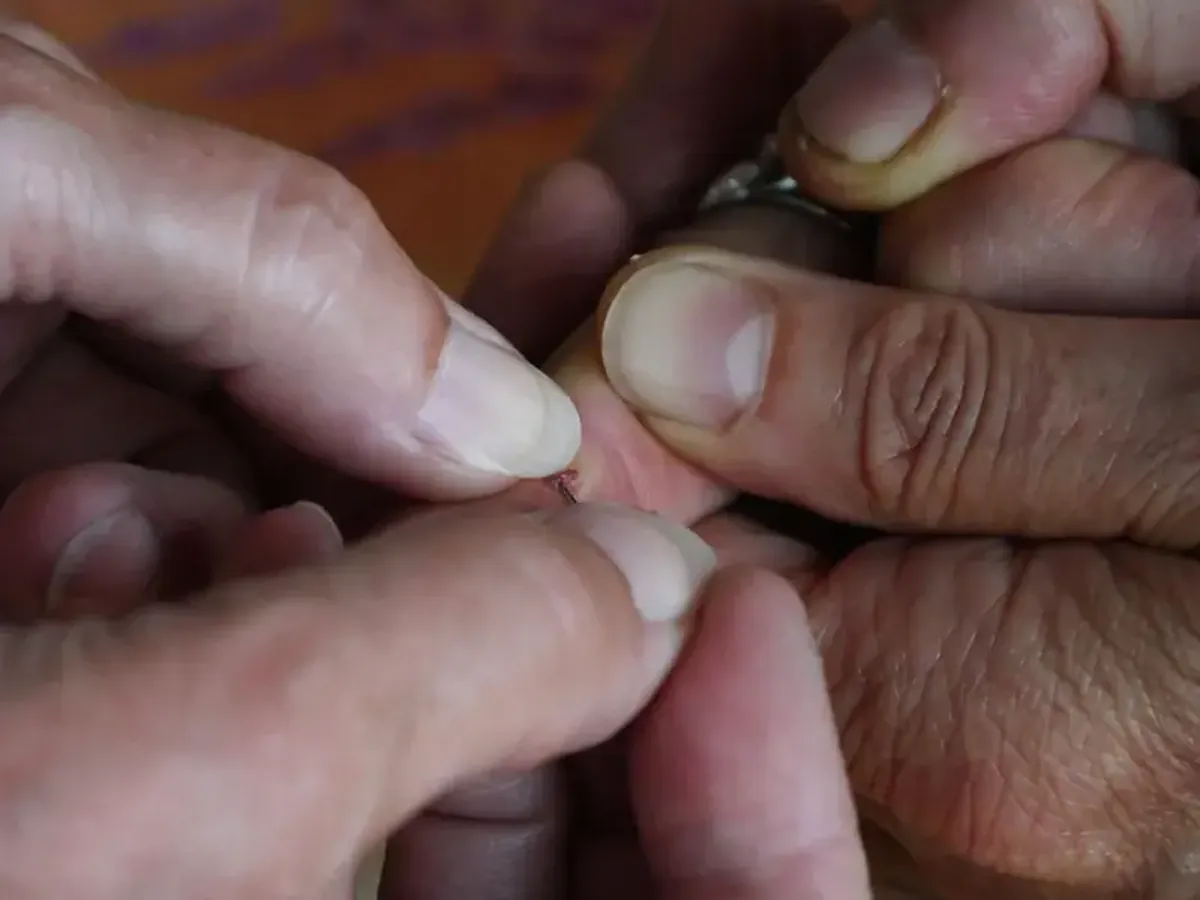
A common “summer splinter” can turn into a serious problem: even a tiny foreign object embedded in tissue can, in some cases, lead to the loss of a body part. An invisible splinter brings pain and the risk of infection. Don’t ignore that “little nuisance.”
Home Remedies
Splinters are small foreign objects that penetrate the skin, nail, eye, or similar tissue. Dangerous culprits include wood splinters, shards of glass, metal shavings, pieces of plastic, sharp stones, thorns, and plant prickles. While most splinters can usually be removed with home remedies, medical help may be necessary in complicated cases—such as when a splinter is lodged in an inaccessible area or has penetrated deeply into the tissue.
Splinters and foreign bodies in the heel, fingers, under the nail, or in the eye can be particularly painful and tricky to remove, but there are several methods for extracting a splinter that you can use at home. The basic tools and supplies for splinter removal include antiseptic, soap, a needle, tweezers, medical adhesive bandages, and gauze.
How to Remove a Splinter from a Finger
If the edge of the splinter is not protruding above the skin’s surface, you can reach the foreign object with a needle. Perform this procedure very carefully and follow safety precautions. The rough skin on the sole of the foot is usually less sensitive to puncturing compared with the fingers and toes. Wash your hands with soap and disinfect the needle before starting. Avoid pressing on the splinter or pulling the skin around it; doing so can easily push the splinter deeper into the tissue.
Soak a deep splinter in hot water before attempting removal. When heat brings the splinter closer to the surface, gently pierce the outer layer of skin above the splinter with the sharp end of the needle—do this with a single confident motion and do not insert the tip deeply. Puncture at the point where the splinter entered, lift the skin with the needle to create an opening, and stretch the skin so the foreign body can be extracted. Hook the splinter with the end of the needle and carefully lift or push it out along the path it entered. After removing the splinter, treat the wound with antiseptic and apply a bandage.
How to Remove a Splinter Without a Needle
No matter how deep the splinter is, you can remove it with tweezers if the edge of the foreign object is slightly protruding from the skin. Cosmetic tweezers are often effective for removing small splinters from accessible areas, such as a finger. If it’s hard to see, put on reading glasses or use a magnifying glass. Disinfect the tips of the tweezers with alcohol or another antiseptic, and wash your hands with soap before the procedure.
Grip the splinter with the tweezers at the edge that is sticking out from under the skin. Do not press or tug on the surrounding skin; pressing and tugging can push the splinter deeper. Pull the splinter out with the tweezers without twisting or turning it—remove it along the same angle at which it entered the skin. If you pull a slanted splinter at a right angle, it may break and a piece can remain lodged in the tissue. Disinfect the wound and cover it with a bandage.
How to Help a Splinter Come Out on Its Own
There are other tricks for removing a splinter without a needle or tweezers. Alternatives to mechanical removal include baking soda, hydrogen peroxide, and ichthyol ointment. Mix baking soda with water to form a paste, apply it to the wound, and cover it with a bandage—within a day, the splinter may work its way out on its own. Alternatively, pour hydrogen peroxide over the wound; this can also encourage the splinter to surface. Even if you need tweezers to finish the job, removal will be easier afterward.
Apply ichthyol ointment to the gauze pad in a medical adhesive bandage and secure the bandage over the splinter for several hours. This method works well for splinters in the foot. For the heel and sole, leave the bandage on overnight; because ichthyol has a strong odor, do this while at home. After about 12 hours, remove the bandage—the splinter will often be stuck to the pad. The ointment also helps prevent infection because it has bactericidal properties. Note that a splinter under the nail will not come out on its own and requires a doctor’s attention.
When the “Nuisance” Won’t Budge
If you can’t remove the splinter with these methods, try some folk remedies our great-grandmothers used.
Warm Onion
Place a warm half onion, baked until soft, on the injured area. In some cases, the splinter will come out of the skin within minutes.
Aloe and Tar
Apply a piece of aloe leaf, cut side down, to the entry point of the splinter, or smear the skin with tar and cover the wound with a bandage. Be aware that the tar remedy has a strong odor.
Young Nettle
Make a compress from an infusion of young nettle leaves. Prepare this herbal infusion in April or May: pack a bottle tightly with nettle, pour vodka over it, and let it steep for two weeks. Keep this disinfecting infusion on hand in the summer to treat scratches and to help draw out splinters.
Consider the consequences of not removing a splinter (or not confirming that it has come out). A retained splinter can lead to inflammation and festering—paronychia, a purulent infection of the tissues—or a metal splinter can even introduce tetanus. A splinter that stays in the tissue for more than six hours increases the risk of complications. If the wound becomes infected, seek medical help immediately. The least severe outcomes are pain and difficulty moving; the worst can include amputation and blindness.
How to Remove a Splinter from the Eye
Symptoms of a foreign body in the eye include discomfort, a feeling of “sand,” burning, tearing, light sensitivity, redness, swelling, blepharospasm (involuntary eyelid muscle contraction), difficulty opening the eyelids, reduced visual acuity, and varying degrees of pain. A foreign object in the conjunctiva, orbit, or cornea is a common ophthalmic problem that can cause injury and lead to serious complications. Metal particles can penetrate deeply into the eye structures. Small metal splinters may not produce obvious symptoms until vision declines after a few days. Copper is especially dangerous because its oxides are toxic to the eye.
Attempting to remove a foreign body from the eye on your own can cause infection and corneal perforation. Consequences range from bleeding inside the eye, conjunctivitis, and keratitis to purulent inflammation, corneal scarring, astigmatism, retinal detachment, cataracts, and glaucoma—conditions that can result in irreversible blindness. Removal of slag, metal shavings, splinters, and pieces of glass is often a surgical emergency. The threat posed by a small splinter is too serious to underestimate.
