
 Gaby
Gaby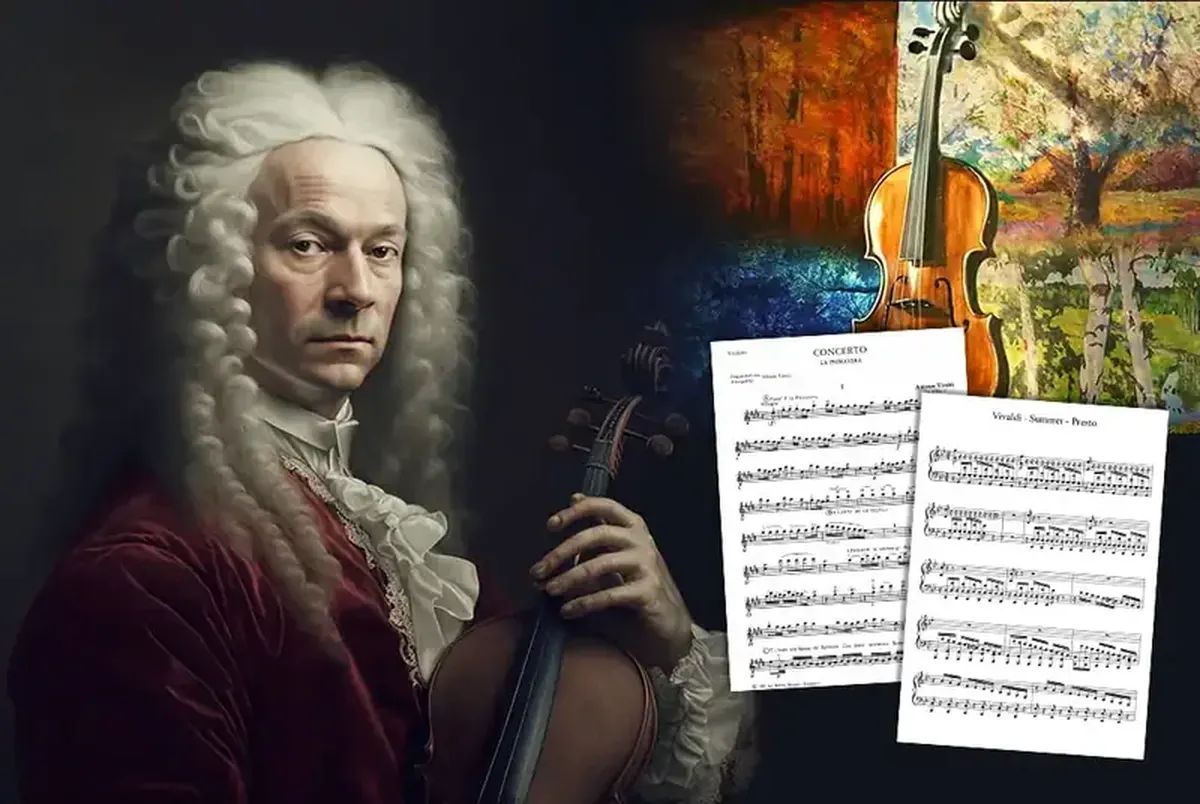
Born into a musical family, he treated music as a sideline. At just 9 years old, the young violinist became the cathedral’s principal violinist, and by 15 he had entered the clergy: he gained the right to open the church and, after a year of conducting Masses, chose music over prayer.
The virtuoso experimenter created the instrumental concerto and was the first to introduce wind instruments into the orchestra, which until then had mostly appeared in military music.
A clergyman by profession, he taught music and singing to orphaned children, spent nearly 40 years composing for girls, and despite his vow of celibacy lived “in joy and sorrow” under one roof with two women.
Famous for his four violin concertos that represent the seasons (one modern recording of the cycle became a global bestseller), Vivaldi wrote roughly 800 works, directed a conservatory, conducted widely, staged theater, and moved in circles that included European aristocrats and monarchs. He nevertheless died in poverty, and his name was forgotten for 200 years. The fascinating facts of Antonio Vivaldi’s life are as striking as his cultural legacy.
Prelude to Genius
The creator of a partially lost legacy of 90 operas and more than 500 orchestral, choral, and chamber works was born prematurely on the day of an earthquake in Venice, March 4, 1678. His mother went into labor in the seventh month of pregnancy, and the frail firstborn, diagnosed with strettezza di petto (an old Italian term for asthma), clung to life for two months. Like the prematurely born Isaac Newton, who arrived 35 years earlier, the underweight Antonio was baptized immediately out of fear he would not survive (the official baptism record was made two months later). Despite grim predictions, Giovanni Battista and Camilla Calicchio’s eldest son survived, although he suffered breathing problems, weakness, and asthma attacks throughout his life.
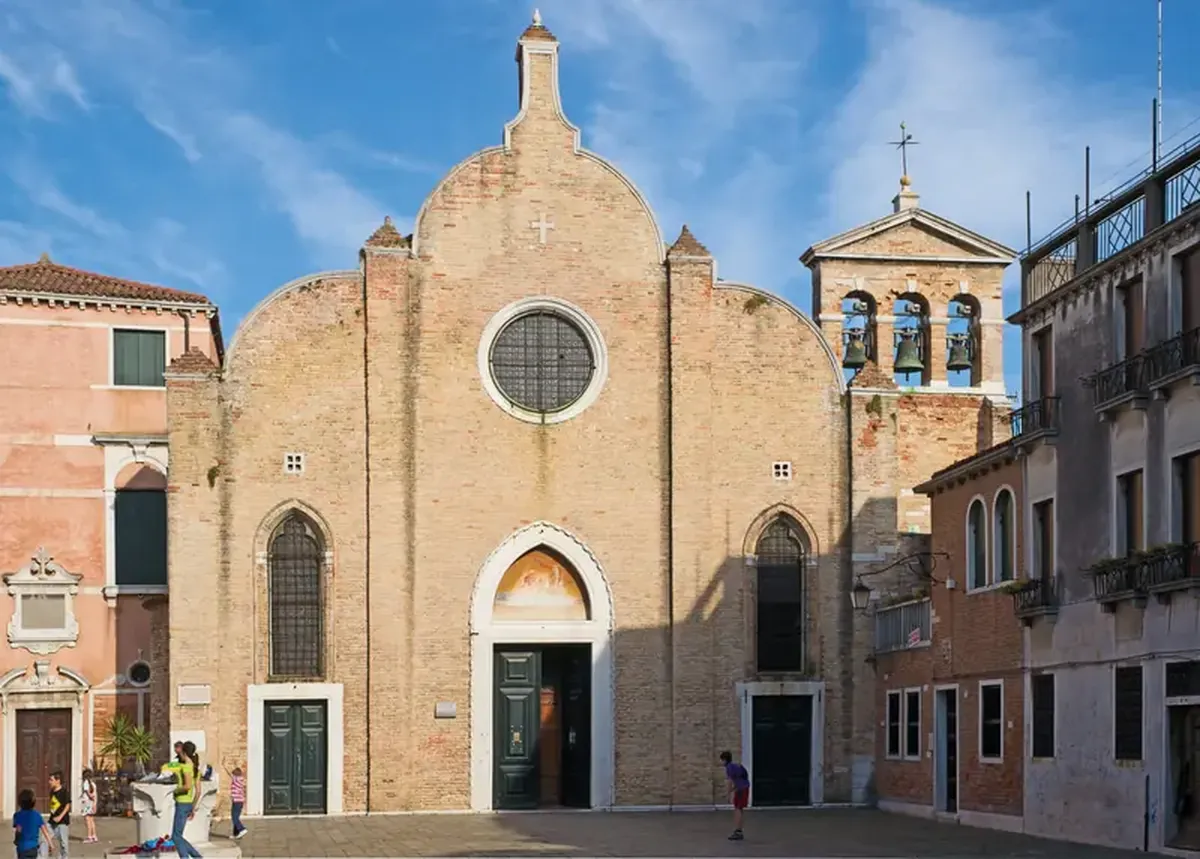
The Church of St. John in Venice, where Antonio Vivaldi was baptized in 1678
In the family, six children were born—three girls and three boys—many of whom followed in their father’s footsteps. Their father worked as a barber, a musician, and a priest, and his three roles found continuation in his children. Antonio Lucio inherited not only his father’s red hair, often hidden under a fashionable wig in formal portraits, but also his passion for music. It is believed that his father was Antonio’s first teacher and taught him the violin. That instrument let the boy join church service early: between 1689 and 1692, from about age 10, he filled in for the principal violinist in the St. Mark’s Cathedral chapel. At 13, the young musician composed his first piece, Laetatus sum (“We Will Rejoice”).
In 1693, 15-year-old Antonio Vivaldi had his head shaved as a sign of entering the clergy; in Catholic practice this is known as tonsure. Along with that, the teenager received the status of “porter”—a lower degree of priesthood that granted him the authority to open the church doors. He subsequently accepted further ordinations that allowed him to serve Mass. In 1703 Vivaldi was ordained and earned the nickname Il Prete Rosso (The Red Priest). Until he completed his theological education, music had been a hobby for the “Red Priest,” but that pastime became his main occupation: alongside his vow of chastity, the young priest gained fame as a virtuoso violinist. A year later he “renounced” his mass duties on the grounds of poor health; the maestro himself cited physical issues when he asked to be relieved of those obligations.
“Don’t Be Afraid of Fast Tempo”
At 25, Vivaldi received an invitation to teach music at the Venetian conservatory Pio Ospedale della Pietà—a de facto refuge for orphans and abandoned children. There were four such state-funded institutions in the Venetian Republic. Students left the school at about age 15. Boys learned trades, while girls learned music. The most talented female students stayed to play and sing in the Ospedale’s orchestra and choir, and Vivaldi’s talent as a teacher flourished there. For nearly four decades he taught both sacred and secular music, composed concertos for the students, and conducted the orchestra. In addition to the violin, he also taught viola. In 1716 Vivaldi became the Ospedale’s musical director and, in that role, met Danish King Frederick IV, to whom he dedicated 12 violin sonatas.

A portrait by an unknown artist, considered by many experts to be a portrait of Vivaldi.
The painting is housed in the International Museum and Library of Music in Bologna
His growing popularity drew new students, many of them from the families of powerful figures. Besides teaching and composing, Vivaldi staged productions in various theaters and managed the Sant’Angelo theater. In 1717 he became kapellmeister at the court of the governor of Mantua, Prince Philip of Hesse-Darmstadt. This proved a fruitful period: over three years he wrote several operas and in 1723 produced his major cycle, “The Four Seasons.” Later composers took inspiration from the idea—Joseph Haydn named an oratorio after it in 1801, and Pyotr Tchaikovsky produced a piano cycle of twelve pieces in 1876—but it was Vivaldi who first realized the concept. After his manuscript was published in Amsterdam in 1725, the cycle of seasons helped revolutionize music.
The “innovator of harmony” captured spring streams, summer pastures, autumn storms, and winter calm using musical means. He found ways to imitate birdsong, barking dogs, buzzing mosquitoes, shepherds’ calls, and the scraping of skates. Each season was paired with a sonnet in which the composer described the scenes the music represents. By emphasizing virtuosic passages and dynamic rhythms, Vivaldi embedded the secret of his popularity. “Don’t be afraid of fast tempo,” he told his students. “The audience will never find a high density of flourishes excessive.”

The title page of the collection “Cimento dell’Armonia e dell’Invenzione” by Antonio Vivaldi, which includes “The Seasons”
Look for the Woman
Scholars believe that the arrival of female influence helped Vivaldi reach a new level of creativity. In Mantua he met opera singer Anna Giro, who, along with her sister, shared his solitary life. This unusual arrangement sparked rumors and raised questions within the church, but the inspired composer had no intention of changing his lifestyle to placate gossip. He presented the barber’s daughter as his student and spent a great deal of time teaching her to sing, as he did with other opera singers who took lessons from him.
Anna and her sister Paolina never parted from Vivaldi, and after his three-year service in Mantua the three moved to Venice together. Both women lived in Vivaldi’s house and accompanied him on his travels. Paolina had nursing skills and helped Vivaldi during his asthma attacks when necessary. Vivaldi supplied singer Anna with a repertoire and specifically wrote parts for her voice. The priest-musician denied any relationship beyond the creative one and defended the honor of the women, who never married and who shared all of Vivaldi’s future trials (Anna outlived the maestro by nine years).
From Fame to Oblivion
During one carnival season in 1727 eight new operas by Vivaldi premiered, and a year later he received a personal invitation from Emperor Charles VI to stage an opera in Vienna; the emperor bestowed a knighthood on Antonio Vivaldi. However, after a decade of success, fortune turned against the renowned Italian.

Antonio Vivaldi (engraving by François Morellon de La Cave, from the edition by Michel-Charles Le Cène, 1725)
In 1737 Cardinal Ruffo banned Vivaldi from entering Ferrara (then part of the Papal States). The composer understood the reason: “It’s not only because I don’t serve Mass in the clergy, but also because of my connection with singer Giro.” In desperate letters to the bishop the priest reminded him of his “inherent defect” and reported the high regard the Pope had shown for his work. Vivaldi wrote that he had stopped conducting church services 25 years earlier after failing to complete the lengthy ritual three times because of breathing difficulties.
Besides discrediting him as a priest, the ban threatened Vivaldi financially: disrupting performances could lead to penalties equal to the fees for 60 operas. Permission for the performances was ultimately granted, but the scandal hurt public perception of Vivaldi; productions in Ferrara failed, and the composer began to lose popularity elsewhere.
These setbacks prompted Vivaldi to move to Vienna, where the emperor had offered him a position at the imperial court. Shortly after he arrived in Austria, Charles VI died, and disputes over the succession began. Vivaldi went to Dresden seeking work but fell ill and returned to Vienna without prospects. There, the 63-year-old composer died on July 28, 1741, of what was described as “internal inflammation,” less than a year after leaving Venice.
Two friends who had stood by Vivaldi in good times and bad buried the celebrated Venetian composer for 19.5 florins in Vienna’s cemetery for the poor—the same cemetery where Wolfgang Amadeus Mozart was laid to rest (neither grave survives). The next month a court bailiff inventoried Vivaldi’s belongings to settle debts, and Venetians forgot the remarkable name they had once celebrated for a full 200 years. Interest in the work of the “lost composer” revived only in the early 20th century. In 1926 scholars discovered 14 volumes of works that had vanished during the Napoleonic wars in a Piedmont monastery. By the end of the 20th century Antonio Vivaldi had taken his rightful place in music history; his creative energy resonated with the modern era because it had been far ahead of its time.
