
 Gaby
Gaby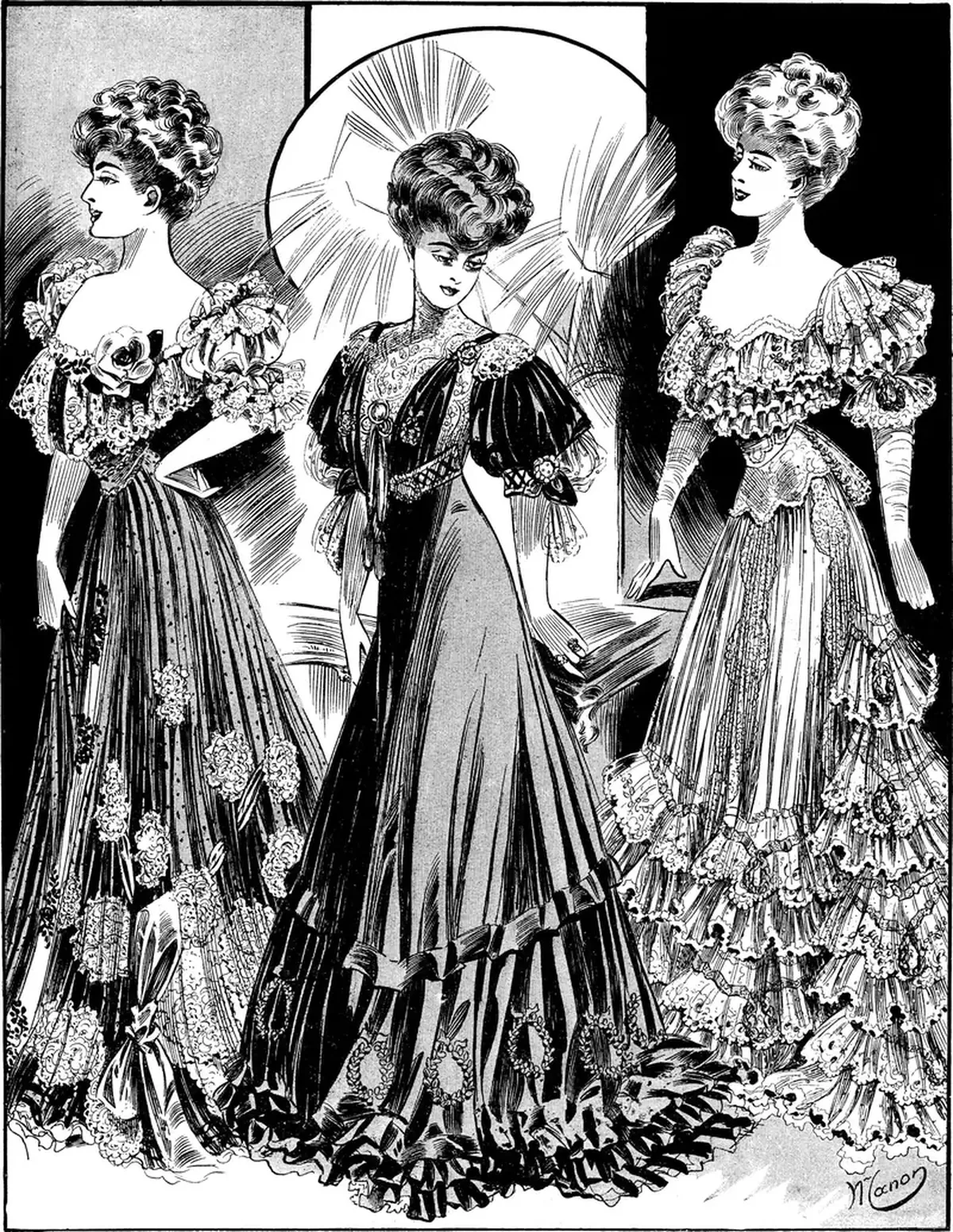
For nearly 60 years the fashion house Boué Soeurs (“The Boué Sisters”) enjoyed dazzling fame. During that time the French designers, affectionately known as the “lace swans,” became beloved in Europe and across the Atlantic, winning over the most sophisticated and affluent women of the early 20th century.
Sisters Sylvie and Jeanne launched their business a year before its official founding, creating a subtle bridge between old and new. By the late 1950s, however, the fashion house had disappeared.
Fashion Treasures of the Art Deco Era
Today, recognizable Boué Soeurs garments survive mainly in private collections and museums, which occasionally put these Art Deco rarities on display.
Remember the women on “Downton Abbey” who worshipped French fashion? The stunning gowns worn by those passionate aristocrats echo the creations from the Boué sisters’ house. The show’s creators probably didn’t use original delicate designer dresses for filming—that would have been prohibitively expensive—but they could and did recreate the fabrics, silhouettes, and embellishments.
So the idea that the sisters are obscure only goes so far.
Couture for Dolls
Fashion historians often trace the sisters’ success back to their childhood, saying the girls played with scraps of fabric, luxurious lace, and ribbons, dressing dolls and dreaming of making clothes. The sisters themselves told that story later, once they were famous and speaking to fashion magazines.

Traditional dress decoration from Boué Soeurs
But if it were only about childhood hobbies, every girl who sewed doll clothes would become a famous designer. Without Sylvie and Jeanne’s talent and determination, it would have been unlikely for them to break into the snobbish world of Parisian fashion.
The High Flight of the “Lace Swans”
The era of Baroness Jeanne d’Etreilly and Madame Sylvie Montéguy (née Boué) began in 1899, when they produced their debut collection of dresses and lingerie and set the stage for opening their first shop in the heart of Paris.
The peak of Boué Soeurs came between the 1910s and the 1930s. A major milestone was the brand’s entry into the American market: in 1915 Jeanne d’Etreilly opened a boutique in New York City.
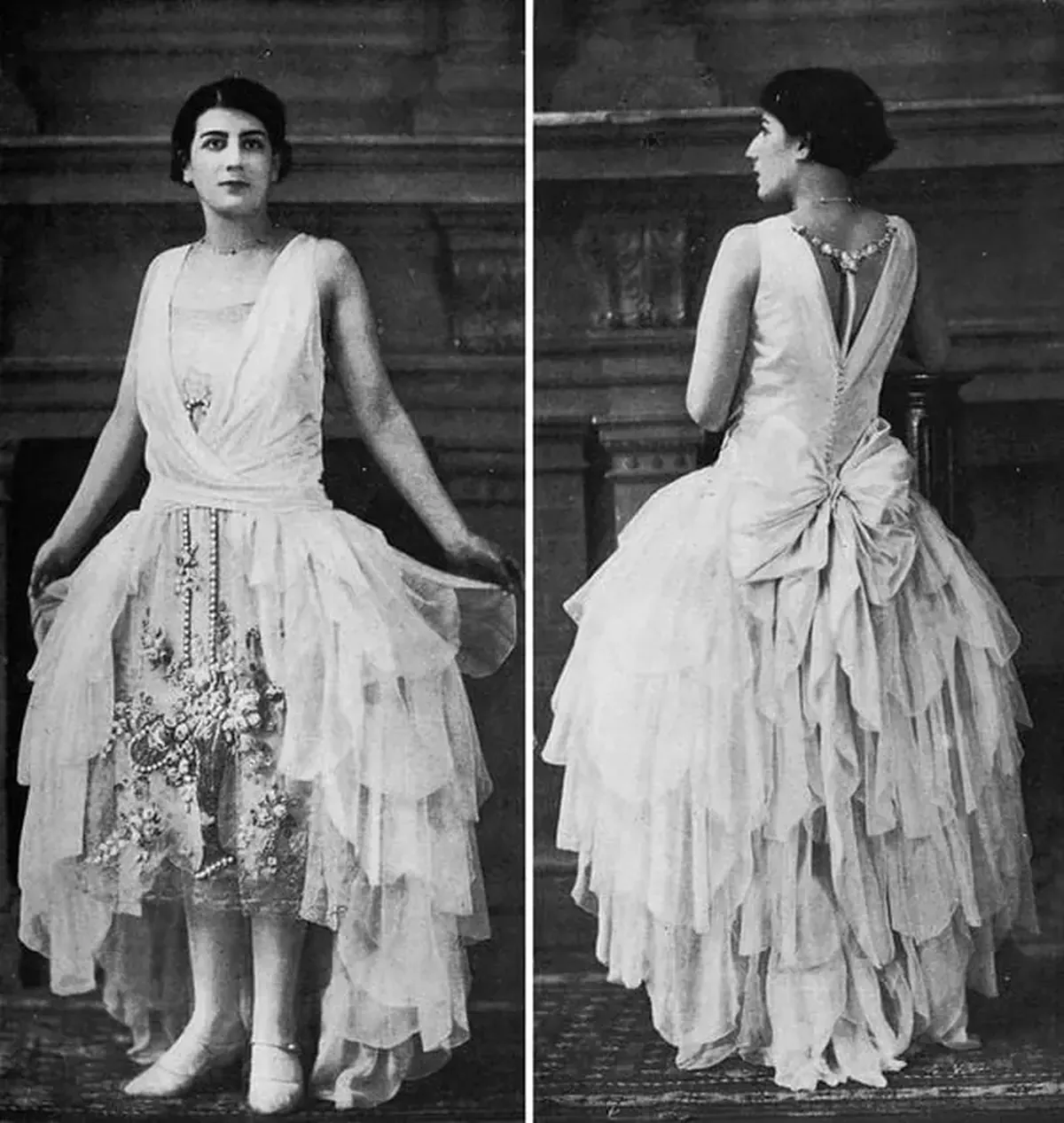
Evening dress ‘Bouquetiére’ by Boué Soeurs, 1928
The French label fit perfectly into The Great Gatsby era—F. Scott Fitzgerald’s 1920s of decadence, luxury, jazz, and wild parties.
The interwar years, with their mix of disillusionment, technological progress, and political turmoil, called for fashion that soothed both the eye and the spirit.
The Boué designers gave their customers what they wanted: ethereal fabrics in pastel and metallic shades, soft feminine silhouettes, distinctive lace with embroidered mesh, glossy ribbons, and signature roses. Each piece was a work of art and usually came with a staggering price tag. By today’s standards, a single designer dress could cost tens of thousands of dollars.
A Dramatic Epilogue with Notes of Optimism
Fashion experts often point to World War II as the main reason Boué Soeurs’ run was short. The house’s decline coincided with the war. The sisters, already elderly, tried to revive the business in Paris between 1948 and 1950, but after several unsuccessful attempts it faded away. The New York branch also struggled after the war and finally folded shortly before 1957.
Attributing Boué Soeurs’ brief heyday solely to the war misses other factors. Even at the height of their fame, the sisters were not always strong on business, and transporting garments and staff to America brought customs and duty headaches.
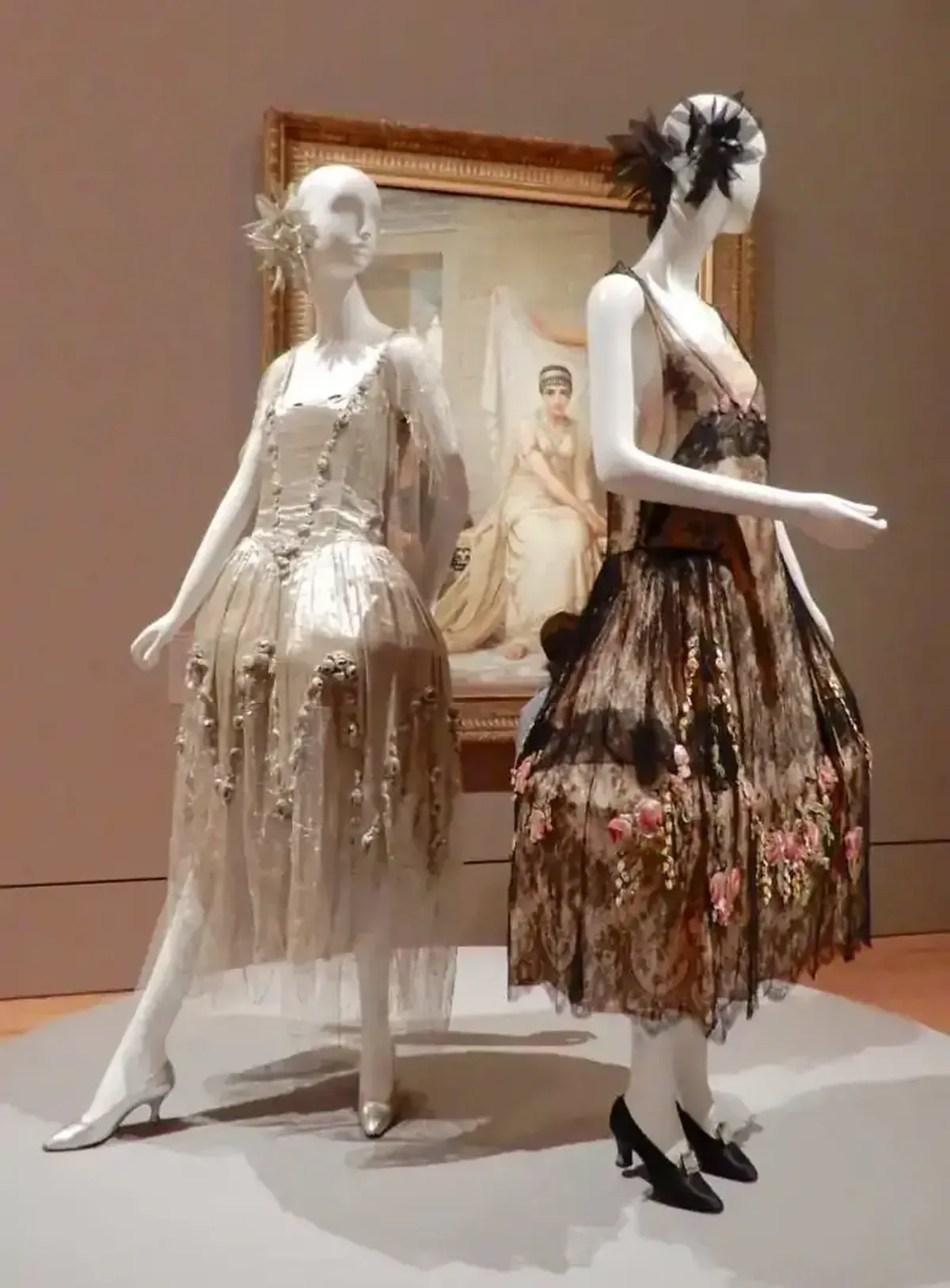
Boué Soeurs clothing at the Metropolitan Museum of Art (New York)
Another reason for the house’s short lifespan was the founders’ reluctance to follow changing trends. Against the radically new styles, colors, and shapes of the 1950s, the sisters’ dresses began to look anachronistic. Even then, their pieces could have found a place in collections of luxurious vintage couture.
But that recognition came later. Today the Boué sisters’ name is mainly familiar to people in the fashion world. Still, the cuts and decorative details of their creations keep resurfacing from obscurity and are being reinterpreted in contemporary dresses and blouses.
Click on any photo to open a full gallery of stunning dresses with descriptions of the outfits.
