
 Gaby
GabyIn the mid-20th century, as people grew confident in aviation and began making the first attempts to reach space — efforts that involved figures like Sergei Korolev — the aerospace boom inspired car designers to create bold conceptual masterpieces. One of those was the experimental Chevrolet Astro III, built by General Motors engineers in 1969.
Design and the cabin
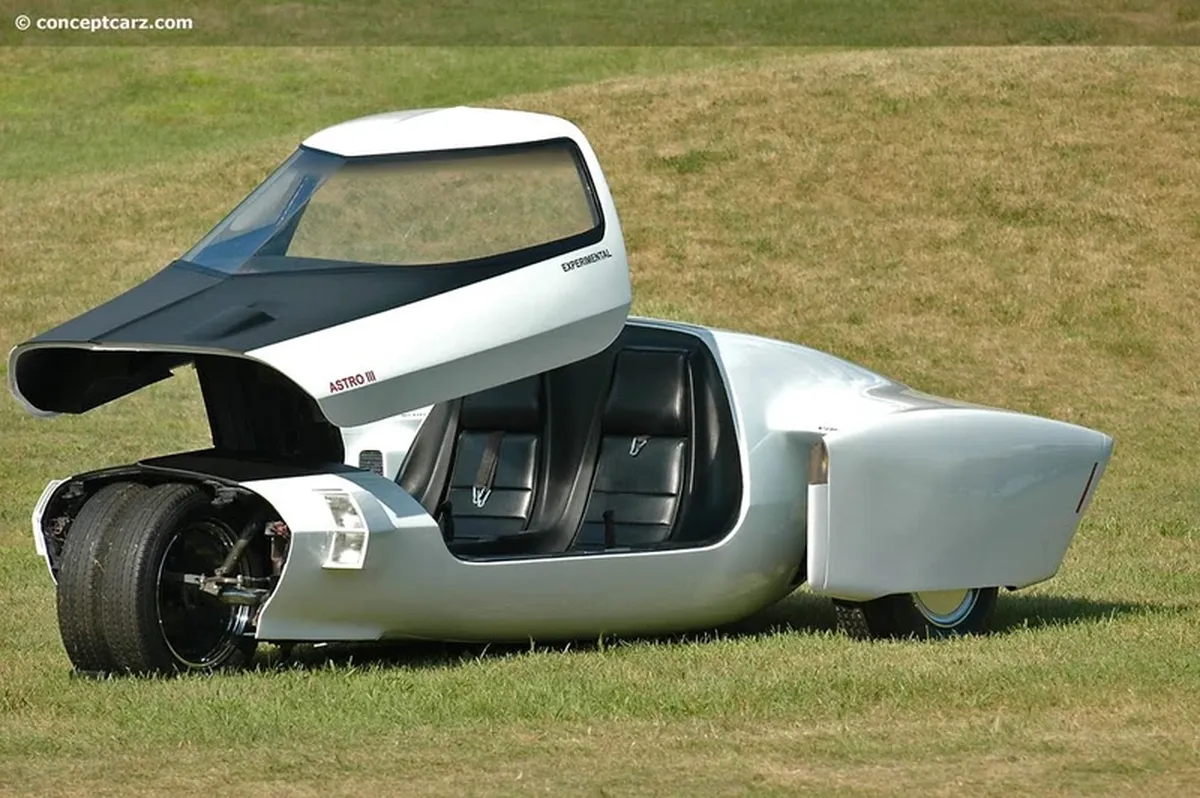
The Chevrolet Astro III represented the most radical departure from earlier models. Its styling was inspired by jet aircraft. At first glance it looks like a three-wheeler, but it actually has four wheels, with the front pair set closely together. The body was red-and-black fiberglass, which gave it a one-of-a-kind look.

Access to the black, aviation-style cabin was through the cockpit’s top, which lifted and shifted slightly forward. Inside, the bucket seats you normally see in sports cars immediately catch the eye. There was no traditional steering wheel — instead, designers fitted controls more like modern “joysticks.”
Instead of rearview mirrors, a camera fed images to a screen mounted between the seats. The headlights extended from a nose fairing positioned behind the twin front wheels.
Technical components
The Chevrolet Astro III was powered by a Model 250‑C18 gas turbine engine that produced 317 horsepower. The engine, built by General Motors, weighed only 139 pounds, which is why it was chosen for the project. Large‑diameter exhaust nozzles allowed hot gases to flow freely for stable turbine operation. The car also used aerodynamic braking flaps similar to those on contemporary jet aircraft.

Why didn’t this project become widespread?
Experts argued the Astro III would struggle with stable handling unless the center of gravity was positioned very precisely. With the front wheels set so close together, the car’s track was narrow; designers would have needed to lower the center of gravity to preserve stability.
Those technological problems had to be solved before a production version could be developed. The developers didn’t continue, so all we can do is admire this futuristic beauty that still wows today.
