
 Gaby
Gaby
March 29 marks Coca‑Cola’s birthday. The original medicinal concoction was created in 1886 by a pharmacist who was addicted to morphine and who died in poverty two years later. Touted as a remedy for “any nervous disorders,” the drink was made from a mix of three parts coca leaf extract (the source of cocaine) and one part kola nut extract (the source of caffeine). Marketed for headaches, hysteria, melancholy, and impotence, it was recommended for older people and was primarily prescribed to soldiers to treat morphine addiction — a condition the former front‑line soldier knew well. At Jacob’s Pharmacy, the largest drugstore in Atlanta, the patented product sold for five cents a glass and initially had very limited demand. What changed the situation, and who turned Coca‑Cola into a national American brand — the most recognized trademark in the world? What exactly is Coca‑Cola made from, how did it spread to 200 countries, and when did this initially unprofitable drink start making money for the company that now sells about a billion servings every day?
The Fate of the Recipe and Its Creator
The inventor of Coca‑Cola was John Stith Pemberton (1831–1888), an American pharmacist and ophthalmologist with a military background. He fought in the Confederate Army during the Civil War and rose to the rank of lieutenant colonel. After being wounded in 1865, he, like many other veterans, developed a morphine addiction. In search of a cure, the University of Columbus School of Pharmacy graduate began experimenting with coca (the narcotic component cocaine had been isolated from coca leaves by chemist Albert Niemann in 1859) and created a drink known as Pemberton’s French Wine Coca.
After Georgia introduced Prohibition in 1885, Pemberton removed the alcoholic component from the formula and replaced it with a carbonated syrup made from burnt sugar. For the new variation, Frank Mason Robinson — Pemberton’s bookkeeper — coined the name Coca‑Cola (referencing the drink’s two main ingredients) and penned the calligraphic script that remains the logo today. The original formula reportedly contained about 8.46 mg of cocaine from coca, while the caffeine from kola nuts amplified the drink’s stimulating effect.
The first syrup batches, intended to treat morphine and opium addiction, were aimed at war veterans and encouraged addicts to switch to a supposedly less toxic alternative. Later, the product was promoted for neurasthenia, depression, impotence, and various stomach, intestinal, and kidney complaints. At Jacob’s Pharmacy, Atlanta’s largest drugstore, the new medicine was served at a fountain for five cents a glass and sold to an average of nine people a day. In its first year the drink brought in only $50 in sales while production cost $70, so Coca‑Cola lost money in its inaugural year. Its 57‑year‑old creator, John Pemberton, died in poverty from stomach cancer in 1888, and the rights to the drink were later bought by the businessman who would found the company that still makes Coca‑Cola.

The History of Coca‑Cola
The Coca‑Cola Company was founded in 1892 by Asa Griggs Candler, a pharmacist turned entrepreneur. One of eleven children of a prosperous Carroll County merchant and plantation owner, Candler was raised with Baptist values and later donated millions to charity, his church, a hospital, and land for Emory University. Some accounts say the recipe was sold to him by Pemberton in the inventor’s last year; others say Candler purchased the rights for $2,300 from Pemberton’s widow. Candler began marketing the drink across the U.S. in 1895, and by 1896 he and about 50 employees were distributing it to neighboring states.
In 1899 the first Coca‑Cola bottling franchise was established. Under that model — which dominated the 20th century — the parent company focused on marketing and producing concentrates, while independent bottlers made and sold the finished drinks. By 1916 the company faced over 150 lawsuits from imitators with names like Fig Cola, Cold Cola, Candy Cola, Cay‑Ola, and Koca Nola. Before leaving the company in 1917 to become the mayor of Atlanta (temporarily passing management to his son Howard and leaving most shares within the family), Asa Candler had already made Coca‑Cola the most famous drink in the U.S. By 1902 the company reported $120,000 in revenue.
By the late 1890s public opinion about cocaine began to change. While cocaine had not yet been banned, concern over its effects was growing. In 1903 a harsh article in the New York Tribune accused Coca‑Cola of contributing to violent incidents involving people from urban slums who had consumed the narcotic drink. In the wake of the scandal the recipe was altered: from then on Coca‑Cola was produced from pressed coca leaves that had the cocaine removed. The drink’s popularity continued to rise. The first Coca‑Cola billboard in Cartersville, Georgia, has stood in place since 1904.
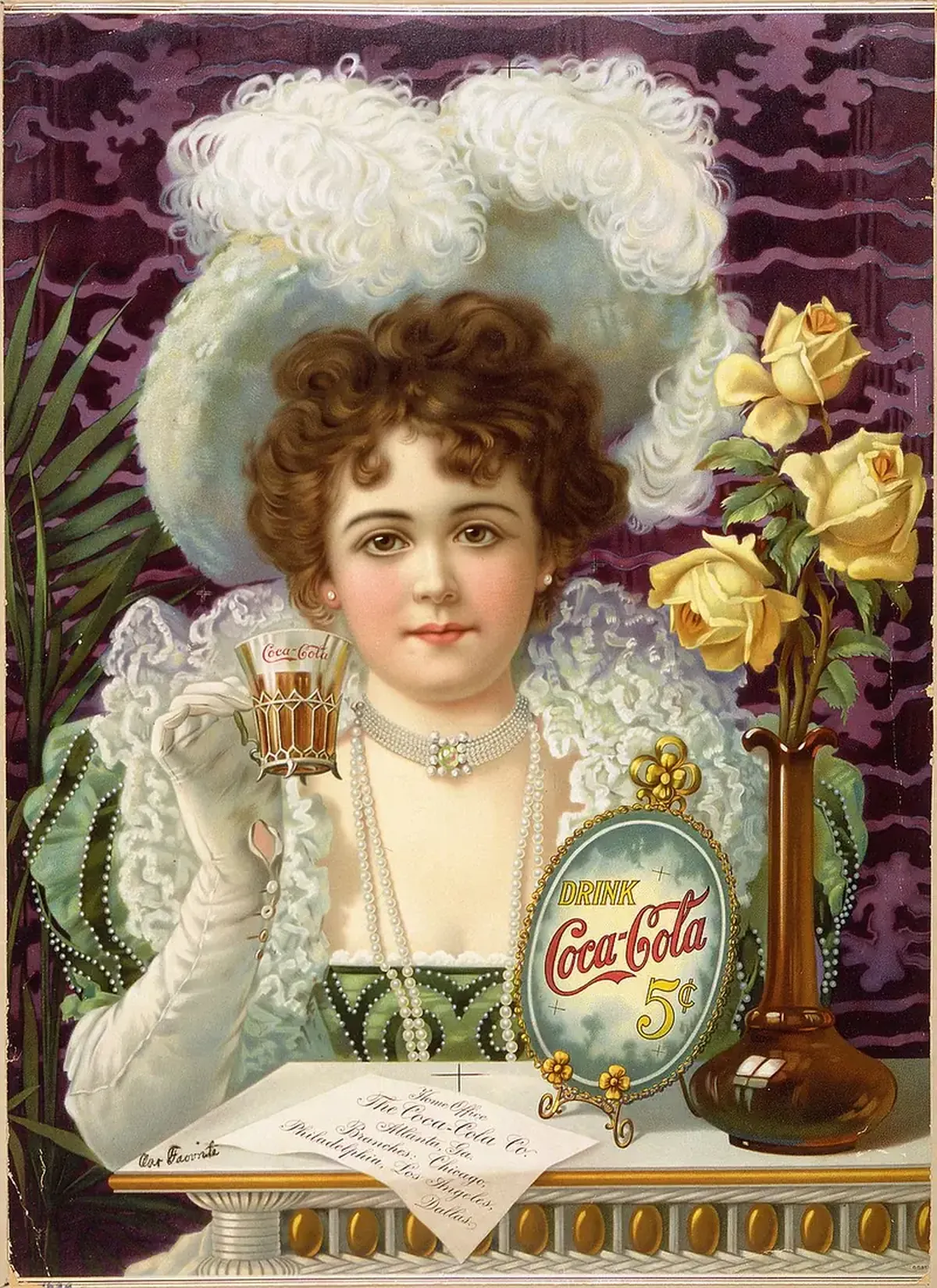
Coca‑Cola advertisement, 1900
An American Icon
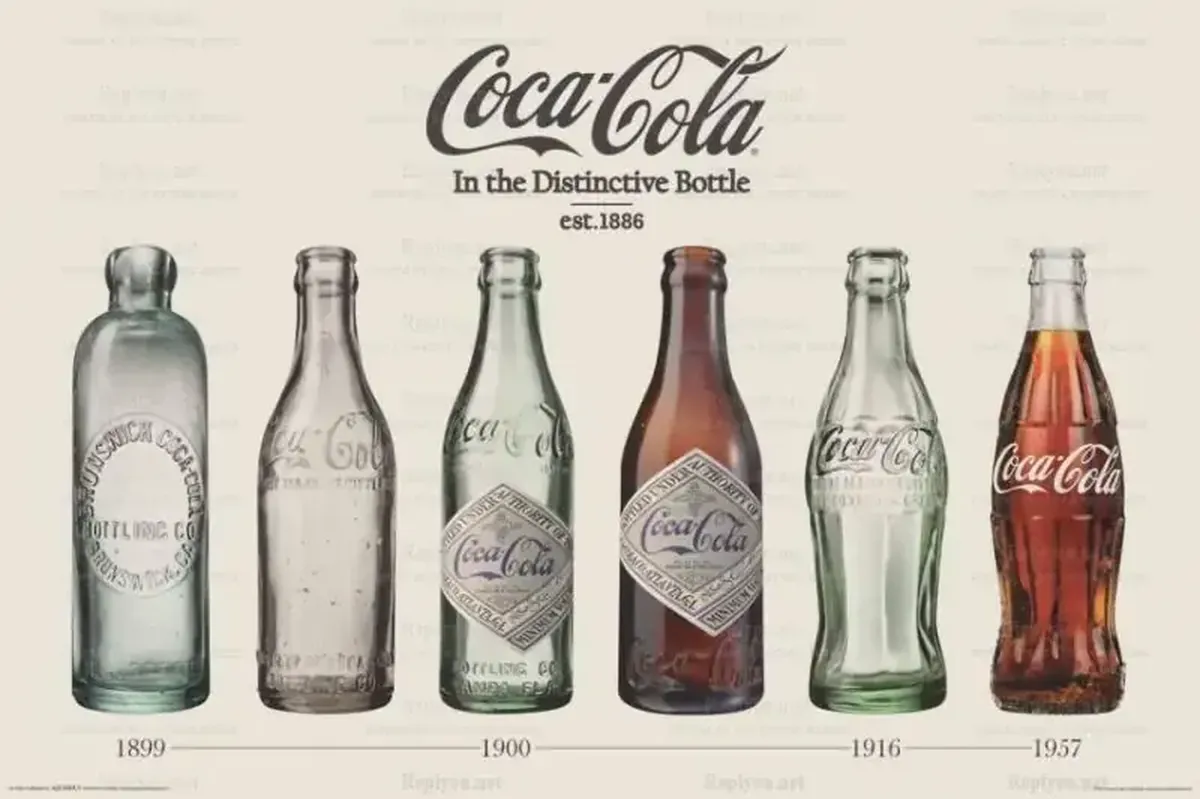
Coca‑Cola has been bottled since 1894 (it did not appear in cans until much later, in 1955). In 1915 Indiana designer Earl R. Dean and his team created a new 6.5‑ounce bottle (one U.S. fluid ounce is about 30 ml). The contour bottle’s form was reportedly inspired by a cocoa pod; one theory says the designer confused “coca” with “cocoa,” while another says he simply could not find reliable reference material about coca or kola. In the decades that followed, more than 6 billion of that bottle design were produced. Starting in 1955 Coca‑Cola was sold in bottles of 10, 12, and 26 ounces, and by the end of 2007 the company introduced a shorter 0.33‑liter glass bottle that reduced carbon dioxide emissions during production.
Ownership changed in 1919 when Howard Candler sold the family business for $25 million to a consortium led by Ernest Woodruff and Eugene Stetson. After the sale the company became one of the largest public corporations in the food industry: half a million shares were sold at $40 each. In 1943 Coca‑Cola plants began operating in Europe and North Africa to boost the morale of American soldiers and to expand the brand worldwide. By 1990 Coca‑Cola’s annual sales first topped $10 billion.
If all the Coca‑Cola ever produced were divided evenly across the world’s population, each person would receive about 1,500 bottles. Every second, roughly 8,000 servings of drinks produced by The Coca‑Cola Company are consumed worldwide. In recent years sales of concentrate have accounted for about 56% of company revenue, with finished products making up the remaining 44%. The U.S. remains the company’s primary market, supplying about 36% of its revenue. The highest per‑capita consumption of Coca‑Cola is found in surprisingly different places, from subtropical Mexico to icy Iceland.
The Company’s Secret
Despite ongoing criticism from doctors and dietitians, demand for Coca‑Cola remains strong. Health professionals warn about the drink’s effects on the kidneys and other organs, pointing to its sugar and carbon dioxide content. The company lists the classic formula as containing about 11% sugar, caramel color (E150), carbon dioxide, caffeine (about 140 ppm), orthophosphoric acid (about 170 ppm phosphorus), azorubine (a synthetic dye), and flavorings such as vanillin, lemon oil, clove oil, and cinnamon oil. The exact concentrations of several ingredients are not publicly disclosed: the proportions are a closely held commercial secret.

The company’s charter reportedly limits detailed knowledge of the formula to three individuals at a time. Bottlers who make drinks from the supplied concentrates and syrups are allowed only minor variations based on local raw materials. In 2009, during a Turkish court case, documents surfaced suggesting the drink contained colorant E120 (carmine), an extract from cochineal insects (dried females of the Dactylopius coccus species). That revelation sparked concern because consuming insects is prohibited by some religions, including Judaism; the company denied that carmine was present in its formula.
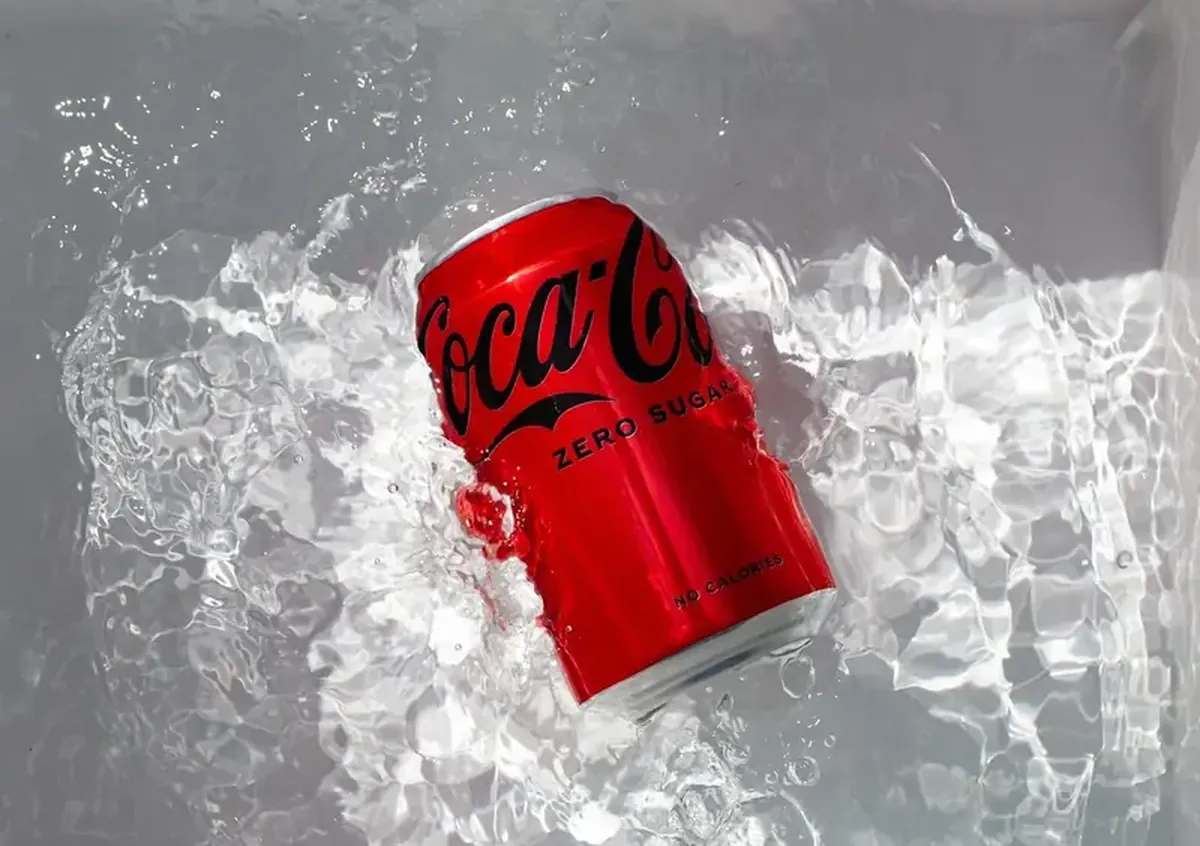
Unlike the secret formula, Coca‑Cola’s caloric content is public: about 42 kcal and 10.6 g of carbohydrates per 100 g of product. In 1982 the company introduced Diet Coke, and later expanded the line to include sugar‑free and caffeine‑free options. Coca‑Cola Light is marketed as having a familiar taste with only about 0.3 calories per 0.1 liters, while the Zero line (Coca‑Cola Zero Lemon, Zero Lime, Zero Orange, Zero Vanilla) contains no sugar and is nearly calorie‑free (about 0.2 kcal). But does removing sugar really lower obesity risk, and how do artificial sweeteners affect the body?
The Benefits and Harms of Coca‑Cola
Cola Zero and other diet varieties use artificial sweeteners such as aspartame, which some studies have flagged as a potential carcinogen. Aspartame’s breakdown products include phenylalanine, which can cause headaches and may trigger seizures in susceptible people. Cola Zero also contains sweeteners like potassium acesulfame and sodium cyclamate. Some research links artificial sweeteners to increased appetite and cravings for fatty foods, and other studies have associated regular consumption of artificially sweetened sodas with higher rates of obesity, type 2 diabetes, and elevated blood pressure.
Some reports have linked consumption of artificially sweetened sodas to a higher risk of liver cancer. Carbon dioxide in soda can contribute to heartburn and may aggravate conditions of the liver and gallbladder. Coca‑Cola is not recommended for people with bile duct disorders or gastrointestinal diseases, including acute or chronic gastritis, high gastric acidity, and peptic ulcers. Phosphoric acid in the drink can contribute to kidney stones, erode tooth enamel, and interfere with calcium absorption, which is important for bone growth — a reason to limit consumption among children and teenagers.
People with diabetes need to account for the classic formula’s high sugar content, which raises blood glucose levels. Caffeine in Coca‑Cola can increase heart rate and respiration. At the same time, the drink’s stimulating properties mean it has been used to relieve fatigue, transient nausea, and mild stomach discomfort and to provide a quick energy boost. A 0.33‑liter can consumed occasionally is generally considered safe as part of an otherwise healthy diet and lifestyle.
In Sweet Captivity
Regular overconsumption of this stimulating drink can contribute to insomnia. Some people report developing a dependency after four to five consecutive days of regular consumption, with withdrawal symptoms such as irritability and drowsiness appearing when they stop. These symptoms can last a day or two; for some, relief comes from consuming the same drink again. That pattern helps explain why people can quickly become “hooked” if they don’t control their intake. Consume Coca‑Cola only occasionally and in moderation — otherwise, overconsumption harms health and benefits the manufacturer.
As early as 1909 English novelist H. G. Wells satirized the Coca‑Cola story in his book Tono‑Bungay, which follows the creation, advertising, and distribution of a miracle tonic called “tono‑benge.” In Wells’s plot a young scientist helps promote harmful stimulants disguised as universal medicines, and the product’s rising sales bring the creators great wealth. To get a sense of scale: all the Coca‑Cola ever produced could fill a pool 1.8 meters deep and measuring 33 by 15 kilometers — enough space for about 512 million people at once.
In 2004 The Coca‑Cola Company won an Ig Nobel Prize in Chemistry “for turning water into a substance unsuitable for drinking.” Popular stories about Coca‑Cola’s “miraculous” properties claim it can clean heavily soiled items, remove rust, and even be used for agricultural pest control in some places. There are many sensational tales tied to this drink, and the endless curiosity about Coca‑Cola only confirms its status as a cultural legend.
