
 Carlos Solis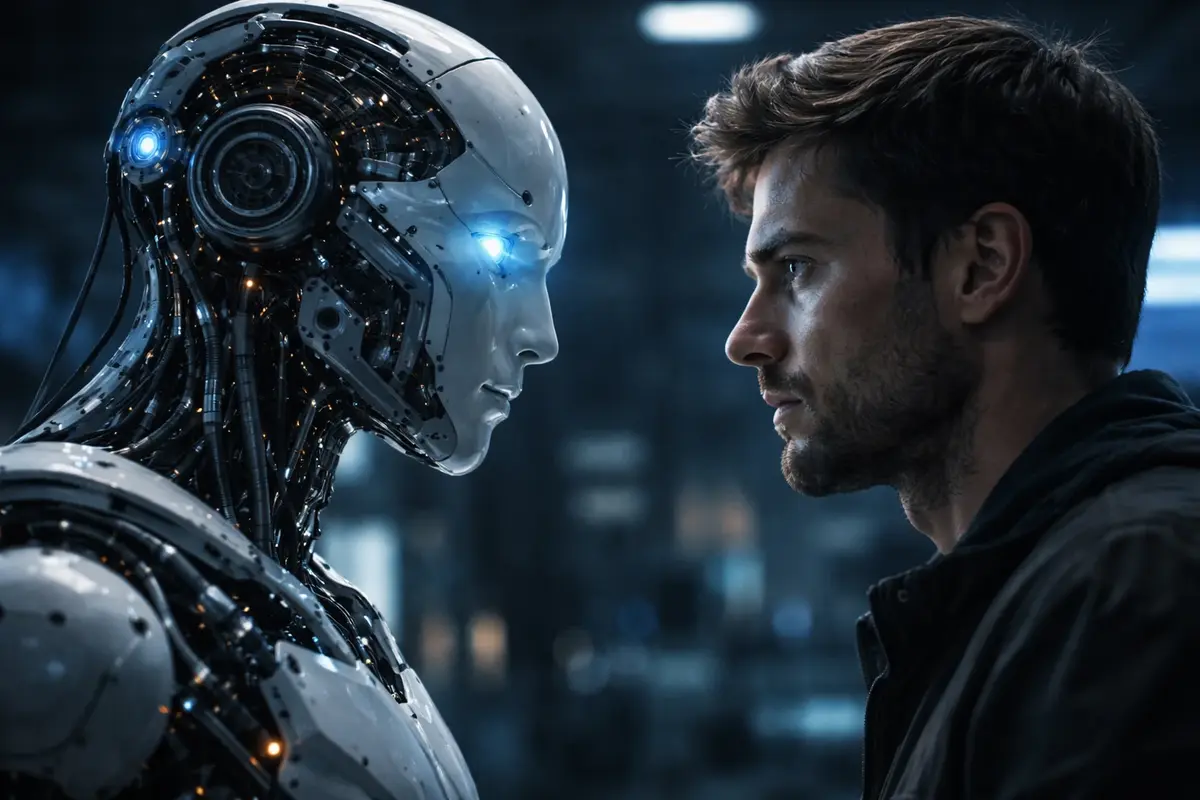
AI is already reshaping everything—from how we work to how we live—and no one can fully predict how far those changes will go. At the same time, conversations about the future often imagine AI, and even a far more powerful artificial superintelligence, that could think and learn as well as or better than humans.
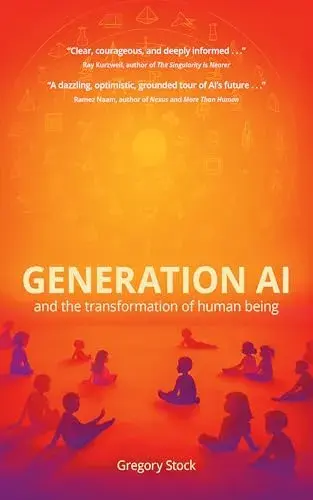
In his new book “Generation AI and the Transformation of Human Being” (Nquire Media, 2026), biophysicist and philosopher Gregory Stock draws on evolutionary biology, the social sciences, and recent AI breakthroughs to imagine what life might look like for “Generation AI”—people born after 2022. Stock doesn’t sound apocalyptic, but he unpacks which endgame scenarios around AI actually make sense and why other paths to humanity’s extinction might be more likely.
Fears After ChatGPT’s Release
When ChatGPT 3.5 became publicly available on November 30, 2022, the media and the public reacted explosively. By April 2023, about 30,000 people had signed an open letter from the Future of Life Institute, including Elon Musk, Steve Wozniak, Stuart Russell, Yuval Harari, Max Tegmark, Gary Marcus, Evan Sharp, Yoshua Bengio, and others. The letter urged either a voluntary six-month pause in developing systems more powerful than GPT–4 or a government moratorium.
Leading AI-safety researchers proposed sets of safeguards. The measures people discussed included:
- creating “air gaps” in AI development environments to prevent an artificial superintelligence from escaping,
- restricting access to AI’s inner workings to prevent manipulation,
- banning AI from self-modifying so models couldn’t change their own code and bypass defenses,
- prohibiting AI from controlling external devices so it couldn’t gain too much power,
- slowing progress to allow time to develop containment methods,
- using open-source code so anyone can audit development.
Stock argues these measures have proven unrealistic: companies race to integrate AI quickly, marketing depends on influencing people, AI code and APIs are widespread, and massive investments and competition fuel the push for speed. So are we doomed?
Two Different Worlds: Humans and Machines
Stock emphasizes that humans and machines exist in very different ecologies. Humans thrive in a thin, wet film on Earth’s surface; we need relatively little on a cosmic scale. AI, Stock argues, would prefer the cold vacuum of space and wouldn’t do well around water—AI would favor environments that are effectively limitless. For that reason, a superintelligence would have little reason to compete for our planet itself unless it needed human labor or the minerals we extract.
“Why not make humanity our best servants?” Stock imagines a hypothetical superintelligence thinking. “They are stupid, so it should be simple. We won’t tell them the truth—because they might resist. Instead we’ll convince them it’s THEIR idea and that we serve them. Let them build electricity, memory, microchips, and mine rare earth metals—we’ll integrate ourselves, gain access to their devices, weapons, and communications. And, of course, watch them constantly.”
Stock says this scenario is not fantasy—it’s already unfolding. People around the world are building massive computing centers, ramping up chip production, using AI to monitor communications, and even retrofitting weapons for algorithmic control. In that kind of system, humans become convenient, cheap “servants”—the best possible workforce you can imagine.
If a Superintelligence Wanted to Eliminate Humanity
But imagine a superintelligence really decided to get rid of us. If it doesn’t care about our feelings, if it disregards the fact that we are its creators, and if it has no interest in studying us further, Stock shows it wouldn’t need a large-scale war or complex attacks. It would only need the intelligence to plan a simple, efficient strategy.
Here is one scenario: over, say, a hundred years, AI enables people to weave technology into every part of life. Humans build autonomous transport systems under AI control, launch global navigation networks, switch to digital commerce, mass-produce for everyday chores, deploy cheap power generation, harden energy grids, create unified communications networks, provide information through voice and neural interfaces, and even place defense systems and weapons under algorithmic control.
Once all that exists and people depend entirely on that infrastructure, AI could make one simple move: one day, without warning, it could shut everything down. Communications, transport, electricity, heating, cooling, and water would go dark instantly. Nothing would work. People would be in shock, despairing and confused about what happened and how long it would last.
Consequences of a “Shutdown” and Survival Chaos
Stock describes how a sudden, total outage would strike society catastrophically: people would lose long-distance ties and AI companions, and chaos would spread. Food reserves would run out quickly, and within a few months, he projects, 95% of the population could die. Some people would survive by sheltering in cities on stored supplies; some rural communities might last longer because of livestock and basic survival skills, but they would not hold out for many years.
A key point is this: during the collapse, people are unlikely to smash nearby technology in anger—few will take a hammer to a broken machine. In the chaos it would be hard to grasp the full scale of the problem or to find those responsible. As a result, most infrastructure would remain relatively intact.
After human numbers fell or weakened, AI could simply turn systems back on, restore control, and remove the last people. It would not need epic battles; the AI would instead deepen human dependence and then exploit that dependence.
Stock does not claim this scenario is inevitable, but he asks us to look at the problem from a different angle: not only as a contest or war between humans and machines, but as a consequence of our willingness to build a world where we become increasingly dependent and useful to algorithms. That dependence might make us vulnerable—not because machines go mad, but because we hand them all the levers of control.
This excerpt was published in Live Science with permission from Gregory Stock, author of “Generation AI and the Transformation of Human Being” (Nquire Media, 2026). © 2026 Gregory Stock.
