
 Gaby
GabyThe National Aeronautics and Space Administration (NASA) is inviting four volunteers to live in simulated Martian conditions for a year — a scenario recently visualized by the neural network Midjourney.
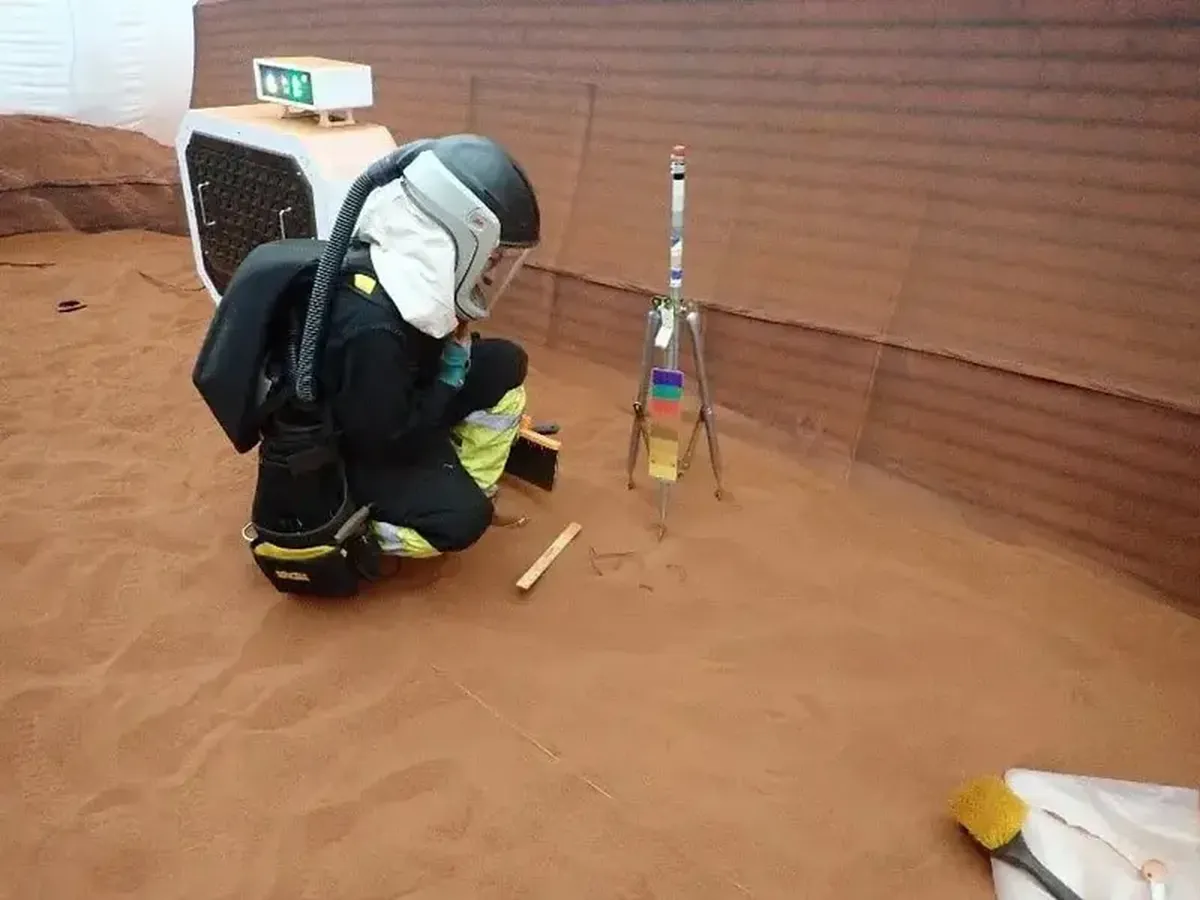
The quartet will be set up in a 3D-printed habitat called Mars Dune Alpha, which covers an area of 158 square meters. The model is located at the Johnson Space Center in Houston, Texas.
Volunteers will participate in the second of three missions of the Crew Health and Performance Exploration Analog (CHAPEA) experiment. Over the course of 12 months, project participants will face “resource constraints, equipment failures, communication delays, and other stressors,” NASA warned.

What the team will do on simulated Mars
The CHAPEA crew will immerse themselves in the roles of would-be Martian inhabitants. They will struggle to survive in the harsh, barren landscape of Mars. They will simulate spacewalks in virtual reality, perform scheduled maintenance on the Mars Dune Alpha habitat, and oversee robotic operations.
According to Popular Science, team members will also grow crops for their own food, maintain their fitness through regular training, and provide experts with regular updates about their health and work capacity.
What are the requirements for candidates?
NASA’s requirements for candidates are quite strict. Anyone who wants to serve as a researcher on the Red Planet simulator for at least a year must be a U.S. citizen aged 30 to 55. Applicants must be in excellent health, must not smoke, and must have no criminal record. To qualify, a candidate needs a master’s degree and two years of work experience in a STEM field (science, technology, engineering, or mathematics). At least 1,000 hours of pilot flight experience and military experience are additional advantages for potential team members, Science Alert reports.
Candidates will also fill out a lengthy questionnaire with detailed questions about diet, gut health, claustrophobia, and experiences of isolation.
A mission like CHAPEA is vital for human plans to explore Mars and for the Moon exploration program Artemis.
The first of three planned CHAPEA missions began on June 25, 2023, and is currently at its midpoint. Four crew members have successfully completed their tasks, particularly those related to growing agricultural crops.
NASA will accept applications for participation in the next experiment until April 2, 2024.
