
 Gaby
Gaby
“God in a Pink Suit” was a singular phenomenon on the American stage. Elvis Presley’s rock and roll arrived as a cultural alternative full of dancing, fun, and erotic charge, and it became a sensation amid the stifling social norms of the time. In the 1950s and 60s he gave voice to new attitudes and became a symbol of nonconformity. The essence of the “King of Rock and Roll” was his fierce independence, rule-breaking swagger, rebellious spirit, and messianic charisma. He created his own musical aesthetic by blending the conservatism of white country music with the sensual energy of Black rhythm and blues. Critics called this talented son of humble beginnings “the first perfect rock star in the history of music.” For many fans he never truly died — and in 2004 Rolling Stone placed Elvis alongside The Beatles and Bob Dylan at the top of its list of “Immortals: The 50 Greatest Artists of All Time.”
A Guitar Instead of a Bicycle
Elvis Presley was born on January 8, 1935, in Tupelo, Mississippi. His father’s family came from Scotland and Germany, while his mother had Scottish-Irish roots; Gladys Presley’s ancestry also included Normans and even a Cherokee ancestor. Gladys, née Smith, was the dominant figure in the household, while Vernon Presley long struggled to find steady work, leaving the family short on money. Three years after Elvis’s birth, the family’s situation worsened when his father was jailed in 1938 for forging checks.
No one influenced Elvis as much as his mother. They shared a special bond and even spoke in a private “child’s secret language.” After Elvis’s twin was stillborn, Gladys protected her only son from life’s hardships and raised him to be grateful and devoted. He grew up loving music and religion: as a member of the Assemblies of God church he sang in the choir from a young age. For his 11th birthday Elvis received a guitar, bought after he won a prize for singing a folk song at a local fair. The guitar also proved cheaper than a bicycle, which the family could not afford.
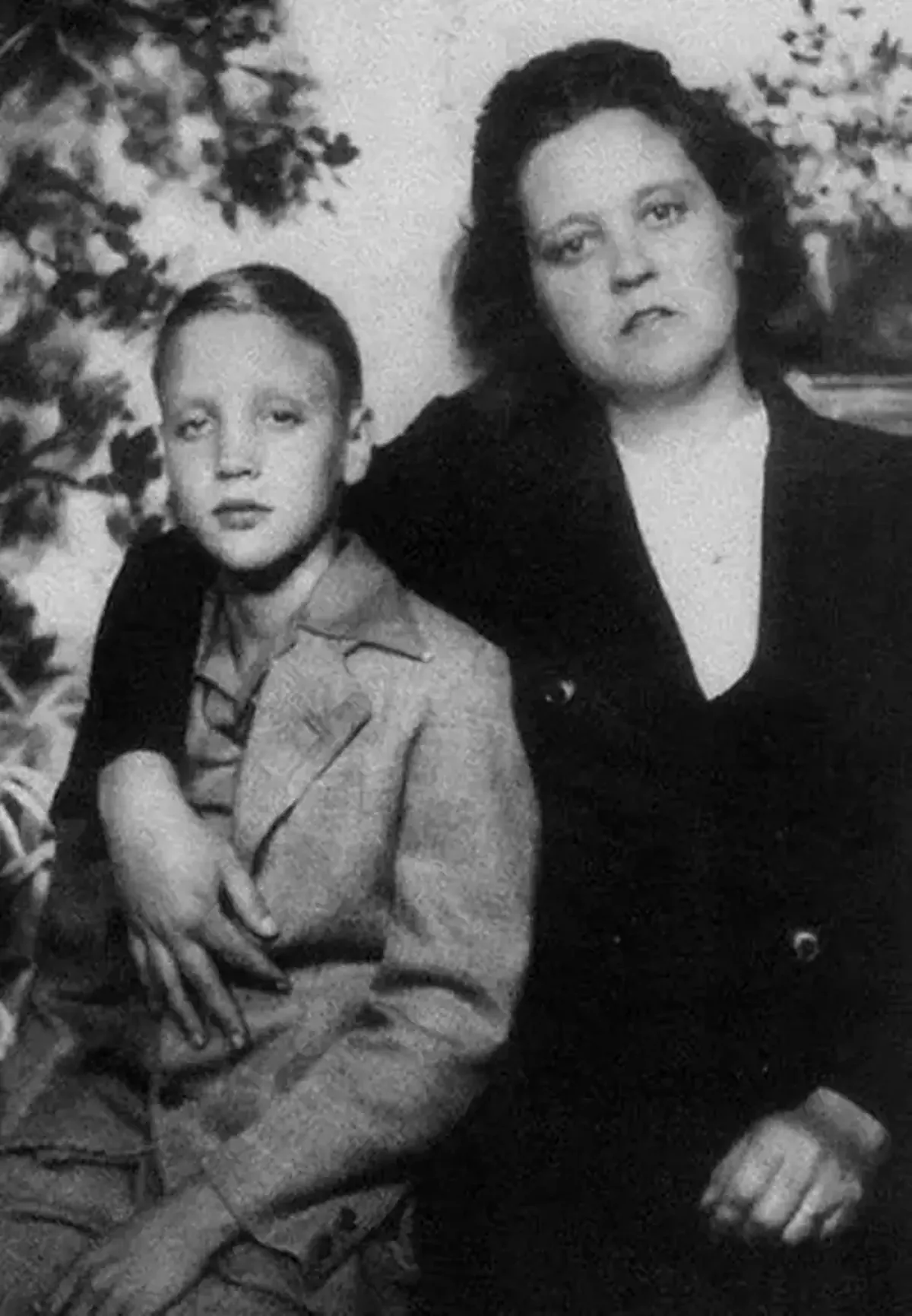
Within a year Elvis had learned the basics of guitar by watching his uncles and his pastor. Once he figured out how to make the instrument sing, he remained too shy to perform publicly with it—he would fear the stage even at the peak of his career, though his brash stage persona hid that fear.
At school Elvis kept to himself. He preferred practicing with his guitar in a corner over joining in school pranks; he brought the instrument to class and worked during breaks. He absorbed rhythms from the neighbors, including a truck driver’s family who lived in a low-income Black neighborhood. He became more serious about music after the family moved to Memphis, Tennessee, where his father had better chances of finding work.
The King of Rock and Roll
Elvis recorded his first two songs in 1953 as a surprise for his mother. The experimental record cost him $8 and was cut at the Memphis Recording Service. Enthralled by the process, he soon returned to lay down more tracks. By the summer of 1954 the studio invited him back to record formally as a vocalist. That session wasn’t a breakthrough, but he later made demo recordings with musicians from a local amateur band, the Starlight Wranglers. When the studio owner played that demo on a local radio station it ran repeatedly, and listeners were intrigued by his unusual singing style. On air, hosts even asked which school he attended to prove he wasn’t Black—a stark reminder of how segregation shaped public perception.
Presley began to believe in himself. Just a month earlier he had failed an audition for the Songfellows quartet and flopped at a trial performance in a Memphis club. People told him he couldn’t sing and should stick to truck driving. In a few months the story reversed: by mid-summer 1955 Billboard and Cashbox named him “the most promising star in country music.” With the help of his new manager Tom Parker, Elvis signed a contract at the end of 1955 that gave him 5% of record-sales profits.
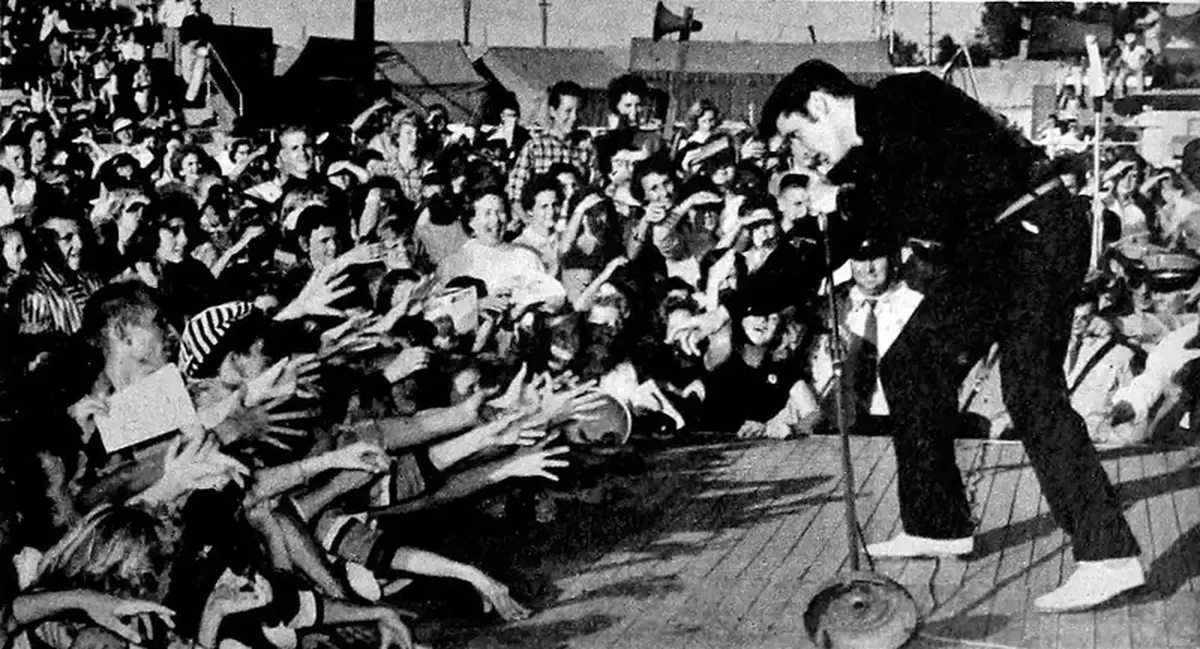
The first records of 1956—”Heartbreak Hotel” and the debut album Elvis Presley—topped the American charts and sold more than a million copies. Presley became a regular on national television, and by the late 1950s his popularity even crept behind the Iron Curtain: in 1957 The New York Times reported on young people in the USSR who were excited about the American singer. His songs charted in Canada, the UK, Italy, South Africa, and Australia. After signing exclusive management with Tom Parker, Elvis appeared on Frank Sinatra’s TV show and was christened “the King of Rock and Roll” by Variety.
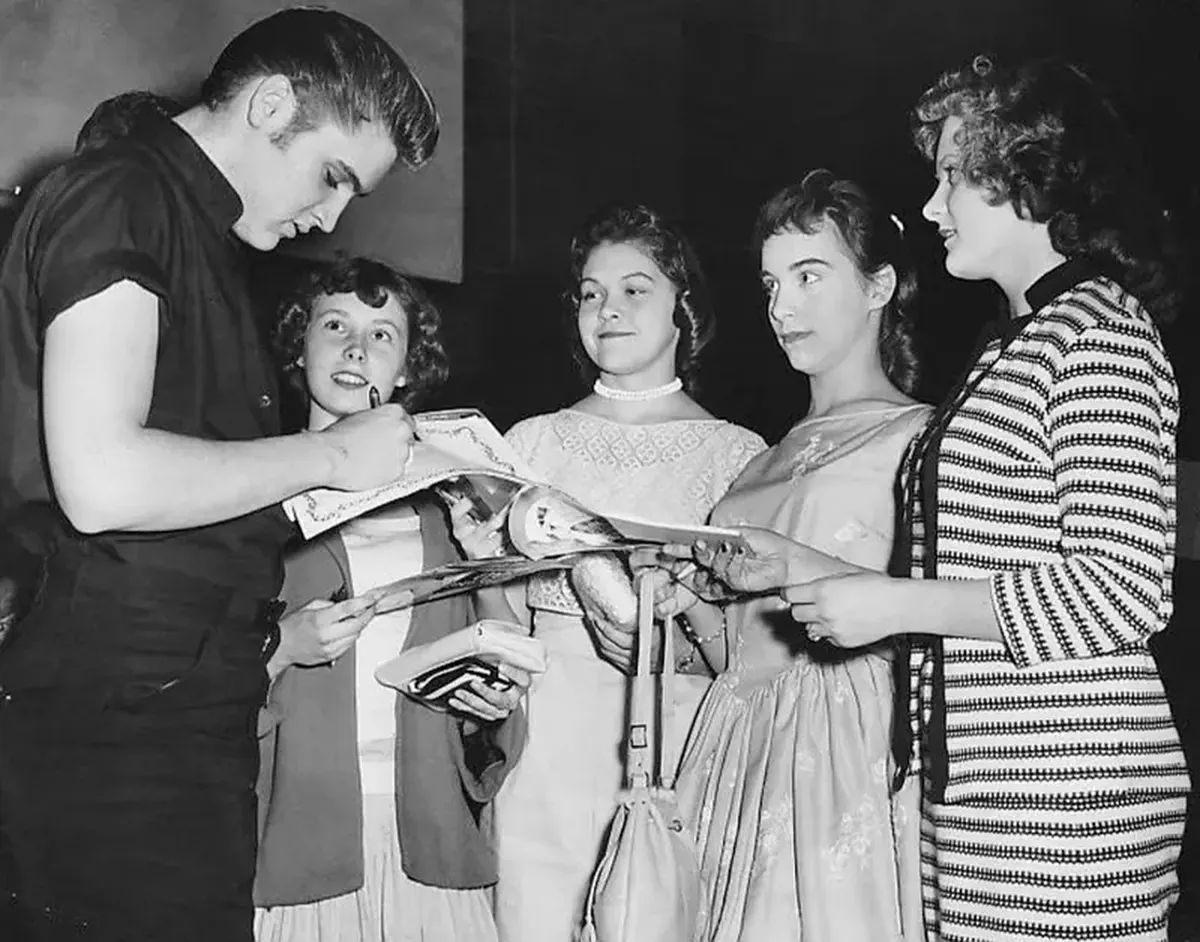
Elvis signing autographs (1956)
Army or Career
Alongside his musical rise, Presley chased a movie career. After his first film, Love Me Tender, in 1956 he starred in Loving You in 1957, a film that drew on his own biography. For his first of nine films produced by Hal Wallis at Paramount, Elvis dyed his hair black and largely kept it that way until his military service. Presley was drafted on December 20, 1957, though he received a brief deferment for filming. By the time of his induction he had already bought Graceland in Memphis and moved family members into the house. That same year he gave several concerts in Canada—his first and last performances abroad.
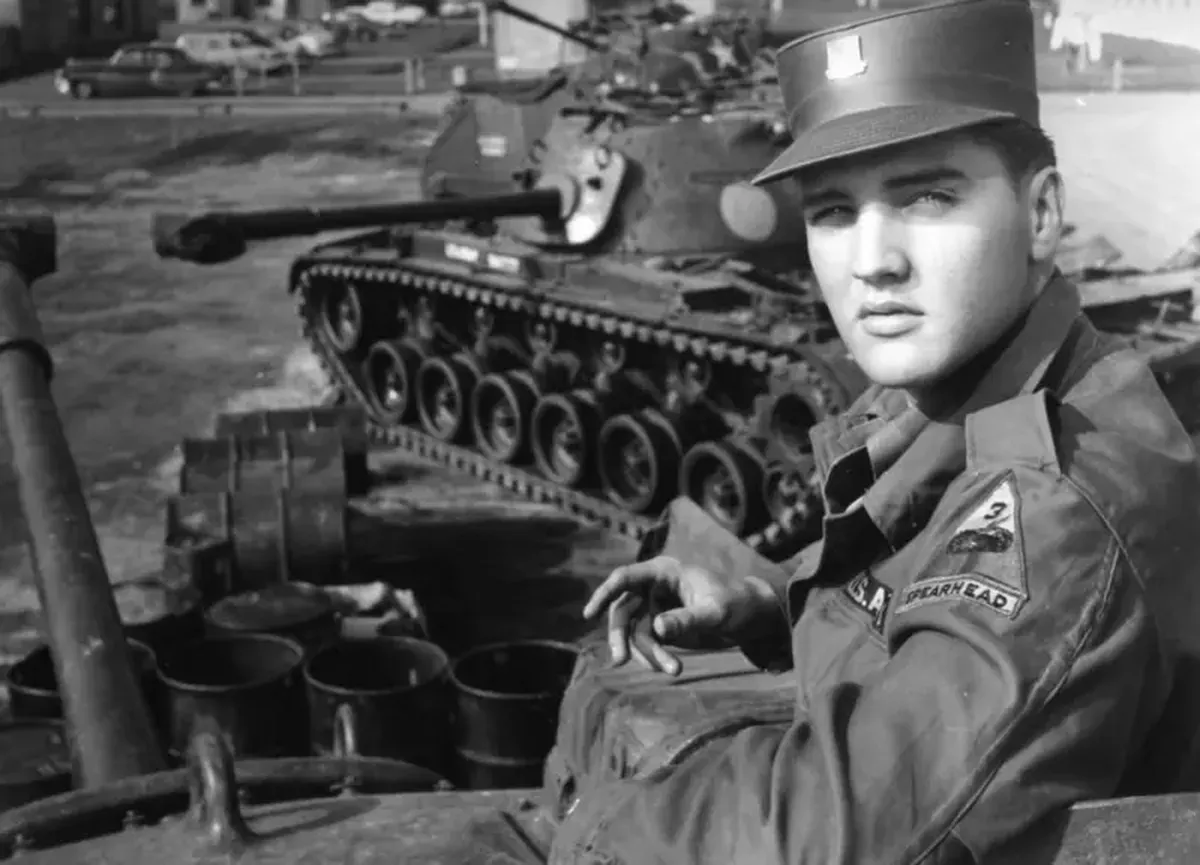
The Army wanted to use the young star to promote service. In interviews the striking young man (army papers listed his height as 6 feet) spoke about wanting to be a soldier, but he also worried that his career might collapse. He did not perform while in uniform. News of his mother’s failing health further drained him. Gladys’s premature death weighed heavily on Presley; her anxiety over his fame and tours led her to drink and take amphetamines, which contributed to her death at 46 from a heart attack and severe liver damage.
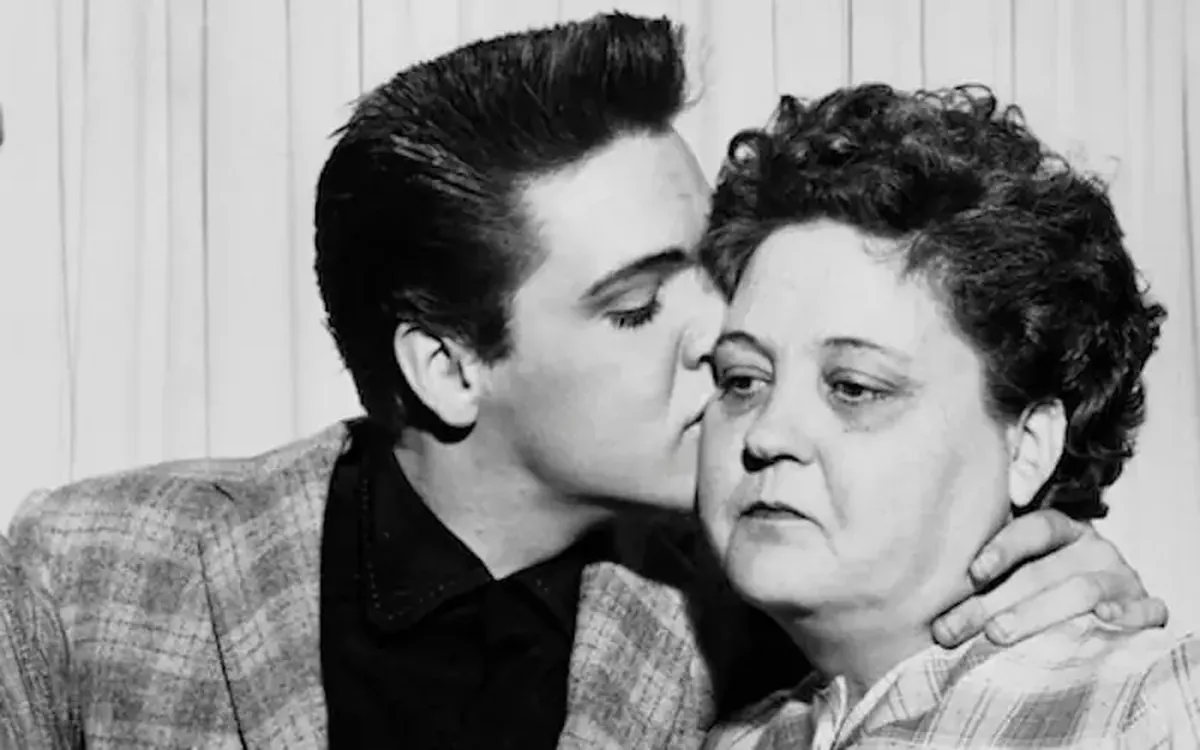
Back in Memphis after his service, Elvis was inconsolable. The 23-year-old soldier said goodbye to his mother in their childhood “bird language,” hugging Gladys and begging her not to leave. After her death he lost his anchor and began to follow a similar path, becoming dependent on pills. Priscilla Presley, whom he met while stationed in Germany and who later became the mother of his daughter Lisa Marie, told People in 2018 that during night maneuvers and guard duty Elvis used stimulants given to soldiers to stay awake. “They were given to soldiers to keep them awake,” Priscilla said. “And during some performances, energy pills alternated with sleeping pills. He was in uncharted territory, trying to tackle the problem alone.”
From the Tank to Hollywood
Presley served in the 3rd Armored Division, stationed in Friedberg, West Germany, and lived in a rented house in Bad Nauheim. His father, relatives, and friends moved in to act as managers, accompanists, bodyguards, and staff; the star’s entourage became known to some as the “Memphis Mafia.” While in the service he still released four LPs. After his discharge as a sergeant he returned to the studio. The 1960 album Elvis Is Back is widely regarded as one of his best, and the singles “Stuck on You,” “It’s Now or Never,” and “Are You Lonesome Tonight” topped the charts. His television duet with Sinatra reportedly caused fainting among fans, but aside from a few charity concerts in 1961 Presley did not perform again until 1969.
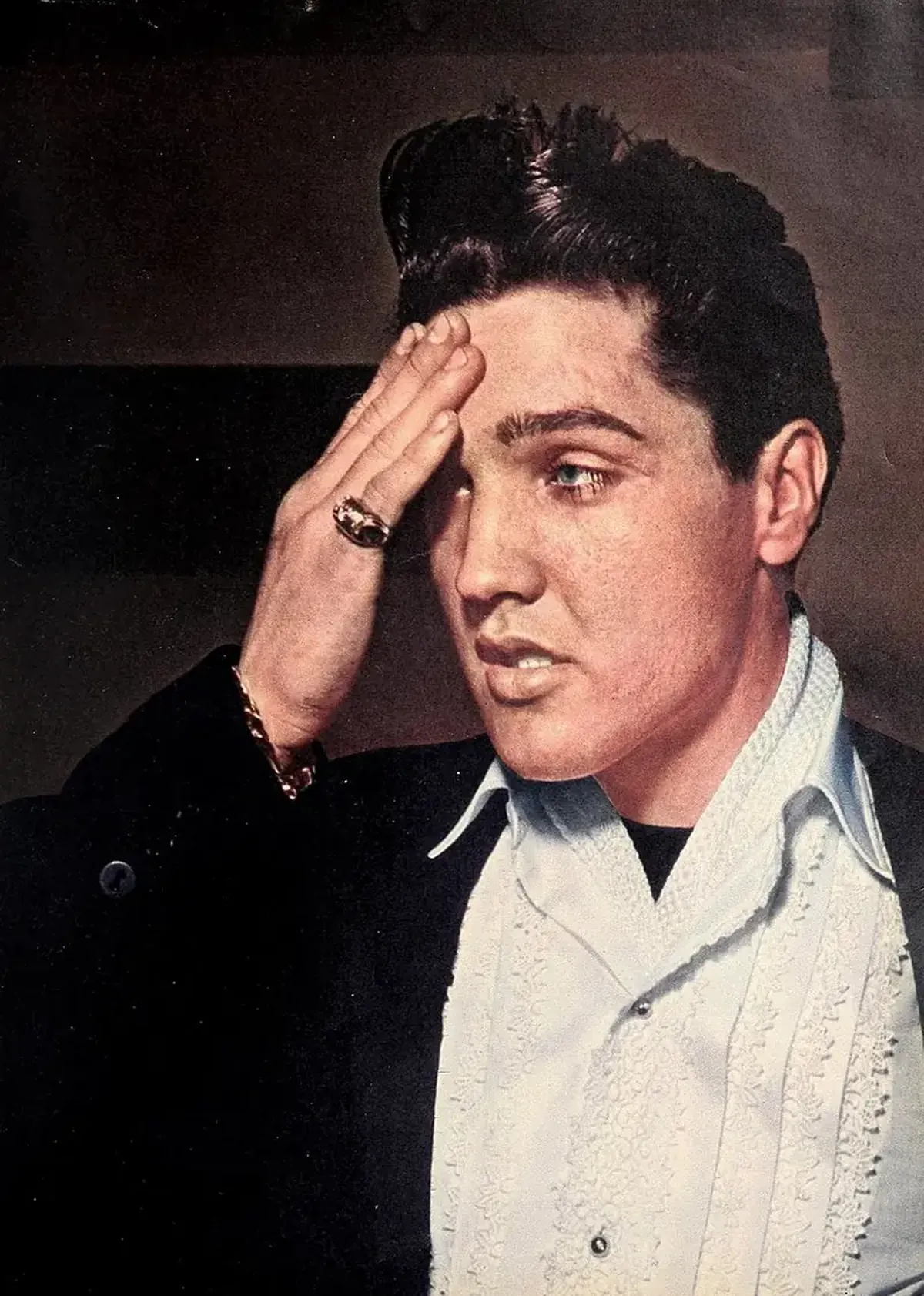
He moved to Los Angeles to focus on films, but the similar roles he was offered failed to satisfy him. Only the first musical comedy, G.I. Blues, which drew on his service in Germany, earned consistently positive reviews. Its soundtrack topped the charts and earned two Grammy nominations. A real turn came with 1961’s Blue Hawaii, where Presley sang 14 new songs, including the hits “Blue Hawaii” and “Can’t Help Falling in Love;” the film became one of the box-office leaders of 1961–62.
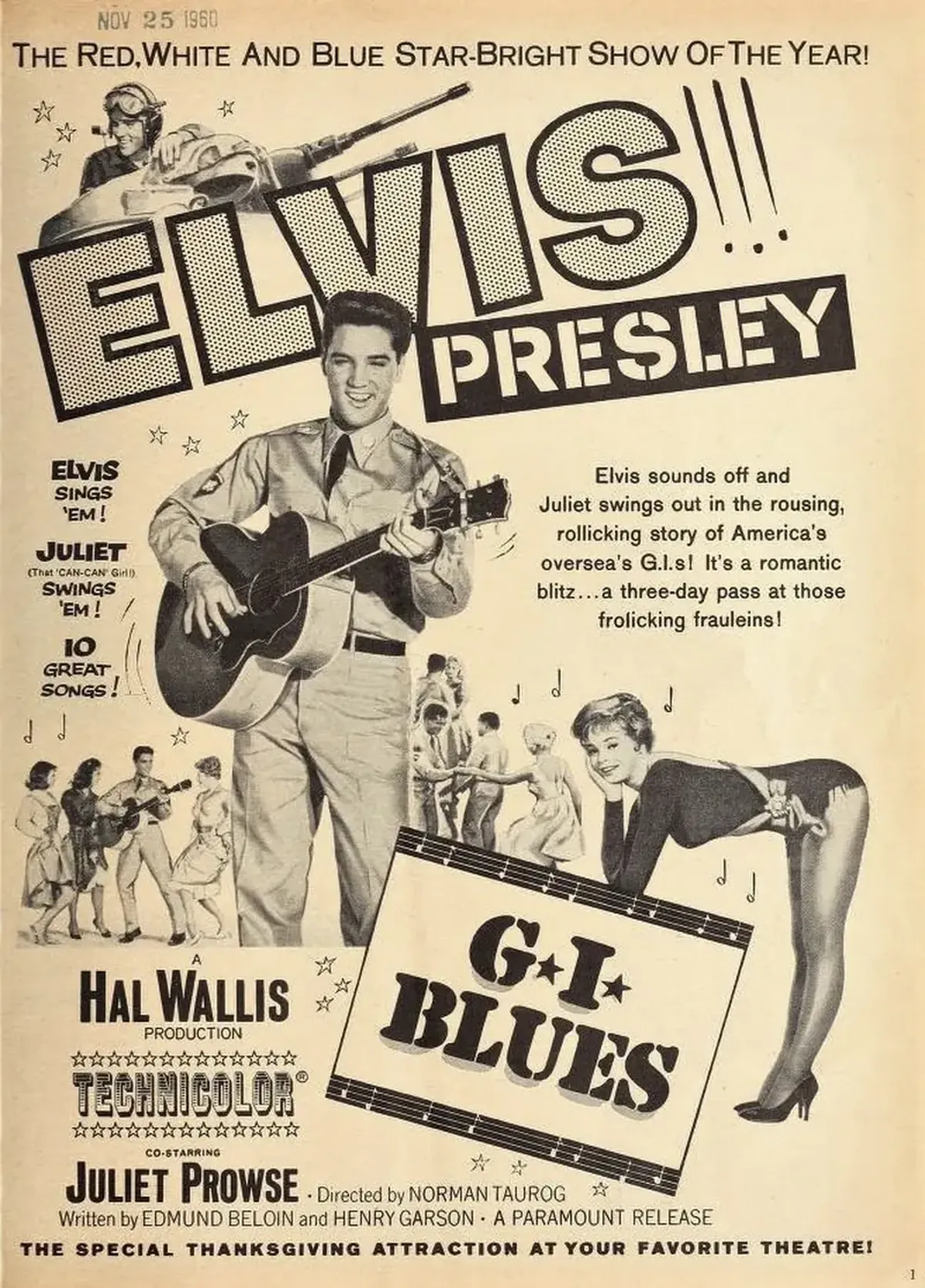
Poster for the film “G.I. Blues,” 1960
Under a contract with Metro-Goldwyn-Mayer Presley earned $500,000 per film (about $4 million today) plus half the box office; Paramount paid him $175,000 per picture. Under his demanding manager he churned out films at a blistering pace—often three a year. That conveyor belt of formulaic movies and identical soundtracks eventually wore out audiences: by 1967 the album Clambake had the lowest sales of his career. As the British Invasion led by The Beatles reshaped pop music, Presley needed a new approach, and by 1969 his film career was winding down.
A New Image
Tired of formula, Presley decided to return to the stage with a show that ignored his movie material. The 1968 television special ended not with the expected holiday numbers but with the socially charged “If I Can Dream.” The special became the season’s most-watched TV show and helped renew his musical style and image. New 1969 Memphis recordings that mixed country, pop, and rhythm and blues earned praise from critics. He also signed a lucrative Vegas deal: engagements at the new International Hotel (renamed the Las Vegas Hilton two years later) paid unprecedented fees.
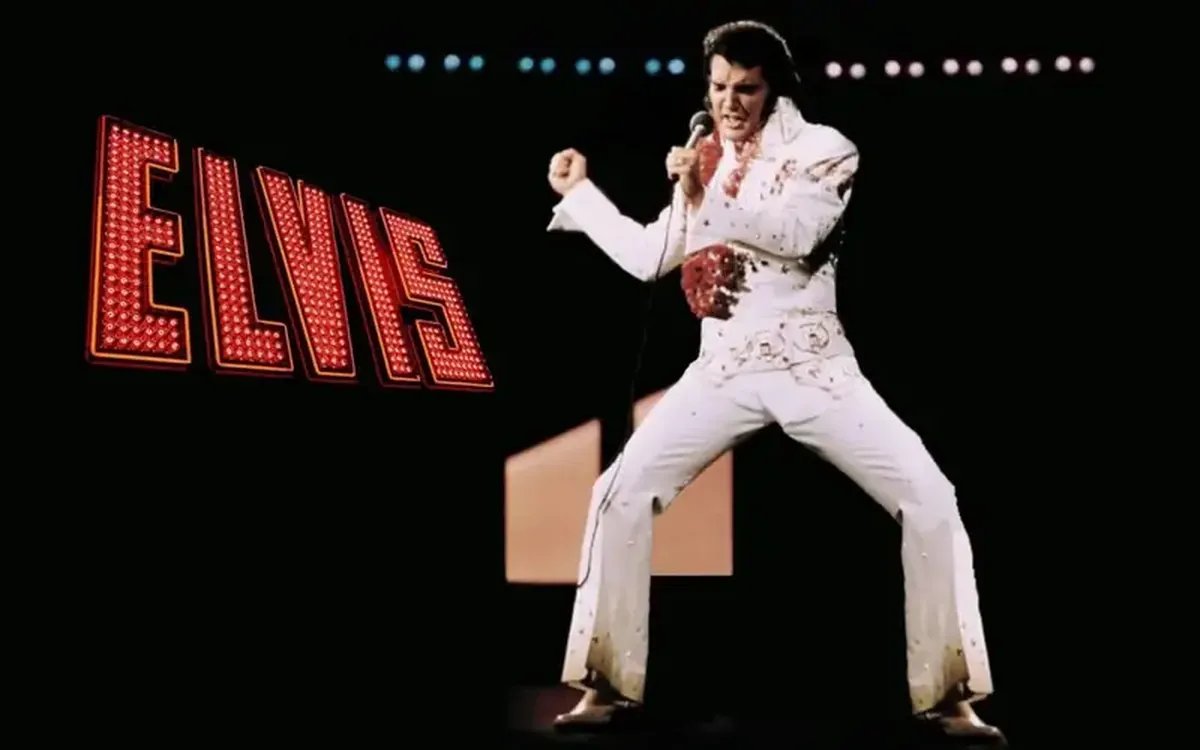
The “Elvis” Show
Elvis moved away from his early rock-and-roll sound even as rock came back into fashion. In just four weeks he gave 58 concerts, often performing twice a day. Over 130,000 attendees set a record for Las Vegas venues. That success pushed him into full-time concert work and a five-year contract with the hotel. By 1970 he appeared onstage in a white flared jumpsuit with a flashy buckle and macramé trim; his costumes grew ever more elaborate, studded with metal, rhinestones, and gems. Witnesses said his shows took on the feel of ceremonies and rituals. When he finished a set he often left quickly to drum rolls while the emcee announced, “Elvis has left the building.”
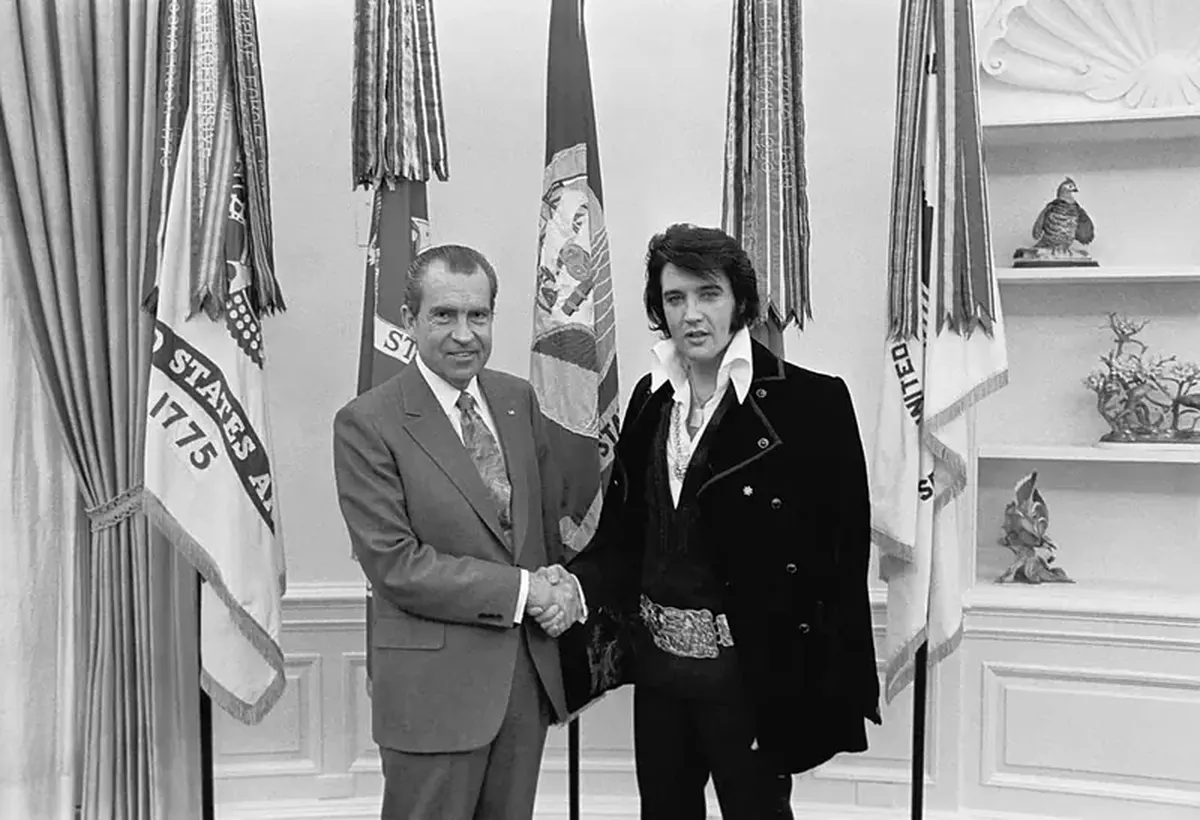
U.S. President Richard Nixon and Elvis Presley
But the grind of Vegas soon bored him. After meeting President Richard Nixon in late 1970, Presley received an honorary title as an officer in the fight against drugs—an irony given his own drug use. The medications his doctors prescribed were not, in his view, a vice; he said they helped him keep up with the workload. Between 1969 and 1977 he gave roughly 1,100 U.S. concerts. In the studio he recorded 44 new compositions and released his third gospel compilation, He Touched Me, in 1973, which won the Grammy for Best Gospel Album. His first global satellite broadcast aired in 1973 to 38 countries; Elvis donated the $900,000 fee and all ticket profits to a cancer charity.
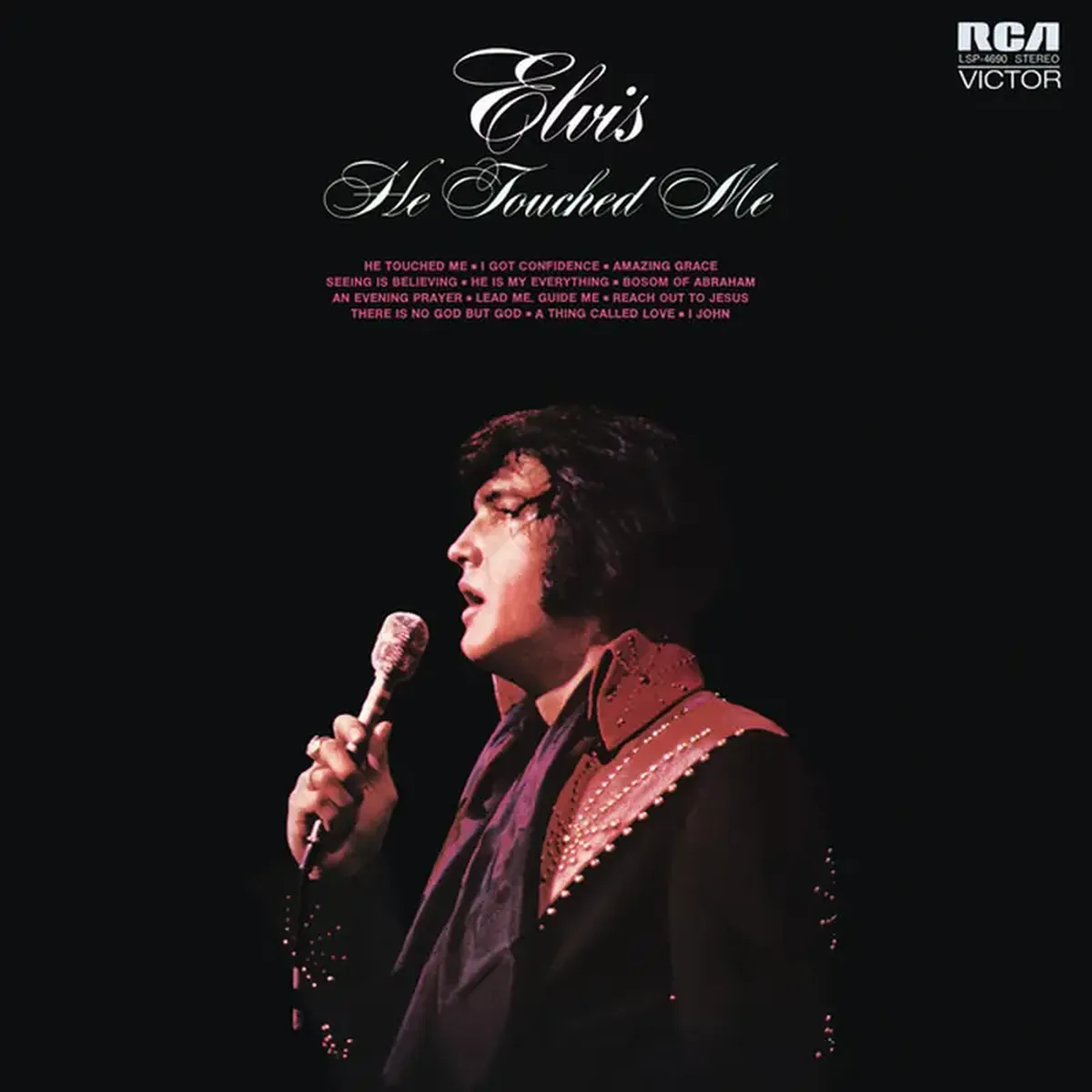
“What Happened, Elvis?”
Meanwhile, Presley often ignored his health while battling a dependence on prescription drugs. In 1970 he was diagnosed with glaucoma in both eyes and began wearing dark glasses. His medical problems later included chronic hepatitis, diabetes, stomach ulcers, gastrointestinal bleeding, hypertension, pulmonary insufficiency, and back pain.
When he couldn’t get out of bed he agreed to hospitalization and detox, but he tended to fall back into old habits once he returned to work. He binged on calorie-heavy steaks and fried sandwiches of bacon, banana, and peanut butter—the so-called “Elvis sandwiches” he had loved since youth. So desperate to break his food addiction, he once asked doctors to induce a drug coma to keep him from eating for a while.
Elvis’s rapid rise from poverty to fame seemed to embody the American Dream, but by the 1970s heavy weight gain and lethargic performances had erased the sex-symbol image of his early years.
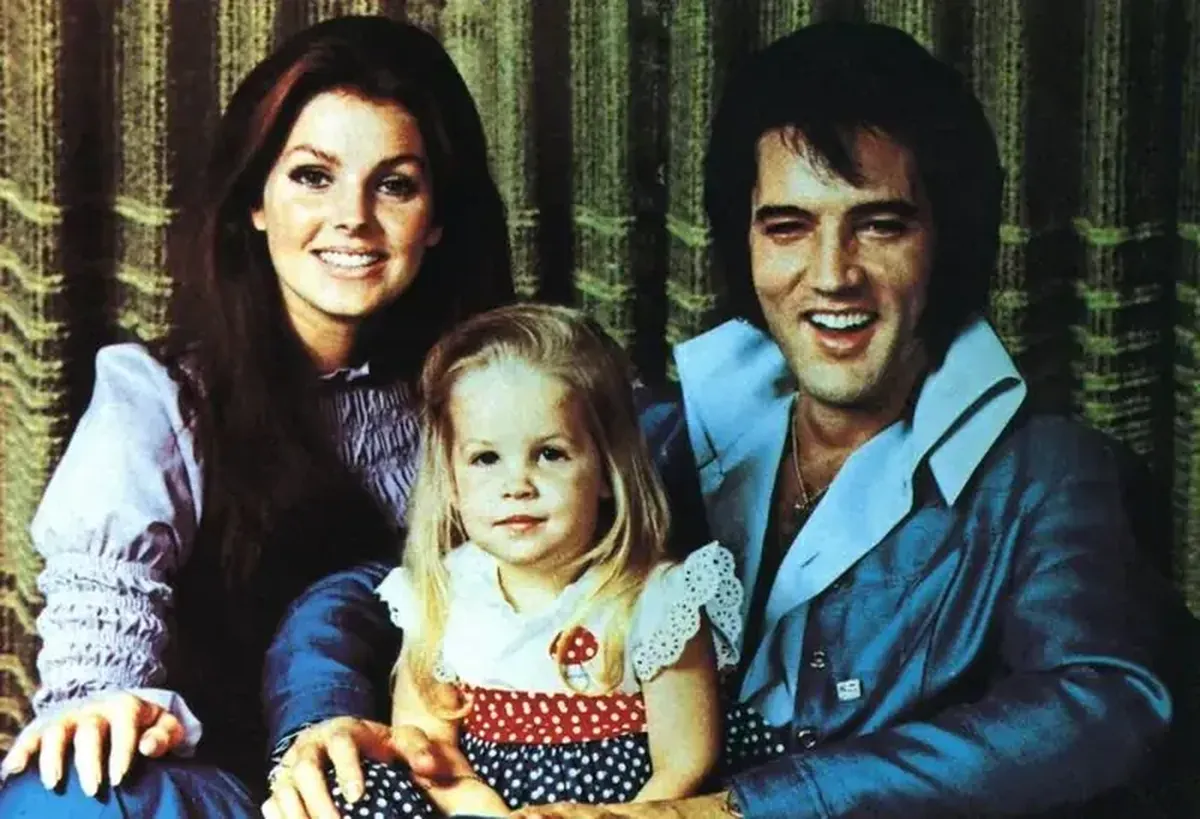
Elvis with his wife and daughter
His family life also collapsed. Marital cooling after the birth of their daughter led to mutual infidelities. Priscilla’s brief affair with a dance-school owner turned into a romance with karate instructor Mike Stone, and in 1972 she told Elvis she was leaving him for another man. The string of girlfriends Presley was seen with after the divorce made many doubt the relationships were serious. His last companion was considered by his father and friends to be “the worst of his companions,” criticized for not traveling with him and for refusing to spend nights under the same roof.
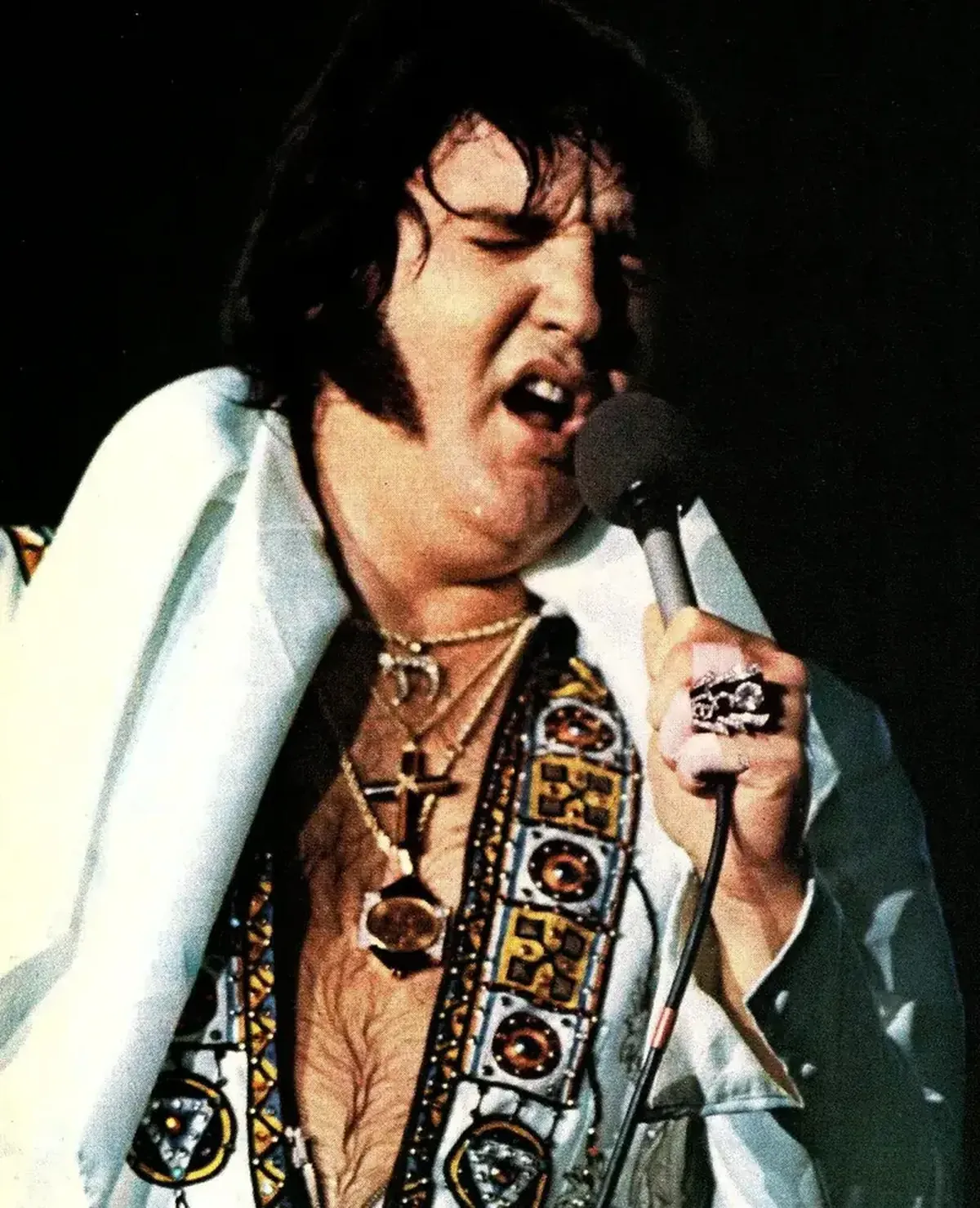
One of the last photos of Elvis
Presley slept with the air conditioner blasting and woke in the afternoon because he often fell asleep only in the morning. Between concerts he read books on spiritualism and indulged his appetite. By 42, the age at which he died, his weight had reached about 350 pounds—roughly 50 percent more than a decade earlier. In 1975 he even stopped bathing at times, which led to sores on his body. Rooms in his home and in hotels were kept dim, monitored by cameras, and staffed by constant security. Two former bodyguards, Red and Sonny West, published a tell-all called What Happened, Elvis? after losing their jobs; the book revealed unpleasant details of the star’s daily life and shocked fans. Presley sank into depression over what he saw as the betrayal of childhood friends.
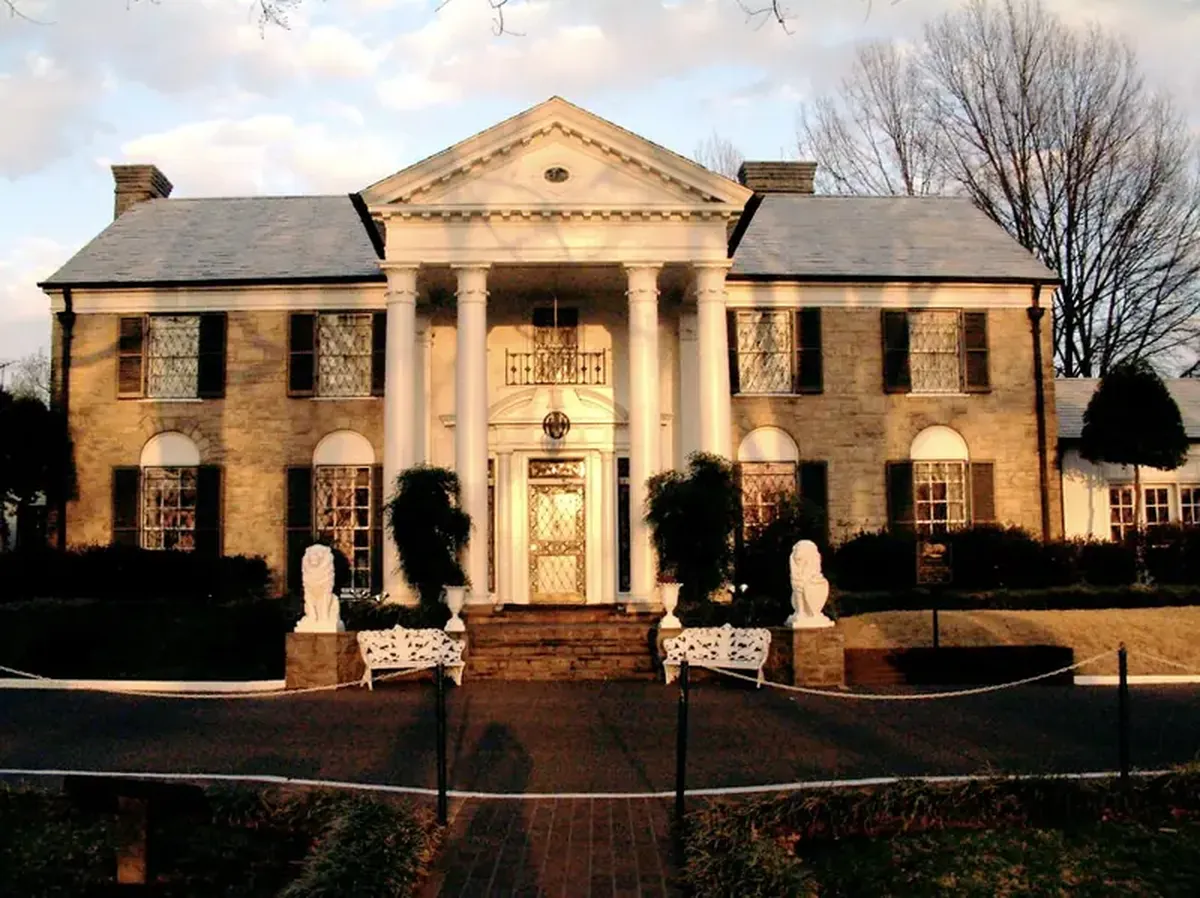
Elvis’s mansion, where he spent all his free time in the 1970s
How Did Elvis Die?
By 1977 Presley’s personal physician had written nearly 200 prescriptions totaling over 10,000 doses of narcotics, amphetamines, and sedatives. After his death pathologists found 10 prescription drugs in his system—painkillers, anti-anxiety medications, and sedatives. The long decline in his health culminated in Elvis Presley’s death on August 16, 1977. After returning from the dentist well past midnight, he spoke with his girlfriend Ginger Alden and went to bed, having taken two sedatives, the second of which proved critical. When she woke in the afternoon she found him lifeless on the bathroom floor; his death was announced two hours later.
The doctor who first spoke publicly before toxicology results were in did not immediately link Presley’s heart failure to drugs, instead suggesting anaphylactic shock from a codeine pill prescribed by the dentist (Presley was reportedly allergic to codeine). Later reports said Presley’s heart was enlarged and that 14 drugs were found in his tissues, 10 of them in significant amounts. Although a court cleared his personal doctor of criminal liability, the physician’s medical license was revoked. The secrecy around the investigation spawned conspiracy theories that Presley had faked his death to pursue spiritual matters; alleged photos of him surfaced periodically in the press claiming to show him alive in various places.
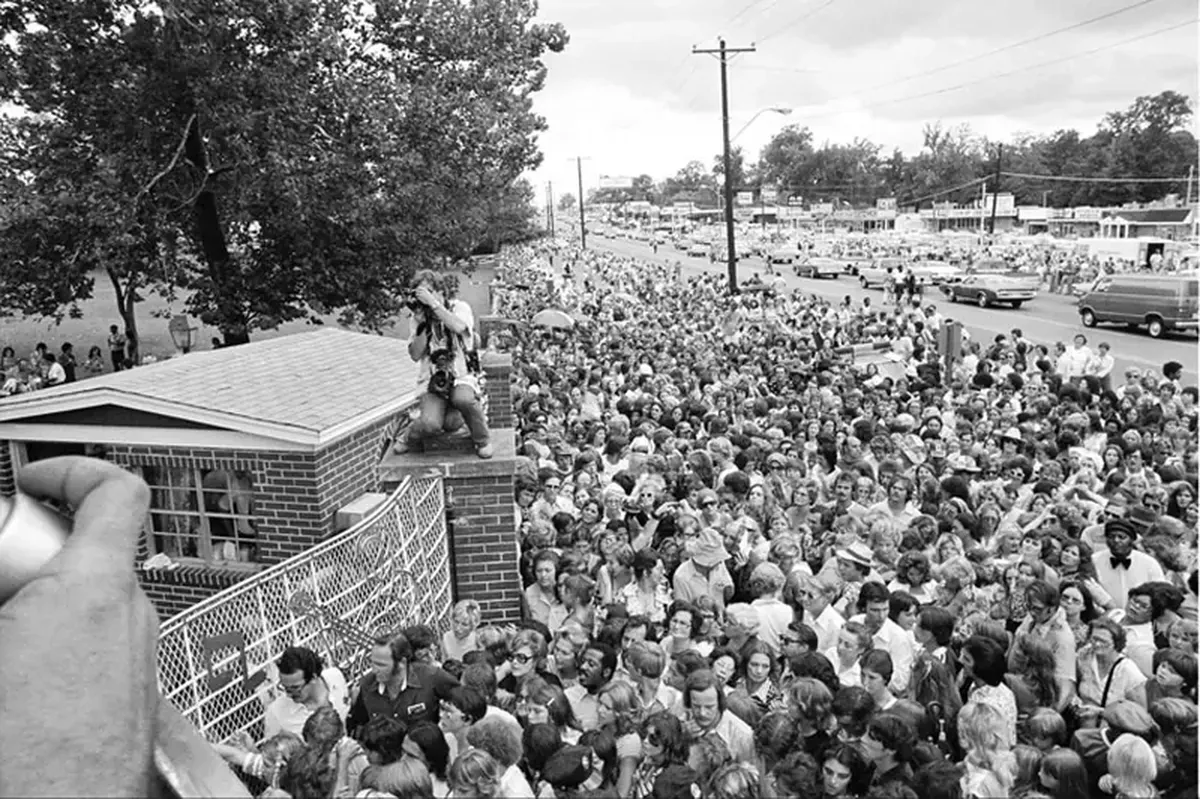
Elvis Presley’s funeral
Frenzied fans even tried to break into the coffin to check for themselves, so his remains were moved from the cemetery to private grounds at Graceland. In 2006 some media ran stories claiming Elvis had lived in secret into the 1990s. Since the late 1980s pseudo-religious groups have sprung up in the U.S. centering on Presley worship and the expectation of his “second coming.” For many fans Elvis was a deity even while he lived. A three-time Grammy winner, he was among the first musicians inducted into the Rock and Roll Hall of Fame, and six of his songs appear on the list of “Songs That Shaped Rock and Roll.” Unreleased recordings still surface, and his record sales have topped one billion.
