
 Gaby
Gaby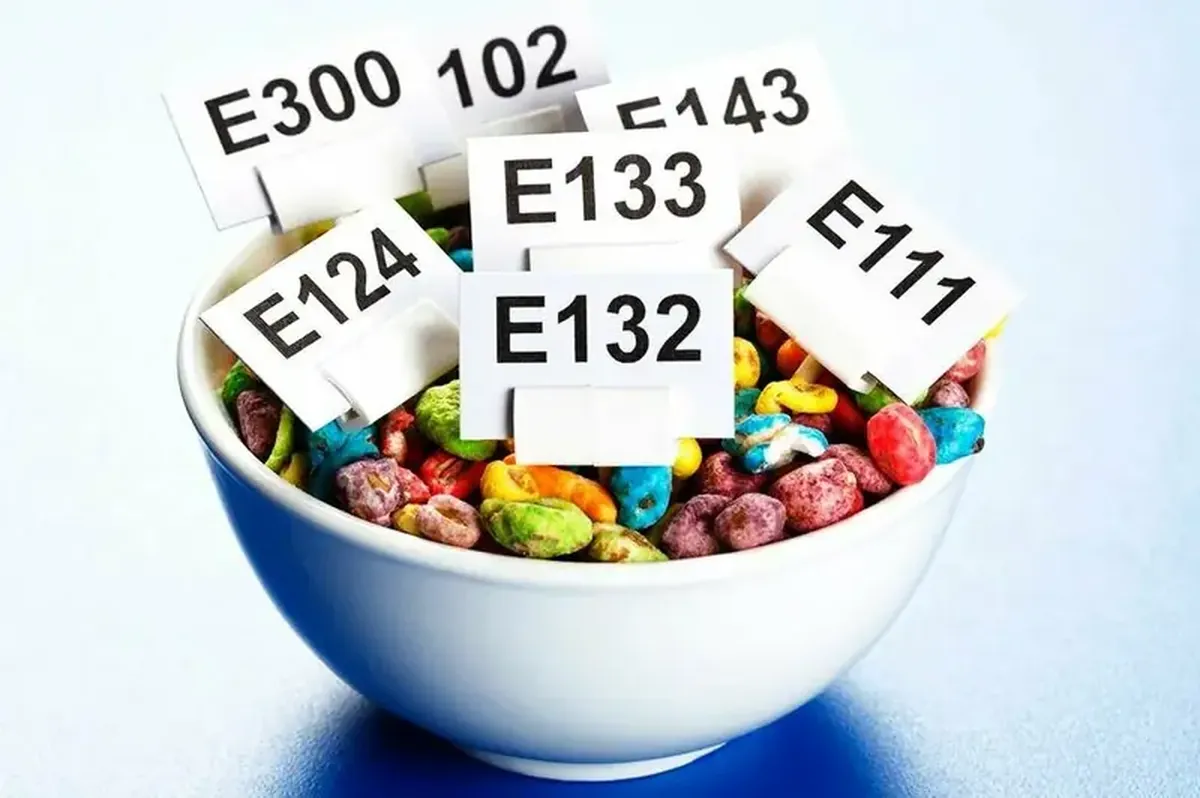
The global market for food additives is projected to reach at least $140 billion in 2024, and experts expect it to double in the coming years. Which additives are safe to eat, and which could pose health risks?
Why People Distrust Additives
Food additives are substances added to products to give them desired properties — flavor, color, texture, or longer shelf life. These include colorants, flavorings, taste enhancers, sweeteners, leavening agents, thickeners, antioxidants, film-forming agents, foam stabilizers, moisture retainers, fillers, preservatives, stabilizers, emulsifiers, and more. Contrary to the beliefs of proponents of “natural food” that additives are always harmful, that isn’t necessarily true: even salt and pepper are technically food additives.
This is not a new invention, although the variety and popularity of additives have grown with the rise of processed foods over the past 200 years. Since the 19th century and especially during the 20th, countries have regulated the use of food additives, allowing some substances and banning others. For example, boric acid was widely used as a preservative during both world wars but was later banned because of its toxicity — banned temporarily in the 1920s and permanently from the 1950s. One can imagine the scale of poisoning caused by a dangerous additive that had been used to extend shelf life since the 1870s.
Such incidents helped foster widespread distrust of additives and created a bias against “chemicals.” Since the 1960s, the safety of food additives has been examined through numerous toxicological assessments before they receive legislative approval. In the European Union, the approval process for a new food additive can take decades. Regulators issue permits with large safety margins. Authorities establish a permissible daily intake for a substance based on body weight; for example, the limits are up to 120 mg/kg for monosodium glutamate, up to 40 mg/kg for aspartame, and up to 0.2 mg/kg for sodium nitrite.
As analytical methods improve, governments revise regulations on additive content, and substances once considered harmless are sometimes recognized as dangerous and banned. Examples include formaldehyde (E240) in chocolate bars and E121 in soft drinks. Because additives are often suspected of links to cancer, allergies, asthma, and other increasingly common health problems, some manufacturers replace the E number on ingredient lists with the additive’s name — for example, listing “monosodium glutamate.”
Allergic reactions are individual, so even seemingly harmless natural additives can be harmful to some people. There are cases where a substance naturally present in a product is declared a carcinogen: for example, in the U.S., flavoring beer with safrole — a compound found in sweet basil — is prohibited. Each country keeps its own list of banned additives, while international standards come from the Joint Expert Committee on Food Additives of the World Health Organization. Countries that are members of the World Trade Organization must follow Codex Alimentarius standards.
What Lies Behind the “E”
There’s no need to fear the letter — it’s simply a code. Pay attention to the number.
Beneficial Food Additives
Let’s start with the friendlier numbers and what they do.
E100 (curcumin) helps control weight.
E101 (vitamin B2 or riboflavin) supports metabolism and hemoglobin synthesis.
E160d (lycopene) strengthens the immune system.
E270 (lactic acid) has antioxidant properties.
E300 (vitamin C or ascorbic acid) boosts immunity.
E440 (pectin) cleanses the intestines and helps remove toxins.
E916 (calcium iodate) enriches foods with iodine.
Neutral Food Additives
The next group includes additives that are generally harmless.
E140 (chlorophyll) is the pigment responsible for the green color of plants.
E162 (betanin) is a red pigment from beets.
E170 (calcium carbonate) is a calcium salt of carbonic acid.
E202 (potassium sorbate) is a natural preservative.
E290 (carbon dioxide) is the gas that carbonates beverages.
E500 (sodium bicarbonate) is baking soda.
E913 (lanolin) is a foaming agent used in some confectionery products.
Harmful Food Additives
These components can pose a threat for people with certain chronic conditions.
People with allergies should avoid products that contain E131, E132, E160b, E210, E214, E217, E230, E231, E232, E239, E311, E312, E313, or E951.
People with asthma may be affected by products containing E102, E107, E122, E123, E124, E155, E211, E212, E213, E214, E217, or E221 through E227 — these additives can trigger an asthma attack.
People with thyroid conditions should avoid products with E127.
People with high cholesterol should avoid products with E320.
People who are sensitive to aspirin should avoid products with E107, E110, E121 through E124, E155, E214, or E217.
People with skin conditions should avoid additives E320 through E332.
People with liver or kidney disease should avoid additives E171 through E173, E220, E302, E320 through E332, E510, and E518.
Dangerous Food Additives
Some substances are banned in several countries because they pose potential health risks; those same additives may still be permitted in other places.
E123 (amaranth) can cause calcium buildup in the kidneys and may lead to developmental defects in fetuses.
E211 (sodium benzoate) is a potential carcinogen.
E220 (sulfur dioxide) can irritate the intestines; about a quarter of people cannot tolerate sulfur.
E249 (potassium nitrite) is a potential carcinogen and is banned in baby food.
E322 (lecithin) in food additives is often a phospholipid derived from transgenic soy.
E450 (pyrophosphate) can have a cumulative effect when present in dairy products and may contribute to osteoporosis and kidney stones.
E621 (monosodium glutamate) is an additive used in meat products that can cause food cravings and may affect brain cells; it is banned for consumption by children, teenagers, and pregnant women in some jurisdictions.
E622 (potassium glutamate) is a common component in fast food and can cause weakness, nausea, cramps, or diarrhea in sensitive people.
E951 (aspartame) is an additive used in soft drinks and sugar substitutes that can affect brain function, cause headaches, and trigger skin rashes in some people.
E952 (cyclamate) is a sweetener about 200 times sweeter than sugar and is banned in several countries because of concerns about carcinogenicity.
Examine ingredient lists carefully and avoid foods with long lists of additives. Consume fewer additives to reduce potential risks to your health.
