
 Carlos Solis
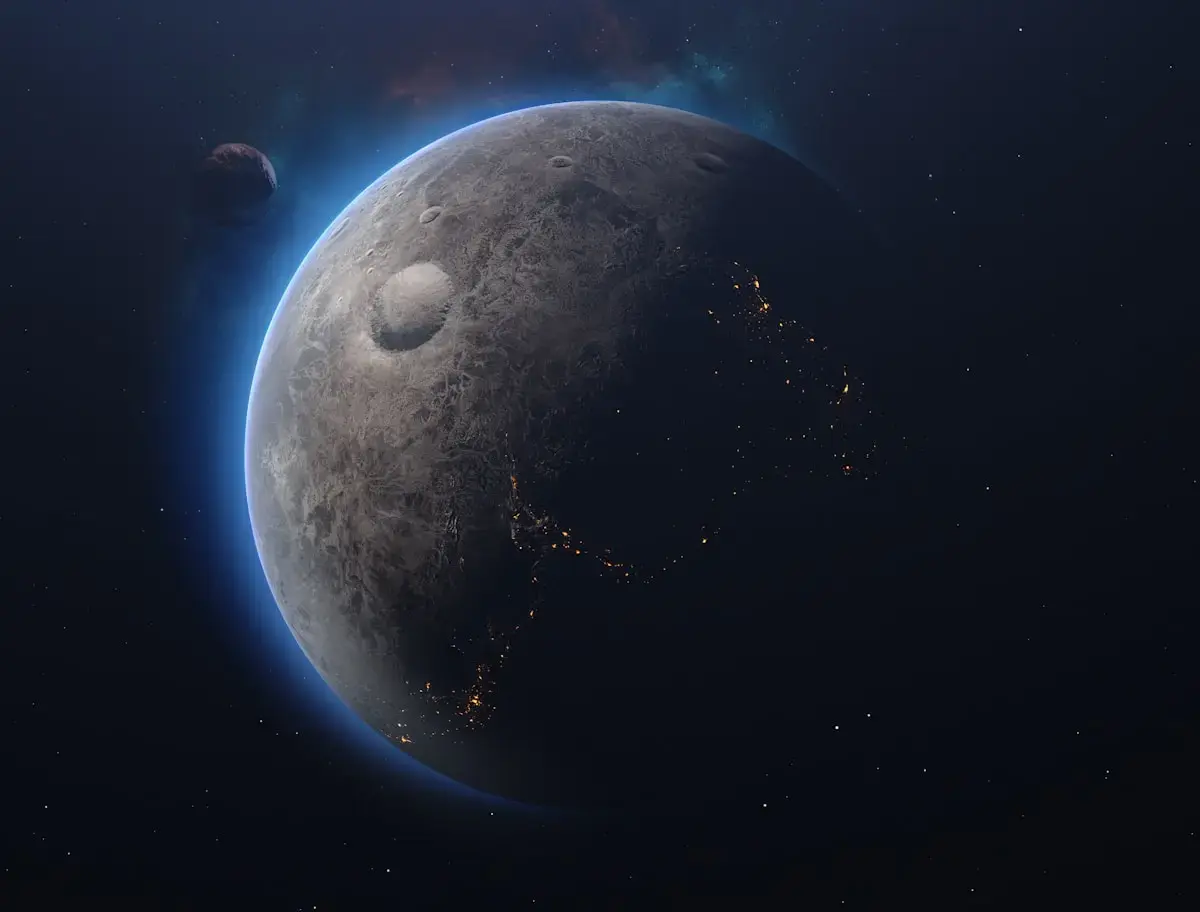 We usually look for life among the stars—on distant exoplanets and in mysterious galaxies. But maybe we should look closer to home. Researchers at NASA suggest that extraterrestrial life may once have existed in our Solar System—on the dwarf planet Ceres, according to the Daily Mail.
A Planet of Hidden Secrets
Ceres is located between the orbits of Mars and Jupiter. Today, it is a barren, frozen wasteland, but 2.5 to 4 billion years ago, warm underground oceans may have thrived here.
Evidence from NASA’s Dawn mission revealed traces of salt, organic carbon, and remnants of ancient bodies of water. All of these are key ingredients for life.
A “Buffet” for Microbes
Modeling has shown that the decay of radioactive minerals in Ceres’ interior heated water to 270°C. Hot streams would rise to the surface, mixing with cold salty lakes and creating a cocktail of minerals and gases.
Such “hydrothermal vents” on Earth have been the cradle for the first living organisms. Unfortunately, over time, these radioactive energy sources faded. The planet cooled, the oceans froze, and the window of opportunity for life closed. Today, Ceres is an icy sphere with a thin layer of brine, too cold to support even the simplest microbes.
Why Is This Discovery Important?
Scientists believe that Ceres is just one example. If this small world could generate its own internal heat and create conditions for life, then there could be countless similar worlds in the universe.
Helen Williams, a professor at Cambridge, said: “This discovery shows that life can arise in completely unexpected places.”
It turns out that “aliens” could very well have lived not in some distant galaxy, but right next door—between Mars and Jupiter.
Quick facts about Ceres:
- Diameter: 950 km
- Discovered on January 1, 1801, by Italian astronomer Giuseppe Piazzi at the astronomical observatory in Palermo
- The only dwarf planet in the inner Solar System
- Explored by NASA’s Dawn mission from 2015 to 2018.
