
 Gaby
Gaby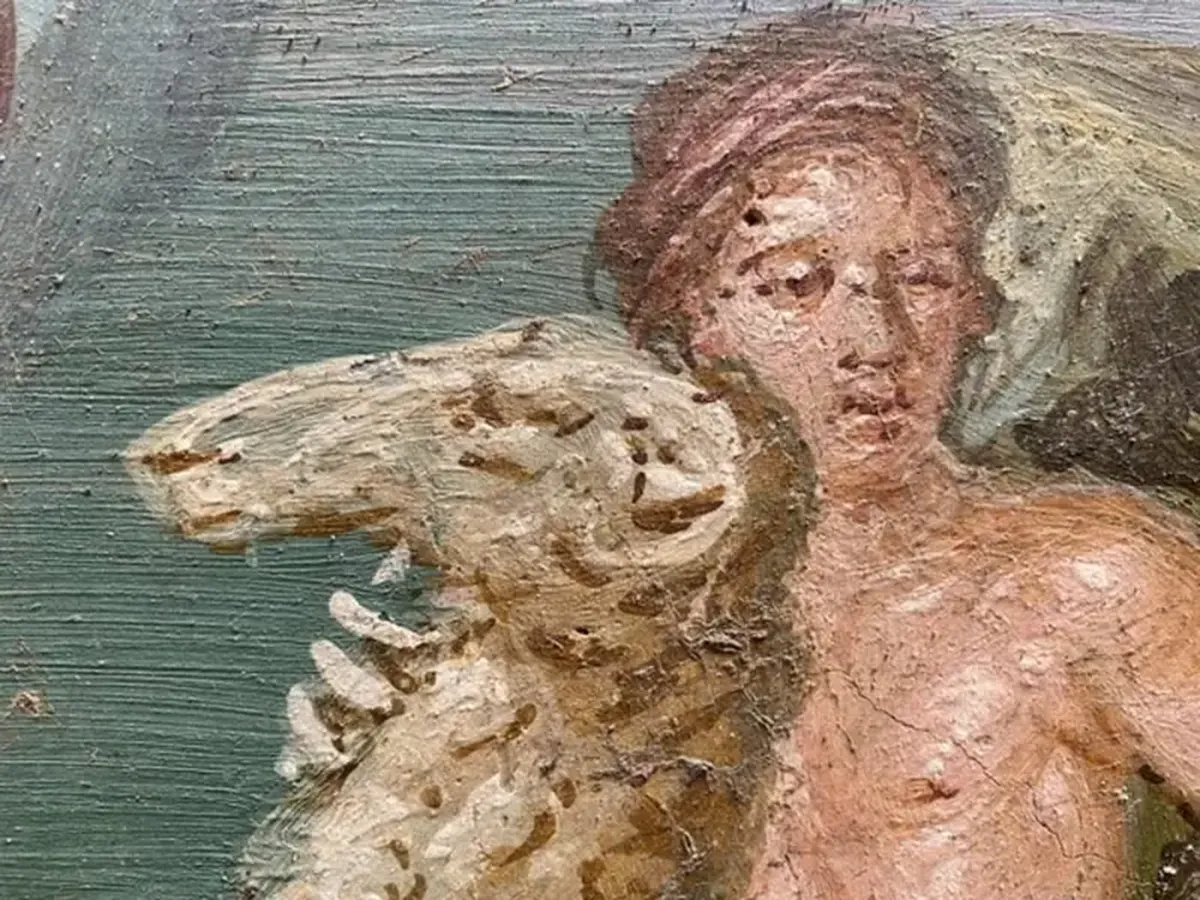
Ancient Roman Pompeii continues to astonish archaeologists with new discoveries. Recently, in the city devastated by Vesuvius’s first-century AD eruption, archaeologists uncovered a fresco showing Greek mythic heroes: Phrixus on a golden-fleeced ram and his sister Helle as she drowns. The wall painting, which decorated a Pompeian home more than two thousand years ago, has remarkably survived intact. The fresco shows vibrant colors and fine craftsmanship.
Gabriel Zuchtriegel, director of the Pompeii Archaeological Park, commented: “This is a beautiful fresco in excellent condition. The myth of Phrixus and Helle was widely known in Pompeii, and it still resonates today. It tells the story of two refugees — a brother and sister — forced to flee when their stepmother plots to get rid of them by deceit and corruption. Helle falls into the sea and drowns.”
What the myth is about
Phrixus and Helle were children of King Athamas. He betrayed their mother, the goddess Nephele, and married Ino, the daughter of Cadmus. Ino hated her husband’s children and decided to eliminate them. She blamed them for a famine she herself had caused, and King Athamas was pressured to sacrifice Phrixus. To save them, the goddess Nephele sent a golden-fleeced ram to carry the children away. As they flew over the sea, Helle panicked, lost her grip, and fell into the water, where she drowned. That stretch of water became known as the Hellespont, or the Sea of Helle (today’s Dardanelles). Phrixus reached Colchis, where King and sorcerer Aeëtes received him and gave his daughter Chalciope in marriage to Phrixus. The golden-fleeced ram was then sacrificed to Zeus, and word of the Golden Fleece spread beyond Greece.
***
Zuchtriegel said he hopes the houses in Pompeii will soon be open to visitors, who will be able to see the fresco of Phrixus and Helle.
Pompeii was destroyed in 79 AD by Vesuvius’s eruption, which killed more than 2,000 people. The ruins are now one of the world’s most visited archaeological sites.
The city attracts about four million tourists a year and nearly lost its UNESCO World Heritage status in 2013 over safety concerns at the archaeological park, The Guardian reported.
Recent surprises at Pompeii include 13 statuettes linked to the city’s pagan rituals and a striking still-life fresco that looks like a pizza topped with something resembling pineapple.
