
 Gaby
Gaby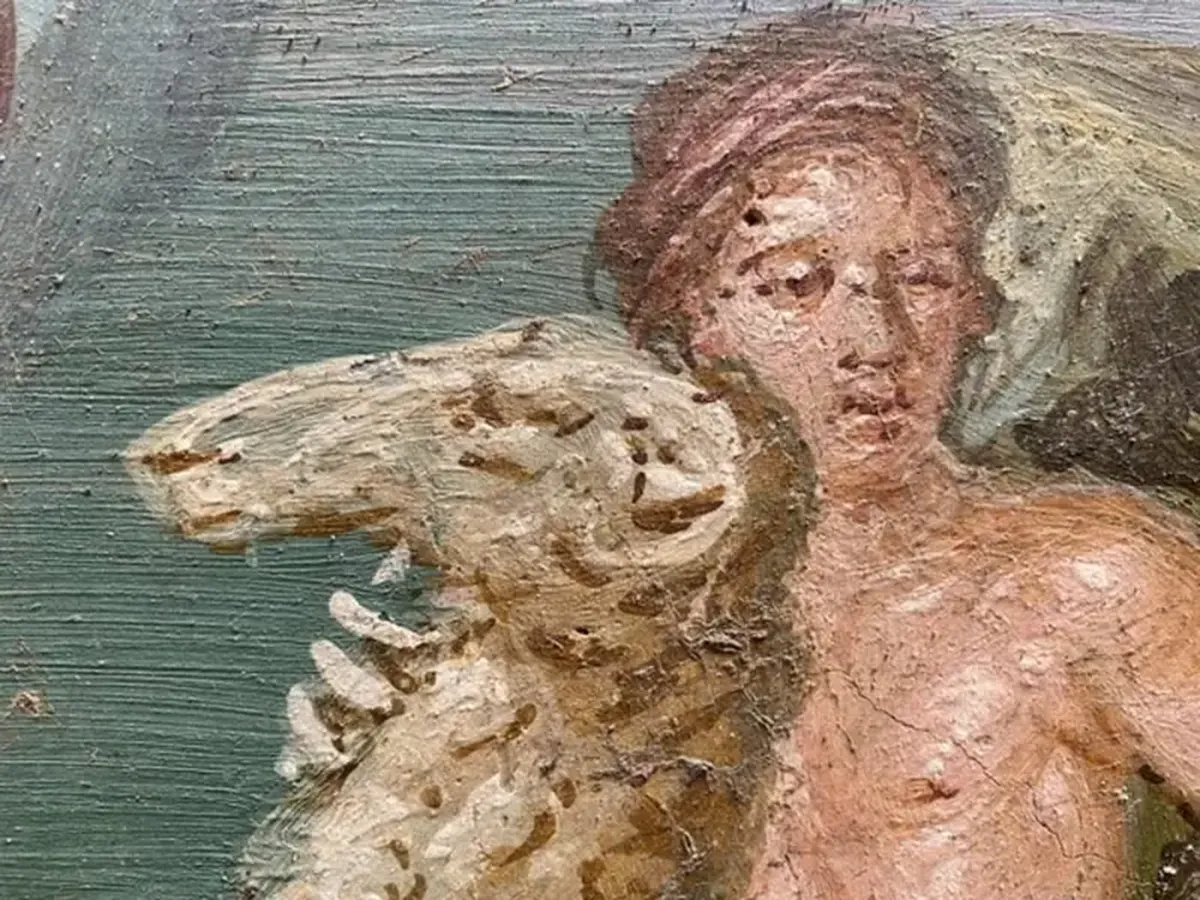
A team of Italian archaeologists announced a remarkable discovery. In the recently excavated House of Tias, researchers uncovered a massive, extraordinarily rare wall painting showing scenes from an ancient mystery cult. At the center of the scene is a woman being initiated into the cult under cover of night.
Discussing the find, Gabriel Zuchtriegel, the director of the Pompeii Archaeological Park, said the heroine of the fresco embodies women who “break free from male control to dance freely, hunt, and eat raw meat in the mountains and forests.”

What Did Researchers Say About the Rare Fresco?
The fresco spans three walls of a large banquet hall, with the fourth wall opening onto a garden. Against a vibrant red background, numerous maenads—followers of Dionysus, the god of wine—appear as huntresses carrying swords and slain goats, while young satyrs play flutes nearby.
The focal point of the fresco is an old satyr with a young woman who appears about to be initiated into the secret mystery cult of Dionysus. This ancient cult, whose practices date to the 5th century BCE, was kept secret from outsiders. The fresco provides researchers with a new key to understanding what happened among the cult’s followers.
Like their Greek counterparts, Roman initiates likely engaged in hunting. The painting suggests the secret rituals emphasized the connection between Dionysus and wild animals, as reported by Live Science.
Although many details of these mysteries have been lost over time because of their secrecy, ancient sources indicate the rituals involved copious consumption of wine and other intoxicants. That drinking often pushed followers into trance-like states. Dionysus was also associated with resurrection, a promise likely offered to those initiated into the mystery cult.

Researchers pointed to another famous fresco of Dionysian ritual found in the suburbs of Pompeii at the so-called Villa of Mysteries in 1909. That artwork also features satyrs, maenads, and a woman being initiated into the cult, but it lacks hunting scenes. Still, both frescoes, Zuchtriegel said, reveal the “wild, untamed side of women.”
The wall paintings depicting the mysteries of Dionysus at both the Villa of Mysteries and the House of Tias date to the mid-first century BCE, which means they were already more than 100 years old when Mount Vesuvius erupted in 79 CE. Buried under a thick layer of volcanic material, the wall paintings have been remarkably preserved for two millennia.
As Zuchtriegel noted, the frescoes also reflect a broader religious crisis: festivals honoring Dionysus and other secret rituals were banned in 186 BCE, yet the paintings suggest residents around Pompeii ignored that prohibition.
Italy’s Minister of Culture, Alessandro Giuli, said the frescoes from the House of Tias and the Villa of Mysteries are important historical documents that shed light on little-known aspects of ancient Mediterranean life.
