
 Gaby
Gaby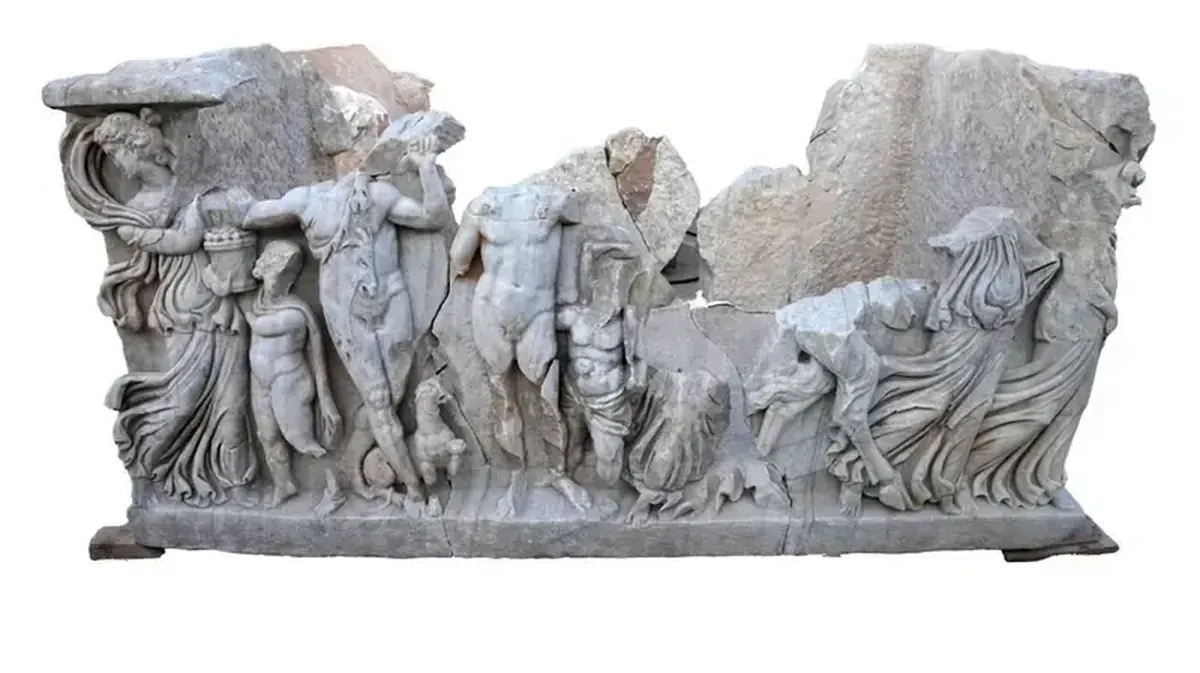
A team of archaeologists uncovered a marble sarcophagus from the Roman period — probably 2nd or 3rd century AD — in the ancient port city of Caesarea on the Mediterranean coast. The sarcophagus’s relief shows the Greek gods Hercules and Dionysus competing in a drinking contest.
“We started clearing away the soft, light sand of the dune when we suddenly spotted the tip of a marble object. The entire excavation team stood by in excitement as we cleared the sand; we couldn’t believe what we were seeing,” said archaeologists Nohar Shahar and Shani Amit from the Israel Antiquities Authority (IAA).
On the sarcophagus, the researchers observed relief images of animals, trees, and the gods Hercules and Dionysus locked in their drinking contest. “This is the first time we’ve found a scene of a drinking contest between Dionysus and Hercules on a sarcophagus in our region,” noted Nohar Shahar.
What else did the archaeologists reveal?
The sarcophagus was broken, the Independent reported. According to the archaeologists, each fragment discovered “was more astonishing than the last.”
At a pivotal moment during the excavation, the team uncovered an intact side panel of the sarcophagus. It depicts Hercules reclining on a lion skin with a cup in hand. The archaeologists felt that the god, known for his strength, “could no longer stand.” Thus they speculate that in the drinking contest it was not Hercules who emerged victorious, but his rival Dionysus — the god of wine — who is shown enjoying himself among mythological figures, tigers, and lions.
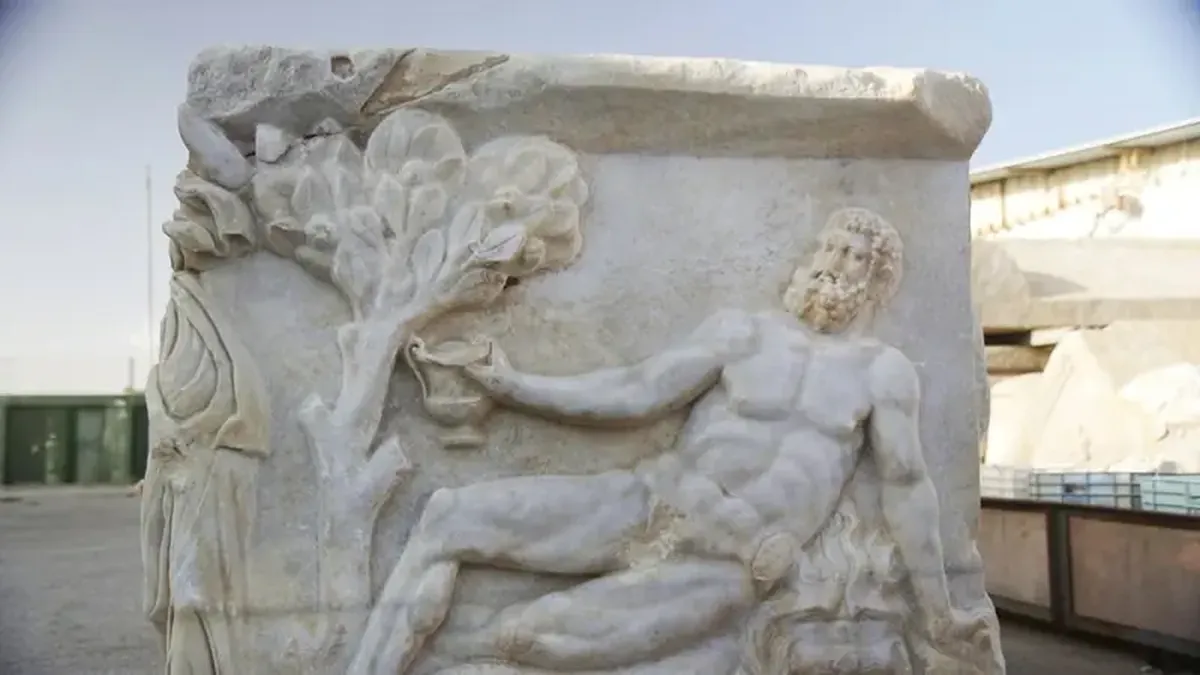
Nohar Shahar pointed out that scenes of Dionysus’s procession are commonly found on sarcophagi from that period. However, this specific theme of a drinking competition, a popular motif in ancient art, had previously only been seen in mosaics in this region, such as those discovered in the ancient city of Zippori.
Shahar said the imagery symbolizes more than celebration: “These gods are not merely celebrating; they are actually accompanying the deceased on their final journey, where drinking and dancing become symbols of liberation and transition to life in the afterworld. This sarcophagus offers an unusual perspective on death, not as an end, but as the beginning of a new path.”
Currently, restorers are cleaning and assembling the fragments of the sarcophagus.
Elie Escozido, director of the IAA, said the discovery “provokes thought and sheds light on the beliefs and daily life of the Roman era.”
