
 Gaby
GabyThe ancient Greek philosopher Democritus, who wrote extensively about space, assumed that there were habitable worlds within it.
And in 1898, H. G. Wells’ “The War of the Worlds”, which told the story of a Martian invasion of Earth, ignited the collective imagination (and fear) about dangerous extraterrestrials.
While working on the novel, Wells likely relied on a popular theory of the time that Mars was crisscrossed by canals. That idea came from the dark lines on the planet’s surface first observed in 1877 by the Italian astronomer Giovanni Schiaparelli. The British astronomer Percival Lowell suggested the dark lines were actual canals, possibly built by an intelligent civilization.
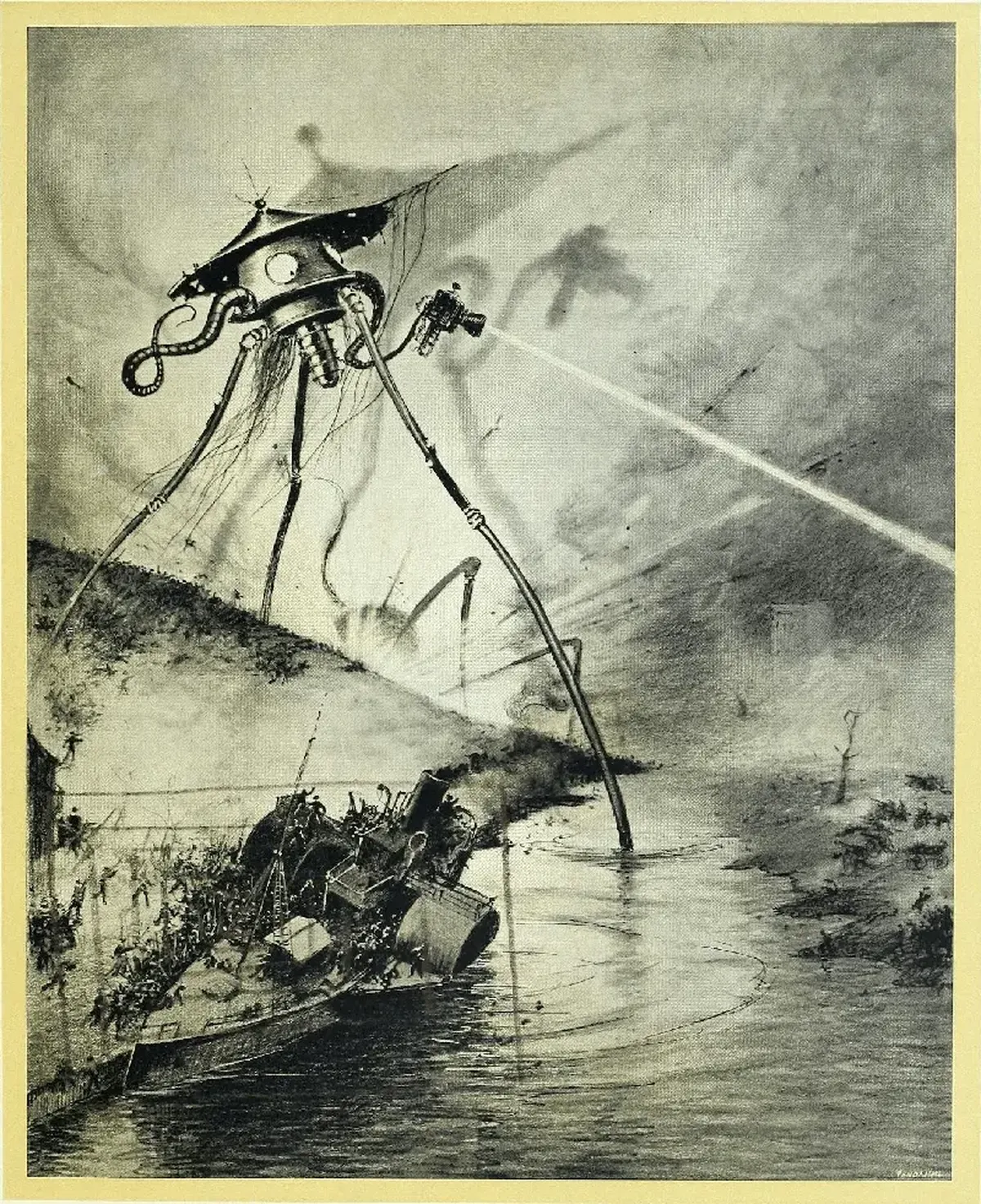
Illustration by Enrique Alvim Correa for the French edition of H.G. Wells’ “The War of the Worlds” from 1906. Martian fighting machine in the Thames Valley.
In 1926, inventor, businessman, and writer Hugo Gernsback founded the first science fiction magazine in America, Amazing Stories. Its pages ran many tales about extraterrestrial life.
In the 1960s, NASA launched the SETI program dedicated to the search for extraterrestrial intelligence. It was canceled in 1993. However, humanity did not stop being fascinated by aliens and kept imagining new possibilities.
1929: crustaceans on the Moon
In 1929, the world’s largest telescope at the time, the Hooker Telescope at Mount Wilson Observatory in California, took stunning photographs of the lunar surface. The images were detailed enough to show topography, but not detailed enough to reveal any possible forms of life.
It’s no surprise that scientists and science fiction writers found fertile ground for thinking about lunar inhabitants. In 1929, Popular Science author Thomas Elvey argued for the possibility of life on the Moon, suggesting lunar creatures might resemble crustaceans with hard outer shells. He wrote that those protective shells would prevent bodily fluids from leaking into the vacuum.
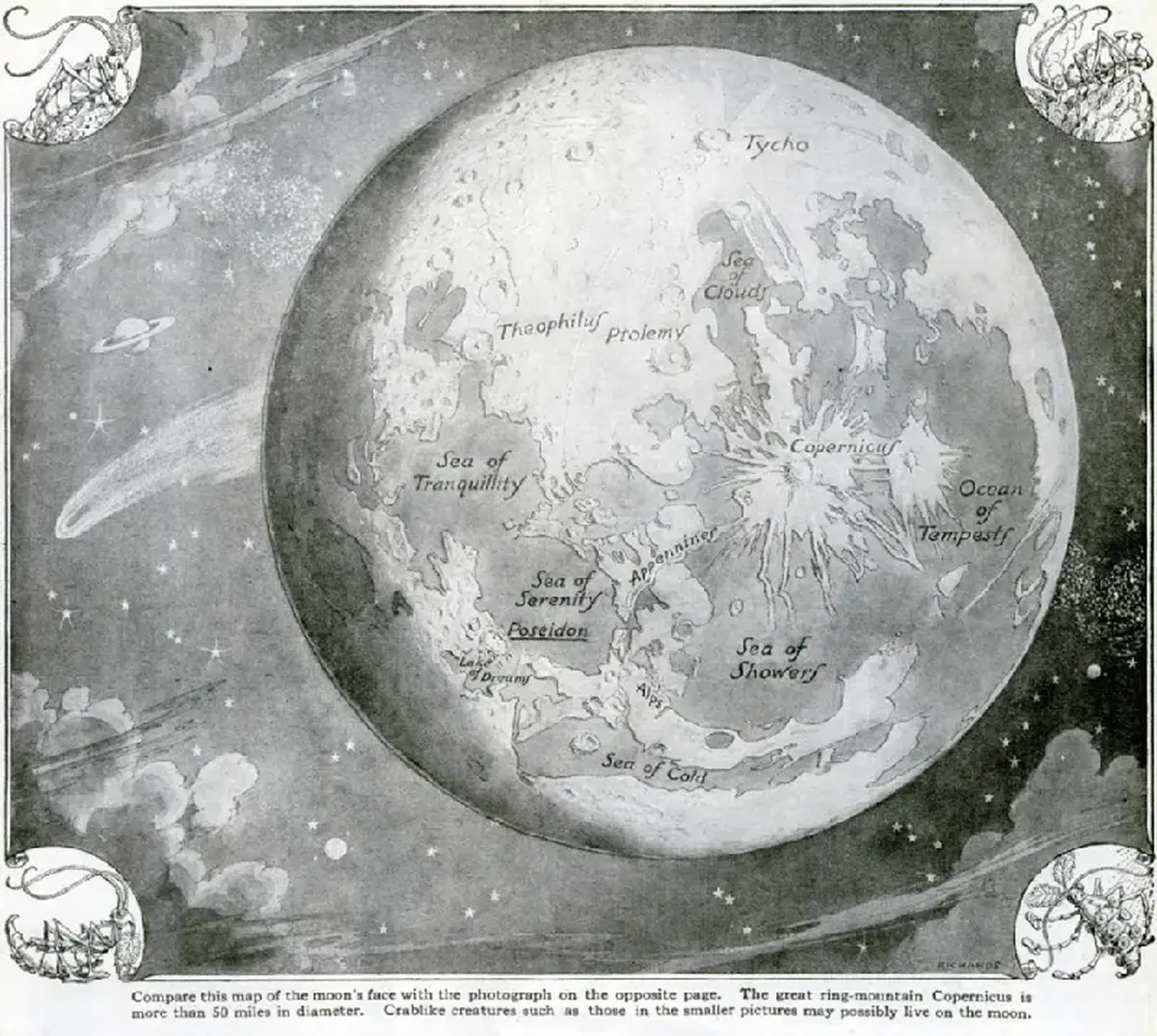
Illustration by Popular Science author Thomas Elvey, 1929.
1930: beavers rule on Mars
In 1930, the same Thomas Elvey suggested that the dominant form of life on Mars might be giant beavers. “On Earth, there is one creature for which the imagined Martian conditions would be ideal for development. This animal is the beaver. It lives either on land or in water. It has a fur coat that protects it from the 100-degree frost of a Martian night,” wrote the author.
To be fair, the best photographs of Mars at the time showed only blurred orbs. With such images, imagining Martian beavers was easy.
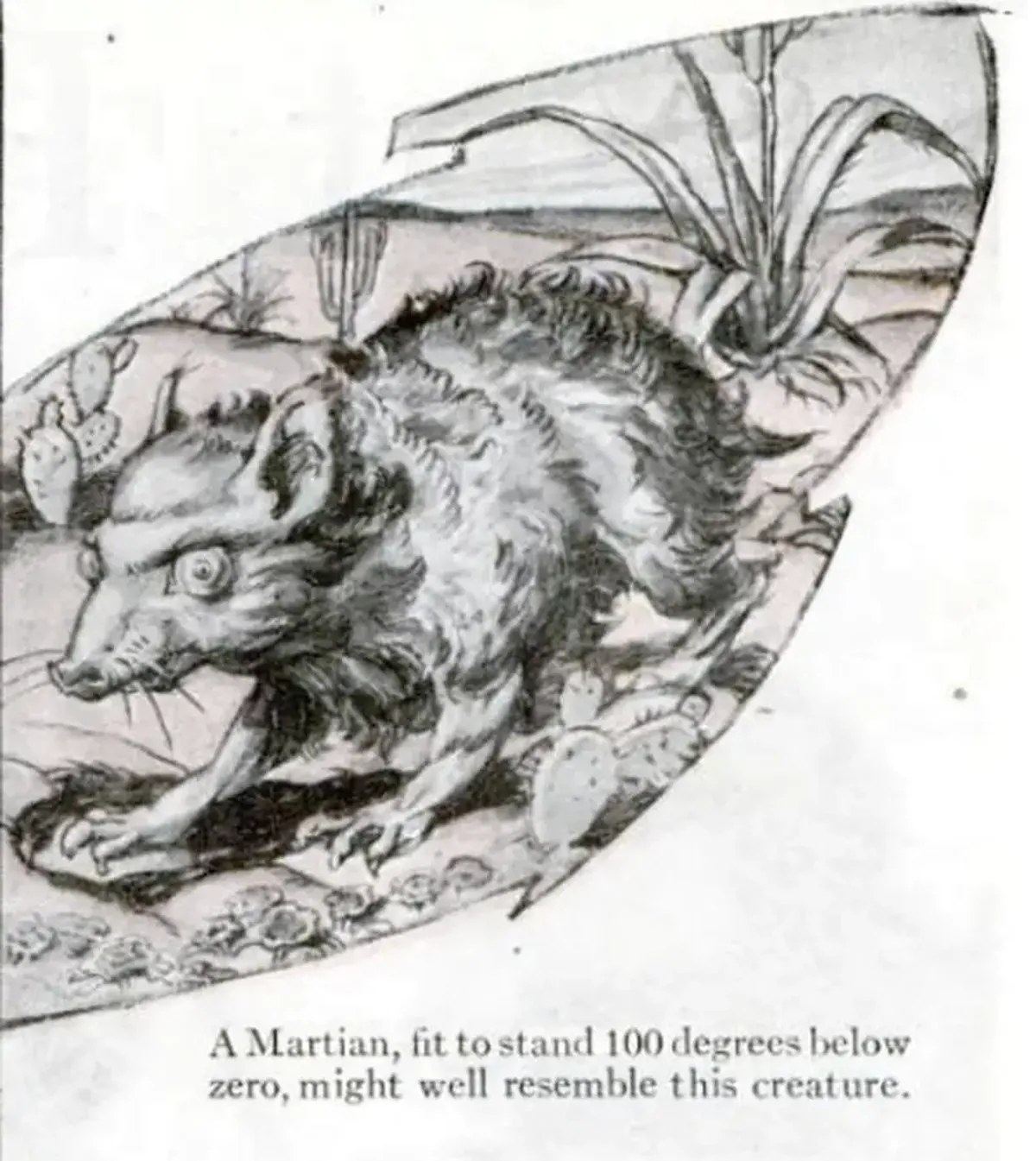
Illustration by Popular Science author Thomas Elvey, 1930.
1934: bird-like creatures — “A Martian Odyssey” by Stanley G. Weinbaum
Originally published in Wonder Stories, Weinbaum’s tale, set in the early 21st century, depicted Martians as bird-like creatures.
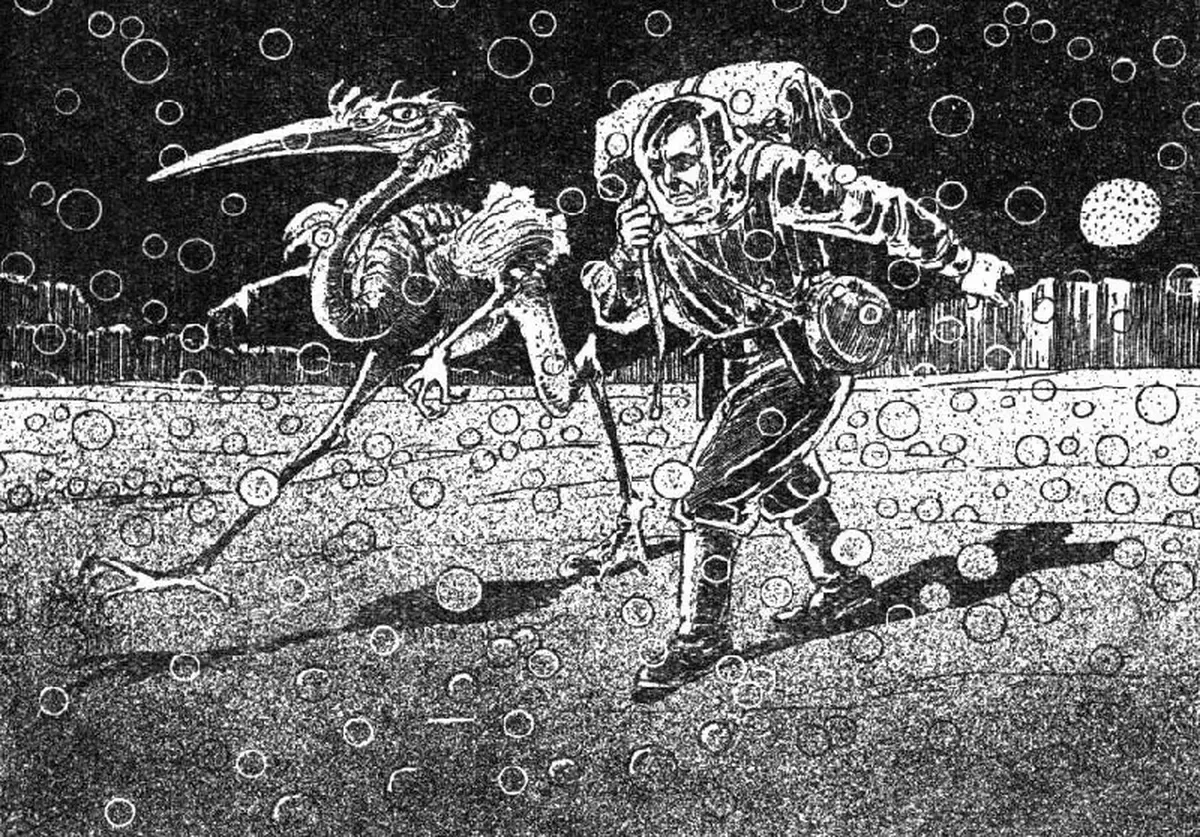
Illustration for “Martian Odyssey,” 1949.
1950: gray aliens
Probably the most popular image of aliens—especially those associated with abductions—is the small gray humanoid with a tall, thin body, bulging eyes, and a large head. That depiction has proved enduring, traveling for decades from one science fiction work to another. The gray little men have become fixtures in shows like “The X-Files,” “Stargate,” and countless films and TV series.

1968: monoliths — “2001: A Space Odyssey” by Arthur C. Clarke
Arthur C. Clarke wrote his famous novel in 1968 based on the screenplay for the film of the same name, which he developed together with director Stanley Kubrick. The novel was published after the film’s release. In “2001: A Space Odyssey,” monoliths appear as extraordinarily advanced objects created by an alien intelligence.

1979: xenomorphs — “Alien” by Ridley Scott
After Ridley Scott’s 1979 film “Alien,” extraterrestrial life took a distinct turn toward horror. Artist H. R. Giger designed terrifying creatures known as xenomorphs for the film. These parasites survive by hunting other species, including humans.
Humanity will likely never tire of proposing new ideas about what extraterrestrial beings might look like.

