
 Carlos Solis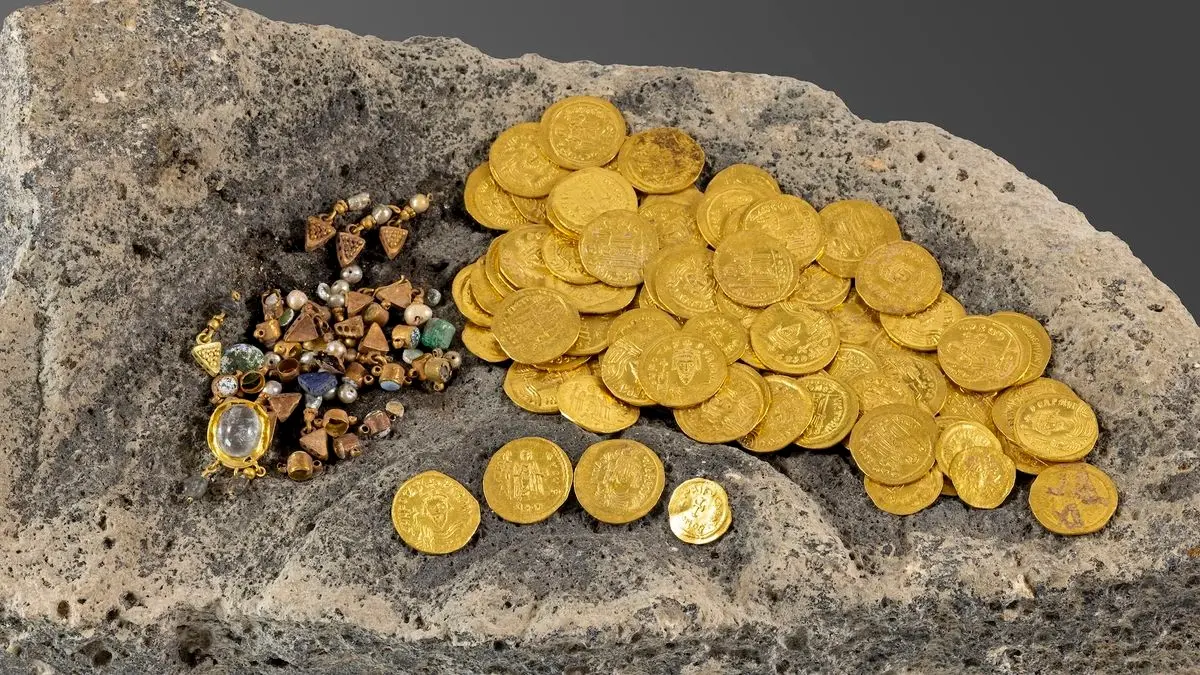
Research team member Edi Lipsman discovered the treasure when his metal detector went off as he passed a large stone and two ancient walls in Susita National Park, near the Sea of Galilee. The archaeologist couldn’t believe his eyes: “Golden coins started sparkling one after another.”
Excited, the team unearthed a trove of coins and jewelry dating back about 1,400 years to the Byzantine era.
What did the archaeologists report?
The treasure included 97 coins made of pure gold and dozens of pieces of jewelry, including earrings set with pearls, semi-precious stones, and glass.
“This is one of the five largest from that period discovered in the region. The presence of jewelry and small coins makes this find even more intriguing and numismatically significant. And this is the first such treasure found in Hippos,” said excavation leader Michael Eisenberg in an interview with Live Science. “When you find coins and ornaments that are nearly 1400 years old and look as if they are brand new, it’s a great stroke of luck,” he added.

The coins depict Byzantine emperors, starting with Justin I (who ruled from 518 to 527) and ending with Heraclius (610–641). Some coins still bear remnants of the fabric in which the valuables were once wrapped.
The coins include solidi — large, high-gold coins; semisses, worth half a solidus; and tremisses, worth a third of a solidus.
One of the tremisses was particularly rare. It was likely minted in Cyprus in 610 by General Heraclius the Elder and his son during their revolt against Emperor Phocas. The younger Heraclius emerged victorious and founded the Heraclian dynasty, which ruled from 610 to 711.
Numismatists evaluating the hoard confirmed that this rare find adds important information to scholars’ understanding of the political and economic history of the period.
While the reason for the treasure’s burial remains unknown, history shows Hippos was a turbulent place in the 7th century. In 614, armies of the Sassanian Empire invaded Byzantine Palestine. According to reports, residents of the region’s Christian cities, including Hippos, buried their valuables during the advance of the foreign soldiers.
For a long time, this region was a hotspot for fierce battles. In 614, the Sassanians captured Byzantine Jerusalem after a siege. About 15 years later the Byzantines regained the territory, and in 636 Muslim armies captured it again. After that, Hippos declined and was ultimately abandoned following an earthquake in Galilee in 749.
Eisenberg said researchers plan to conduct a deeper analysis of the treasure. Afterward, it will likely go on public display; he believes some museums will be eager to show these ancient gold artifacts to as many people as possible.
