
 Gaby
Gaby
Researchers from the Israel Antiquities Authority (IAA) say they’re closing in on the room where the Last Supper took place more than 2,000 years ago. It is believed to be located in a two-story building on Mount Zion in the historic center of Jerusalem. The search, however, is still ongoing.
The story of the Last Supper—Jesus’ final meal with his apostles before the crucifixion—is one of the most iconic narratives in the Bible. For centuries, the location of the room, famously depicted in Leonardo da Vinci’s artwork, has puzzled scholars.
Now, archaeologists from the IAA say the biblical gathering occurred in an upper room of a two-story building with limestone walls and a red, sloped roof. This structure still stands in the city, the Daily Mail reported.
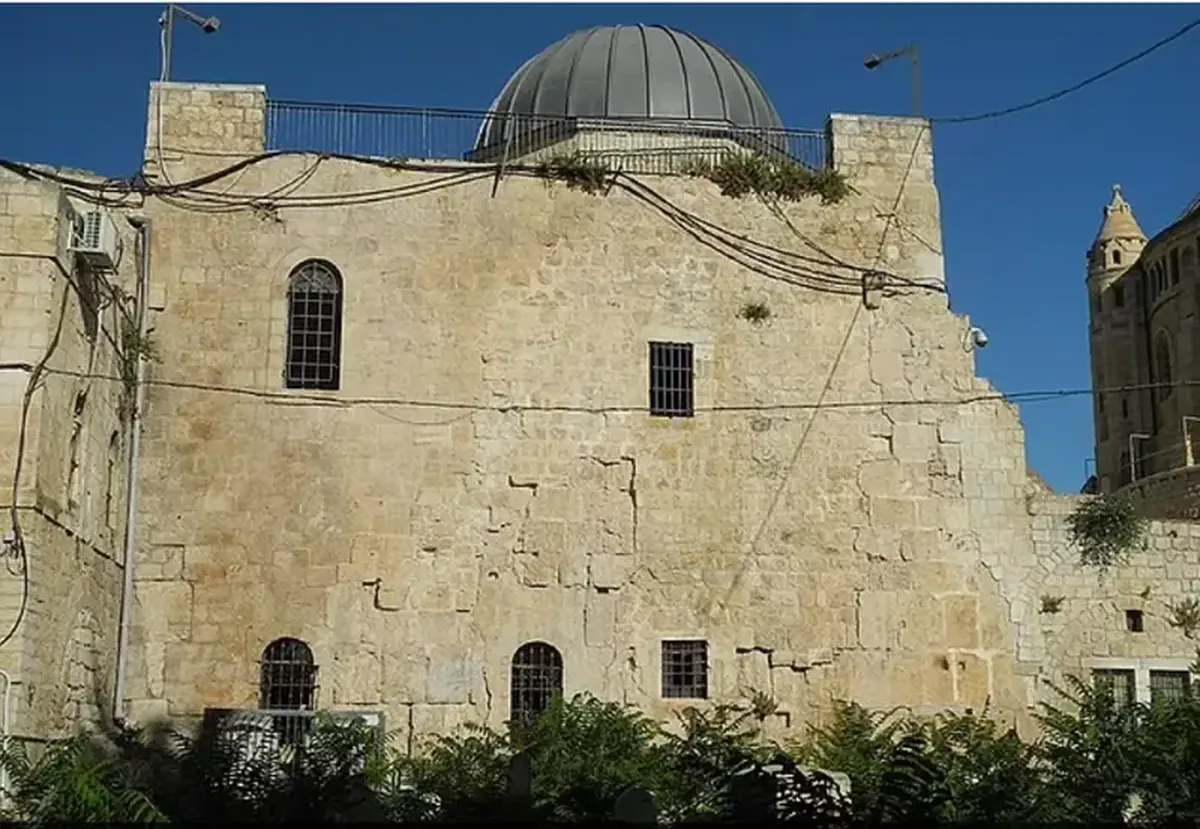
What We Know About the Legendary Room
This site appears in several depictions dating to at least the 4th century AD. It was during that time that Christians began visiting the room to honor the final moments of Christ before his crucifixion.
The room, also called the upper room, originally served as a prayer space and could accommodate over 120 people. The space is briefly described in the Gospel of Luke 22:11-13, where Jesus requests a large, furnished upper room for him and his disciples to celebrate the Passover meal.
The upper room sits in the Old City of Jerusalem on Mount Zion, above the southern gate. The room features large columns supporting a vaulted ceiling and a sloped red roof, which survives to this day. Unfortunately, researchers have not yet been able to conduct archaeological excavations there, making it difficult to confirm whether the building hosted the Last Supper.

The History of the Search
In 1884, Greek Orthodox Christians uncovered the oldest map of Jerusalem while building a new church in Madaba, Jordan. Created in 560 AD, the map depicted the Holy Land and marked the main street—the Cardo Maximus—as well as two sacred structures at the southern end, identifiable by their red roofs. All landmarks were labeled in Greek, including the Damascus and Jaffa gates and Bethlehem.
It wasn’t until 2017 that David Christian Clausen, an adjunct lecturer in religious studies at the University of North Carolina in the United States, matched one of the houses on the map with a building that still stands at that location. To Clausen, the structures looked identical, at least in that both had red, sloped roofs.
That led Clausen and other researchers to propose that the Last Supper took place in the upper room of this building. They sought further evidence and turned to a 6th-century drawing found in Italy in 1846, which shows Jesus entering the city through the southern gate on a donkey. In the background, the artist included an illustration of the Last Supper.

6th-century drawing from a manuscript of the Gospel
Since 2019, IAA archaeologists have repeatedly tested this theory. To strip away centuries of changes to the upper room, researchers used laser scanning and advanced photographic methods. Those techniques allowed the team to visualize what the room might have looked like at the time of the Last Supper.
“I felt like I had stepped into a Dan Brown novel, ‘The Da Vinci Code,'” said Amit Re’em, an archaeologist with the IAA. “We needed to decipher ancient symbols.”
Re’em’s team mapped every corner of the room to “create an accurate model of the space” and noted intriguing features. Among the images researchers found were symbols of the Agnus Dei (“Lamb of God”) and the Lion of Judah, which appear on the ceiling and gaze down into the room. “The lion was a symbol of King David,” Re’em explained. He also pointed out that, according to ancient scriptures, Jesus was a descendant of King David.
Re’em said further research is needed. As of now, there is no archaeological evidence confirming that this room was the site of the Last Supper.
Meanwhile, the IAA has repeatedly said that poor lighting, faded walls, and frequent renovations have hindered archaeologists from studying the upper room.
