
 Gaby
Gaby
A team of archaeologists has uncovered well-preserved ruins of an abandoned Byzantine monastery and a farmhouse in the Negev Desert, dating to the 6th century. Among the finds, researchers discovered a unique mosaic. The Israel Antiquities Authority reported the discovery.
“The monastery may have been abandoned during the transition to the early Islamic period because security in the region was deteriorating,” said Nir-Shimson Paran, the excavation leader.
The Discoveries Held Many Secrets
Within the monastery complex, archaeologists found a chapel, a dining hall, a kitchen, service rooms, and even a wine press. The main building had thick walls, giving it the appearance of a fortified structure, archaeologists said.
One of the most striking finds was the unique mosaic in the chapel. At the center of the mosaic is a Maltese cross, and beneath it a three-line Greek inscription names the monastery and four monks who lived there, archaeologists said.
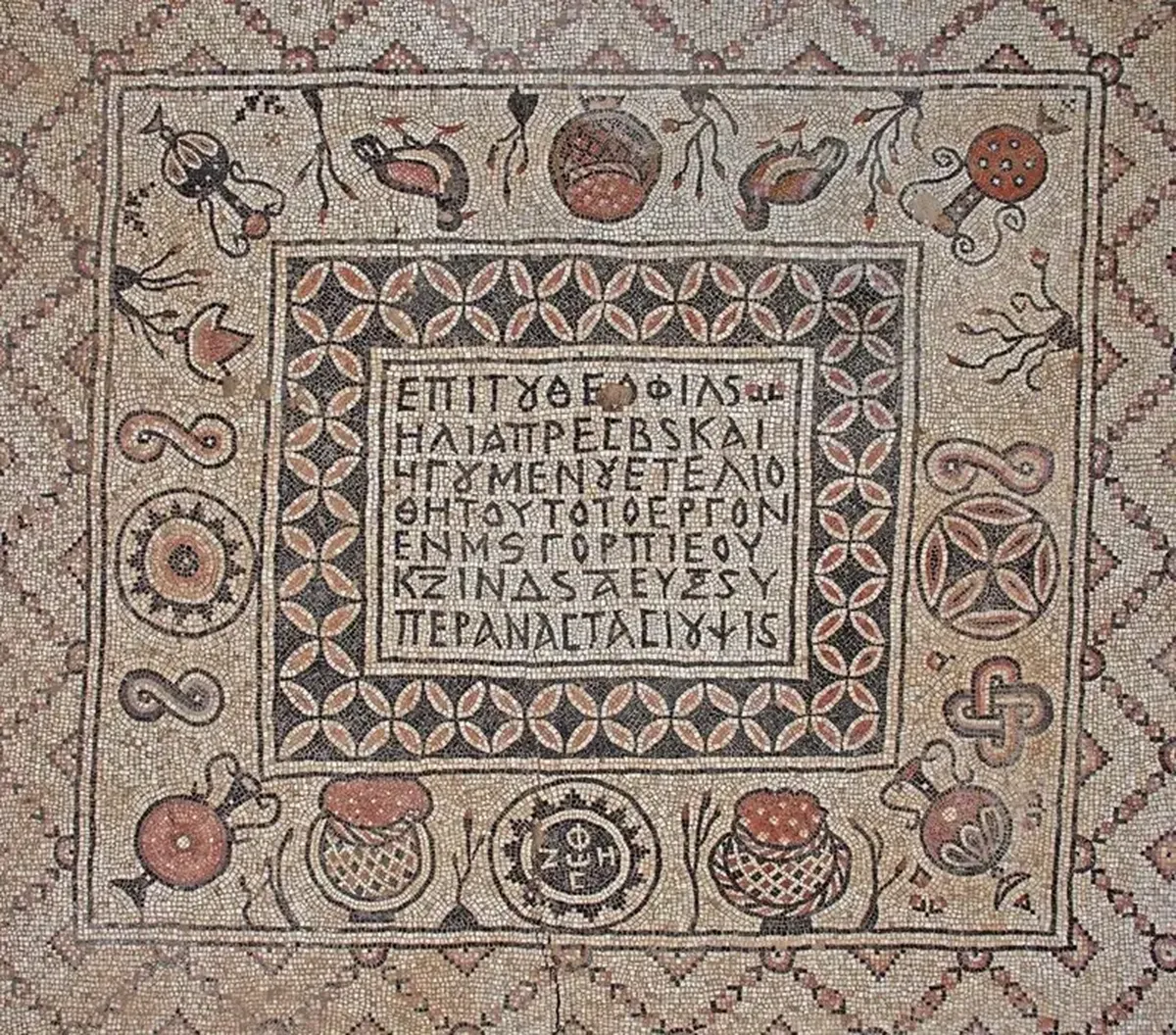
In the adjacent rooms, archaeologists found numerous artifacts related to the monks’ daily life. A cone-shaped depression in the mosaic floor probably held a storage vessel, the project leader said. Among the artifacts were ceramics dated to 460–475 AD and a cooking pot, Arkeonews reported.
In the stone-paved apse, archaeologists discovered two tombs. Paran said a cross was engraved at the eastern end of the southern tomb. An altar partition column, a bronze hook, chains, and glass lamps suggest the area was used for liturgical purposes.
A thick layer of ash in the kitchen shows that food was prepared there. The lower half of a jug embedded in the floor likely served as a small oven.
The monastery had its own winery: in the northeastern part of the agricultural wing, archaeologists found a pressing floor (5.7 × 6.0 m) sloping to the south. The team also unearthed a lime pit and what appears to be a cistern.
To the south of the monastery, archaeologists found a farmhouse from the same period. The structure included a rectangular watchtower with a small window. On the floor of the farmhouse, archaeologists found a coin dated to the first half of the 6th century.
The Israel Antiquities Authority said the discovery sheds light on the daily lives of the monks who lived in the area during the Byzantine era.
