
 Gaby
Gaby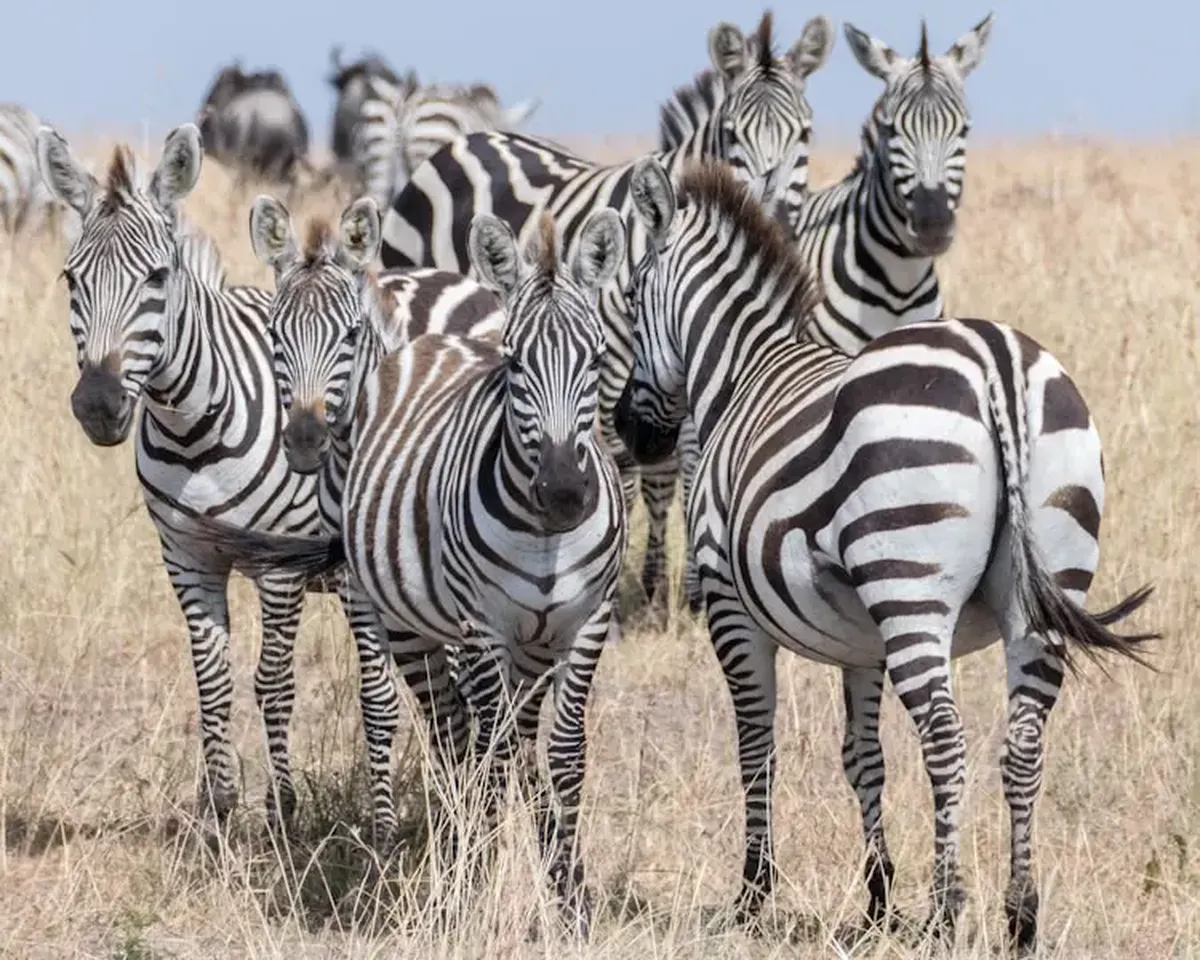
Zebras, members of the horse family, have a distinctive black-and-white coat that makes them easy to spot. A team from the University of Bristol found that that high-contrast pattern helps zebras repel biting flies. The team’s leader, Professor Tim Caro, has been chasing this question for more than 20 years. To test it, he recruited colleagues for a clever experiment that used farm horses as stand-ins for zebras. The researchers dressed the horses in coats with different patterns, including the classic black-and-white stripes. That pattern drew the fewest blood-feeding flies, the Daily Mail reported. Only female flies feed on mammal blood because it provides nutrients for developing fertilized eggs; males feed on nectar and pollen.
Natural selection favored zebra stripes. Plains, desert, and mountain zebras all share the same black-and-white striping. Scientists have been puzzled by zebra coloration for the past 150 years, and they’ve proposed many ideas. Some suggested the pattern helps zebras find one another at dusk. Others argued the stripes confuse or dazzle predators. There were also theories that stripes act as camouflage or help regulate body temperature. The Bristol team says the most likely explanation is that zebra stripes evolved to deter biting flies.
The researchers covered horses with wool blankets printed in different patterns. One blanket was solid gray. They recorded how flies reacted to each pattern. Gray attracted the most flies, while the black-and-white pattern attracted the fewest. The team plans more work to understand why this pattern evolved in zebras but not other animals. Caro and his colleagues say this question matters for livestock, because flies can carry serious, sometimes fatal, diseases.
