
 Gaby
Gaby
Starting in the 15th century BCE, people buried at least six metal hoards around a mysterious settlement atop the extinct Somló volcano in western Hungary, a new study using lidar and metal detectors has revealed.
Between 2023 and 2025, archaeologists unearthed more than 900 artifacts from the Late Bronze Age (1450–800 BCE) and the Early Iron Age (800–450 BCE), including jewelry, military awards, and weapons.
The oldest finds from the Late Bronze Age date to about 1400–1300 BCE. Most items, however, date to the Bronze Age, particularly between 1080 and 900 BCE.
In addition to metal objects, the team found amber beads, fragments of textiles and leather, and tusks from wild boar and domestic pigs.
What Did the Scientists Report?
The archaeological work focused on Somló, a volcanic hill that rises above the otherwise flat landscape. Today the region is better known for wine production, but researchers recognized the hill as an important archaeological site in the late 19th century. The first ancient artifacts were found by local farmers and winemakers, explained lead researcher Bence Soos, an archaeologist at the Hungarian National Museum, to Live Science.
Farmers and vintners had uncovered jewelry, weapons, and bronze vessels. The quantity and quality of those finds suggested a substantial settlement on the hill between the 13th and 6th centuries BCE. Researchers still don’t know which specific people lived there during that time.
Some of the oldest objects are burial goods from the Early Iron Age, recovered from monumental burial mounds. Some scholars have proposed that prominent sites like Somló served as centers for an elite class of warrior leaders.
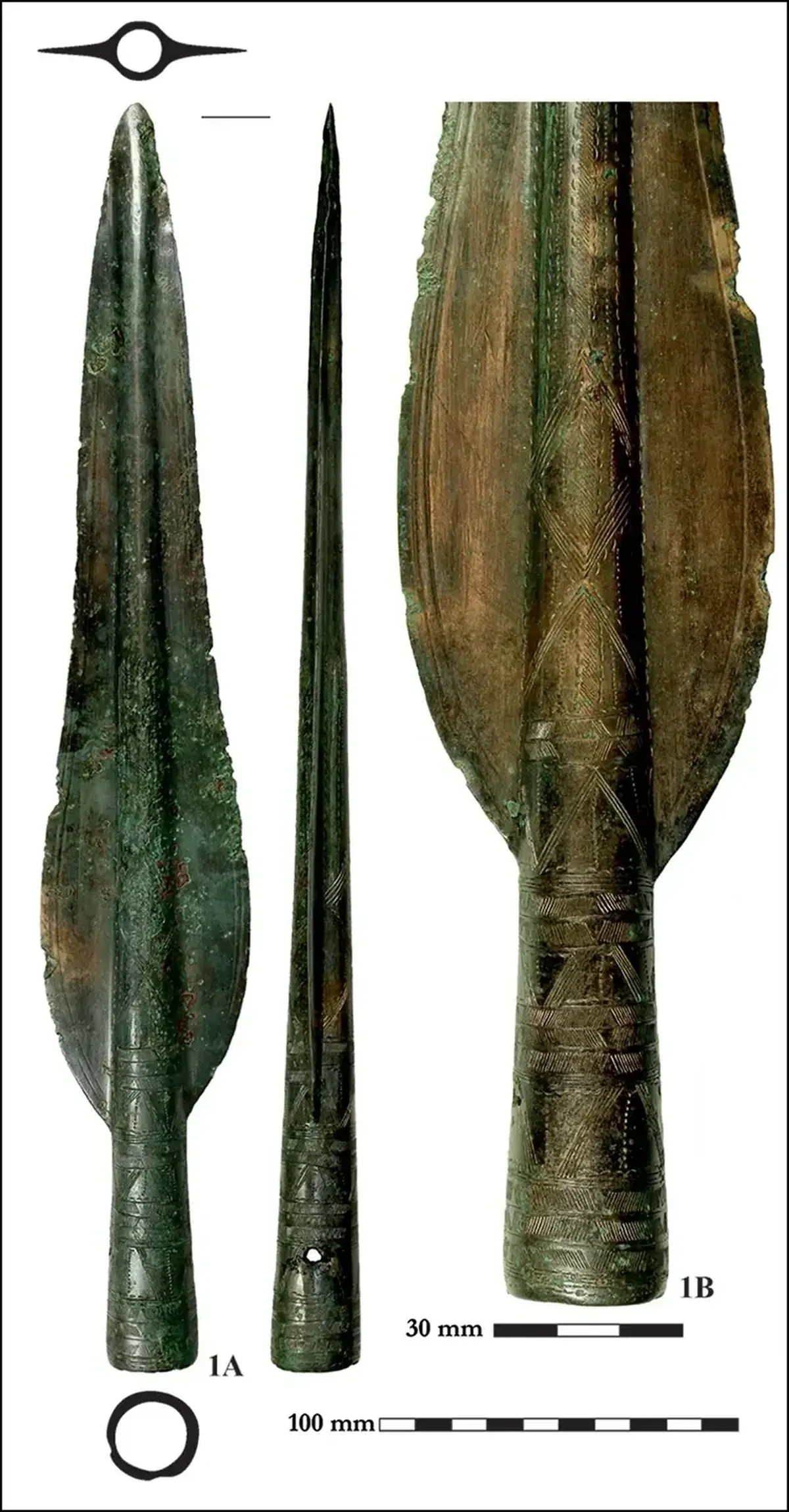
For the new study, Soos’s team used metal detectors and lidar — a laser-mapping technique that gathers detailed topography by measuring reflected light.
Most of the metal artifacts turned up on a plateau in the southeastern part of the hill. Many of the items are related to bronze processing.
The discoveries point to a transition between the Late Bronze and Early Iron Ages around the end of the ninth century BCE — a period Soos says has not been well studied.
In particular, the so-called Treasure V provides the first evidence in western Hungary from the end of the Late Bronze Age of burying metal objects for ritual or symbolic purposes. It is also the first local example of metal artifacts stored in ceramic vessels.
The finds at Somló suggest that between the 13th and 6th centuries BCE, the area was likely home to tribal or clan communities led by elite warriors. Somló may have been both a center of power for those groups and a residence for a complex society that stored metal hoards, Soos said.
He and his colleagues uncovered parts of a structure that could have been a metalworking workshop. The team hopes further research will clarify the settlement timeline on Somló Hill and the traditions of its ancient inhabitants.
The study’s results were published in the journal Antiquity.
