
 Gaby
Gaby
Archaeologists digging in Pompeii’s central IX district uncovered a bakery. As part of a major project, they were investigating the remains of a house that had been under renovation just before the 79 AD eruption. The residential area of the house was decorated with exquisite frescoes, while the non-residential section contained a mill and a bakery that doubled as a prison for slaves.
Archaeologists say the find sheds light on the everyday lives of enslaved Pompeii residents — a topic rarely covered in history lessons.
What the Researchers Found
The bakery’s small barred windows are one sign of the brutal conditions the city’s enslaved workers endured. Enslaved people were forced to grind grain and bake bread in a cramped space they could not leave.
Carved into the basalt floor, the team found indentations made for donkey-driven mills. The archaeological park Pompeii said those indentations restricted the animals’ movements, forcing them to walk in circles for hours with their eyes covered. A slave would push the millstone and oversee the grinding, The Independent reported.

“This space allows us to imagine the lives of people with slave status, whose master restricted their freedom of movement,” said Gabriel Zuchtriegel, director of the archaeological park. He said this represents the most horrific aspect of ancient slavery: a system without trust or promises of freedom, where people behind iron bars were subjected to brutal violence.
A Grim History
In 79 AD, thousands of Romans died in Pompeii, unaware of the impending danger from one of Europe’s largest volcanoes.
Pompeii, along with the neighboring city of Herculaneum, was buried under 13 to 20 feet of volcanic material. That thick layer preserved residents’ remains and the ruins of their homes. The eruption sent a deadly cloud of molten rock and ash 33 kilometers into the sky.
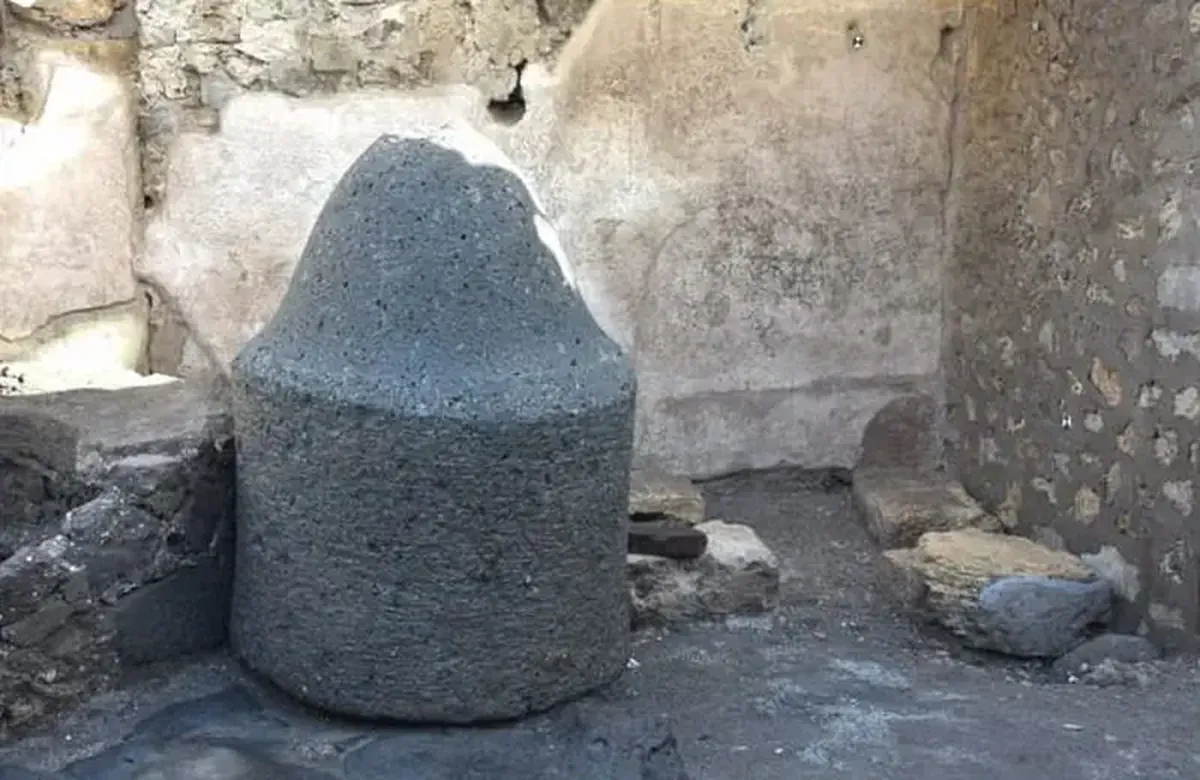
The interior of the “bakery-prison,” where slaves and donkeys were locked up to grind the grain needed for bread-making.
Recently, archaeological activity in Pompeii, in the Italian region of Campania, has increased thanks to a €105 million project funded by the European Union. In August, archaeologists uncovered a small bedroom in a Roman villa near Pompeii that was likely used by slaves to rest.
On December 15, an exhibition titled “Other Pompeii: Everyday Lives in the Shadow of Vesuvius” will open at the archaeological park. The park director said the exhibition is dedicated to “the vast number of people often overlooked by historical chronicles.” This includes the enslaved residents of Pompeii, who made up a significant portion of the city’s population. “Their labor was a substantial contribution to the economy, culture, and social structure of ancient Roman civilization,” Zuchtriegel said.
