
 Gaby
Gaby
“A drop of sweat” is a familiar phrase — but it’s not quite accurate. Scientists prefer “a film of sweat” or “a puddle of sweat.”
A new University of Arizona study found that human sweat doesn’t come out of pores as individual droplets, as we often picture, but as nearly flat, shallow puddles.
When enough sweat pores fill to the brim, the excess runs out onto the skin and forms a very thin film less than 0.1 millimeters thick.
Using infrared thermography, which can detect individual sweat pores, a University of Arizona team led by mechanical engineer Síbín José watched those pores in surprising detail.
Sweating had mostly been studied with macroscopic physiological methods, leaving the dynamics at both micro and macro scales largely unexplored.
What Did the Scientists Discover?
During the experiments, six healthy participants lay in reclining chairs wrapped in electric blankets that kept them warm.
As the temperature changed, sweat appeared on the volunteers’ foreheads and evaporated in a repeating cycle. When the blankets heated the participants’ bodies, the pores gradually filled with sweat until the pores overflowed, and the excess collected on the skin and mixed with sweat from other overflowing pores. If droplets of sweat occasionally rolled down their foreheads, gravity was the likely cause.
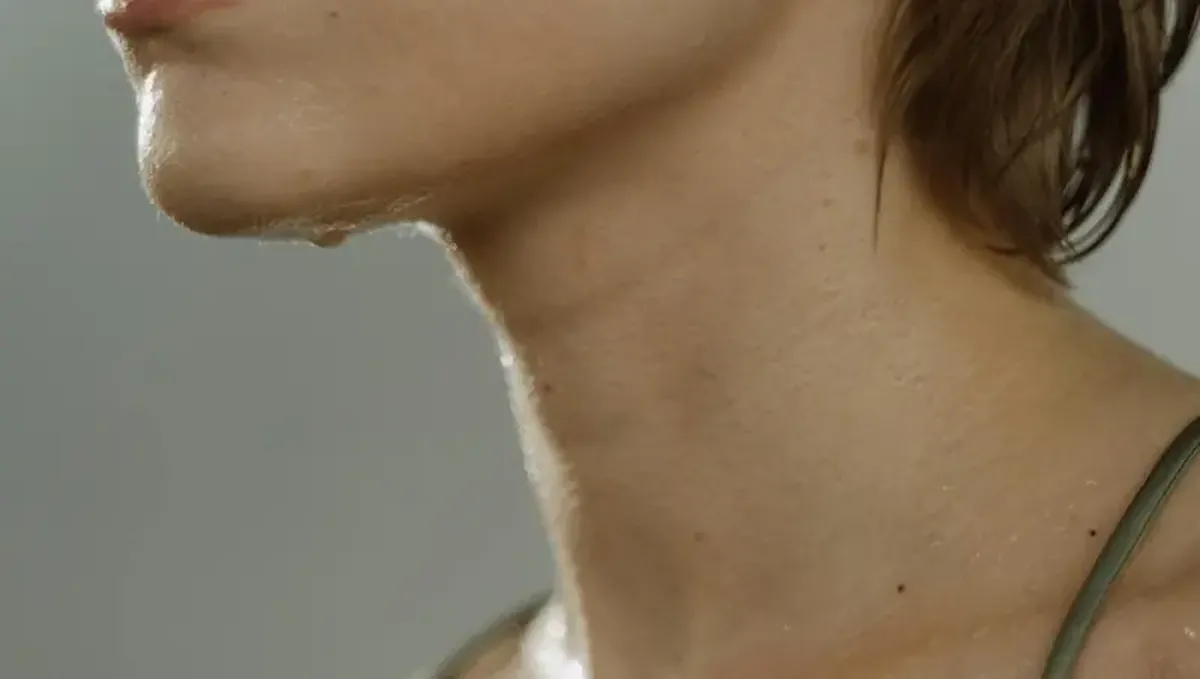
After one sweating-and-cooling cycle, a layer of salt remained on the volunteers’ skin. During the second heating cycle, that salt helped the sweat film form faster, ScienceAlert reported.
“When sweat reaches the edge of the pores during the second heating stage, it comes into contact with the surrounding salt deposits, absorbs into them, and spreads, quickly forming a thin film on the skin,” the study’s authors wrote. The team hopes their approach will help researchers understand how sweating varies across body parts, levels of physical activity, and age groups.
The study expands scientific understanding of the fundamentals of human microscale sweating. That knowledge could have applications in clinical diagnostics, textile engineering, and the development of wearable sensors.
The results were published in the Journal of the Royal Society Interface.
