
 Gaby
Gaby
Do you remember Mr. Bean’s rich palette of expressions? He used them masterfully to silently convey a range of desires and feelings.
Now, it turns out that anyone, not just a movie character, can signal their wishes to others without words or gestures.
A team of researchers from Flinders University in Adelaide, Australia, has explored the role of eye contact in how we understand one another.
The scientists discovered that the best way to show what we want is to look at the object, make eye contact with the person, then look back at the object.
They say that this sequence and synchronized gaze make people more likely to see the eye movements as a clear request.
“Not only the frequency of glances but also the context of eye movements makes behavior communicative and appropriate,” said lead author Nathan Caruana.
His team asked 137 volunteers to complete a task of collecting geometric shapes alongside a virtual partner. During this engaging process, they had to determine whether the partner was merely looking at one of three objects or actually desired it.
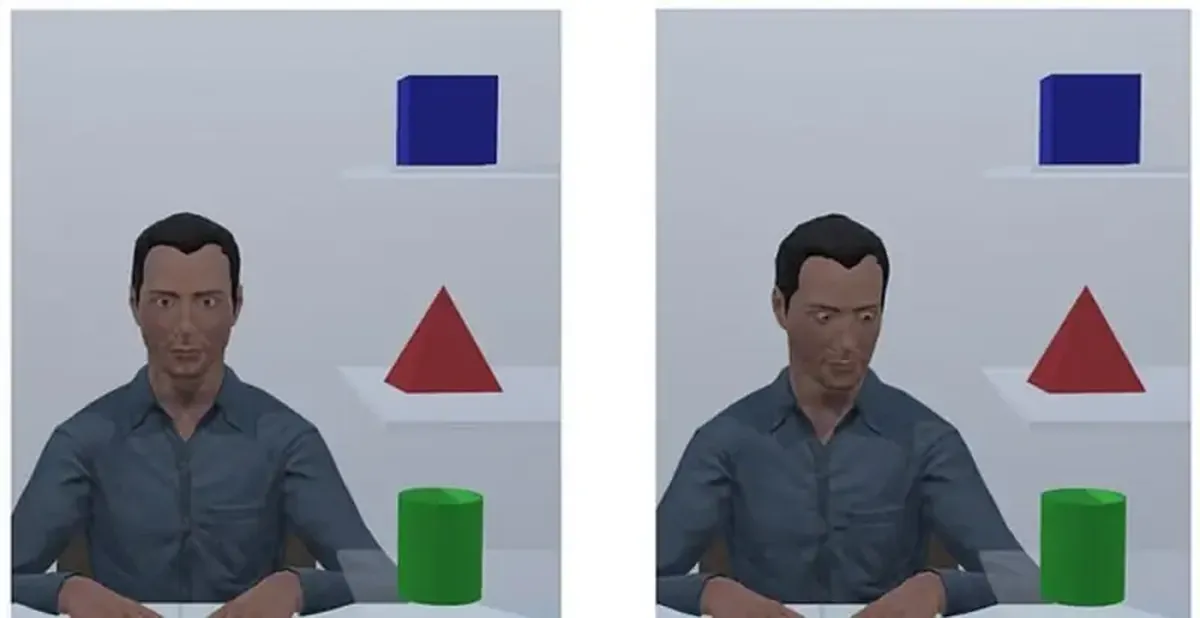
In an article published in the journal Royal Society Open Science, the researchers reported: “Participants were most likely and quickest to perceive a request when eye contact occurred between two diverted gazes directed at the same object.”
The team believes their findings will help people communicate nonverbally in situations like sports, military operations, or noisy environments, the Daily Mail reported.
This trick could also assist those who rely heavily on visual cues, such as individuals with hearing impairments or autism.
One previous study highlighted the significance of eye contact between humans and birds, particularly when a person needed to protect their food from pesky seagulls.
Dr. Niltje Bugert, a behavioral ecology expert at the University of Exeter who participated in that study, noted: “Seagulls are afraid of human gaze and are less likely to approach your food if you are staring at them.”
