
 Gaby
Gaby
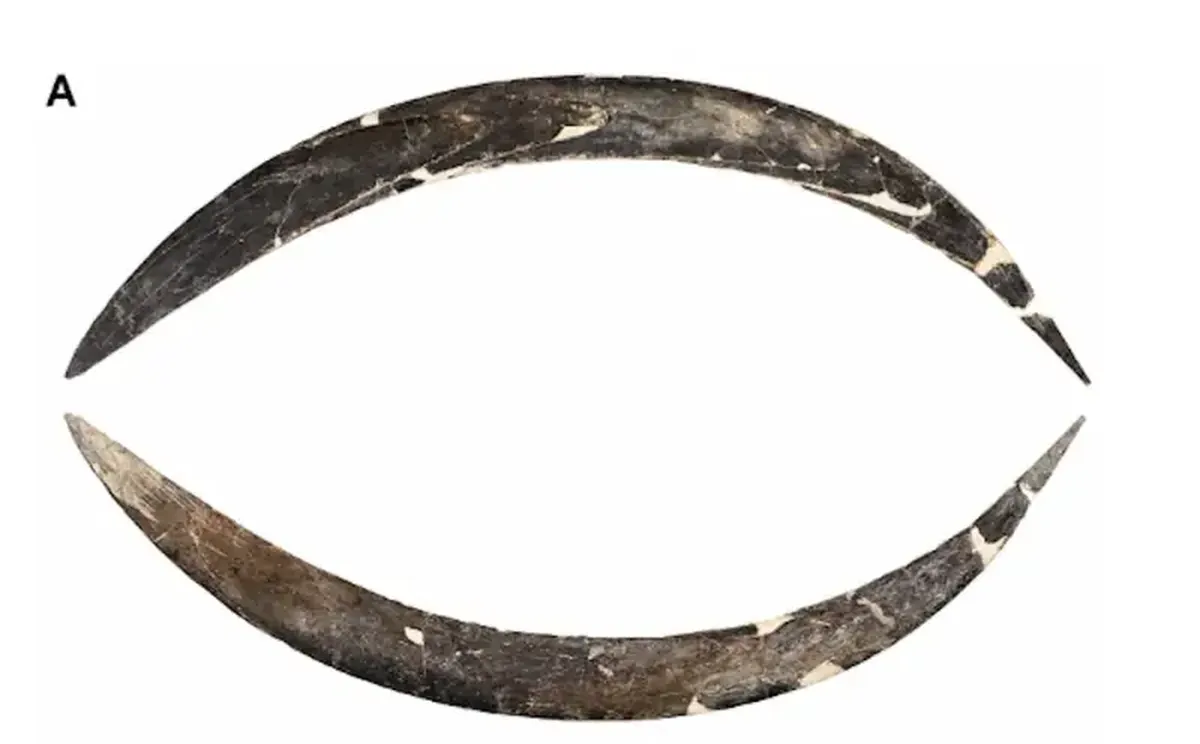
Anthropologists in southern Poland uncovered a 72-centimeter boomerang expertly carved from mammoth tusk in Obłazowa Cave. Radiocarbon dating revealed that the artifact dates to between 42,290 and 39,280 years ago, making it one of the earliest hunting tools used by Homo sapiens.
Unlike traditional wooden boomerangs, this prehistoric hunting weapon was made as a non-returning boomerang. It was optimized for throwing accuracy rather than a return flight. Its large size and strong curvature showcase the advanced skills of Late Pleistocene craftsmen. Wear analysis indicated that the weapon was predominantly used by right-handed individuals.
The boomerang was found alongside a human phalanx (a finger or toe bone). Genetic and morphological analysis showed the bone belonged to a member of Homo sapiens.
Decorative elements on the boomerang, including shell pendants and bone beads, suggest it may have held symbolic or ritual significance.
This discovery challenges the long-held belief that boomerangs and other throwing tools were unique to Aboriginal Australians or to ancient Egyptians. Researchers now say early Homo sapiens in Europe developed complex hunting technologies as far back as 40,000 years ago. Isotopic analysis of animal remains found in Obłazowa Cave revealed a diverse diet that included deer, horses, and aurochs, Arkeonews reported. That diet was adapted to the cold steppe conditions that prevailed in the region at the time.
The mammoth-bone boomerang illustrates that Homo sapiens in Europe possessed advanced technological skills during the Upper Paleolithic. The artifact provides a rare glimpse into the cognitive and adaptive abilities of our ancestors during a pivotal era of human evolution.
The absence of carving debris in the cave suggests that the boomerang was likely crafted elsewhere and later brought to Obłazowa Cave.
The discovery of this ancient boomerang highlights the complexity of Upper Paleolithic hunting tools and supports the idea that early Homo sapiens in Europe developed technological innovations independently of other regions.
