
 Gaby
Gaby
She transformed opera into dramatic theater, and the girl who had avoided mirrors since childhood became a model of aristocratic taste who captivated millionaires. “I didn’t have my own face; I created it myself,” the star confessed — a woman who began her career weighing over 220 pounds and with -7 eyesight. Professional achievements brought the opera diva fame, while personal losses helped solidify her legacy.
Stage and Diamonds
Along with her exclusive jewels, the primadonna employed two bodyguards. The guards were responsible not only for the celebrity’s safety but also for protecting her precious treasures, which she never parted with, even at the beach. Maria Callas’s jewelry could have been a story unto itself.
After the mysterious death of the “golden voice,” her multimillion-dollar estate sparked heated debate, and the anonymous sale of her famous collection at Sotheby’s in 2004 became a sensation. Eleven of Maria Callas’s favorite pieces, with a preliminary estimate of $1,000,000, drew global interest.
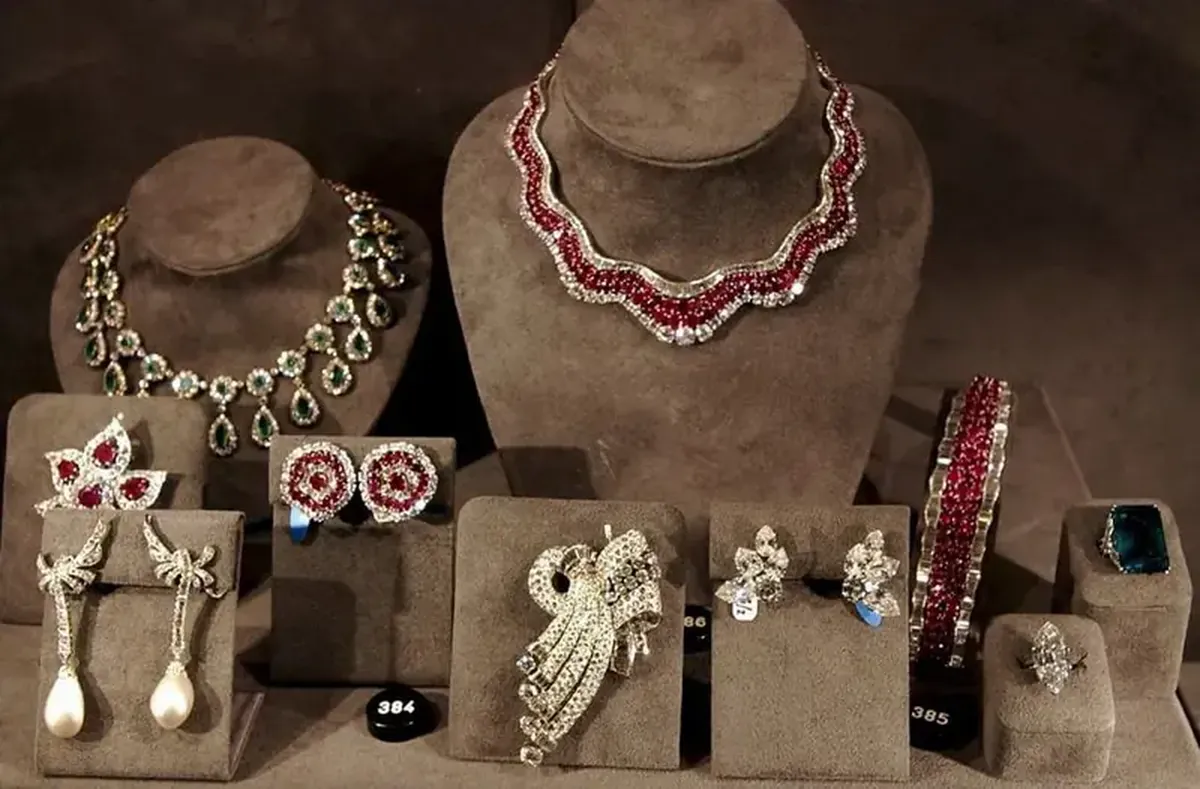
Jewelry from the Callas collection in Lugano, Switzerland, in 2004. Photo by Karl Mathis/nytimes.com
Among the items listed for six figures in Geneva were a ruby bracelet, pearl earrings, and an 11.7-carat diamond ring. The rarities that went under the hammer included both personal purchases by the singer and gifts from her admirers. Several of the luxurious presents were purchased in Geneva as mementos from men who played significant roles in her life: her producer husband Giovanni Meneghini and Greek magnate Aristotle Onassis.
The most famous pieces from Van Cleef & Arpels silently witnessed the joyful and sorrowful events in Callas’s life. In necklaces and bracelets set with Burmese rubies and large diamonds, the star always made a splash at social events. Her haute couture evening gowns and luxurious fur coats were often complemented by a gold handbag encrusted with diamonds.
Opera Chic
French couturier Yves Saint Laurent praised the magnetic soprano: “The singer was a diva, a primadonna, a queen, a goddess. After losing 77 pounds, Maria completely transformed her former image and became the embodiment of elegant femininity. With her new style, she chose midi dresses paired with exquisite jewelry, which Callas was very particular about.”
A frequent visitor to the Parisian jewelry boutiques, she purchased the exclusive Cinq Feuilles at Place Vendôme. The delicate platinum brooch, shaped like a five-petaled flower and set with four types of gemstones, was custom-ordered in 1967; the rare piece featured oval rubies totaling 15.77 carats and diamonds totaling 16.35 carats.

Maria Callas selects jewelry from Cartier in Milan, 1957
Callas’s collection also featured many large pearls that beautifully complemented her dark hair. The dazzling white necklaces and striking chokers were a passion of the brunette with a fierce, tigress-like gaze. Rings and earrings for performances were chosen with particular care. In her theatrical roles, Maria Callas often dazzled with Swarovski gemstones. For some opera parts, Milanese designers Ennio and Antonio Marangoni created diadems, necklaces, and pendants for her in the 1950s and 60s. Her jewelry even included pieces of her own design.
The Condition of Love
Despite performing her last opera role in 1965 and dying in 1977, she remains one of the most recorded and talked-about singers in the world.
Her parents were Greek immigrants in New York who had dreamed of a son and were disappointed when a daughter was born on December 2, 1923. Her mother forbade the girl from approaching mirrors, distracting her from her studies. From the age of three, she listened to classical music; by five, she was playing the piano; and by eight, she was taking vocal lessons.

Young Maria Callas plays the piano
In 1934, Maria took second place in a prestigious radio competition, earning her first award—a wristwatch—for her performance of an aria from Carmen. This early success caught her mother’s attention; Evangelia had once dreamed of becoming a pianist. For the first time, her mother praised Maria, and the child seemed to win maternal approval through hard work. Maria supported her family for years, but she would die alone, even though her mother and sister lived in the same city.
Art Without Borders
At just 13, Maria’s mother took her to Greece to learn the language and enroll in the conservatory (Callas was accepted three years earlier than her age allowed). In 1940, the talented singer had the honor of performing the lead role in Tosca on the opera stage in Athens, stepping in for an ill soloist who would later become her competitor.
After returning to America five years later, Callas had to reintroduce herself. In New York in 1945, the nearsighted young performer with extra weight was not accepted on the big stage. Her concert history was yet to unfold. Soon, a remarkable transformation would occur for the singer, who possessed a three-octave range; contemporaries would call her la divina—”the divine.”
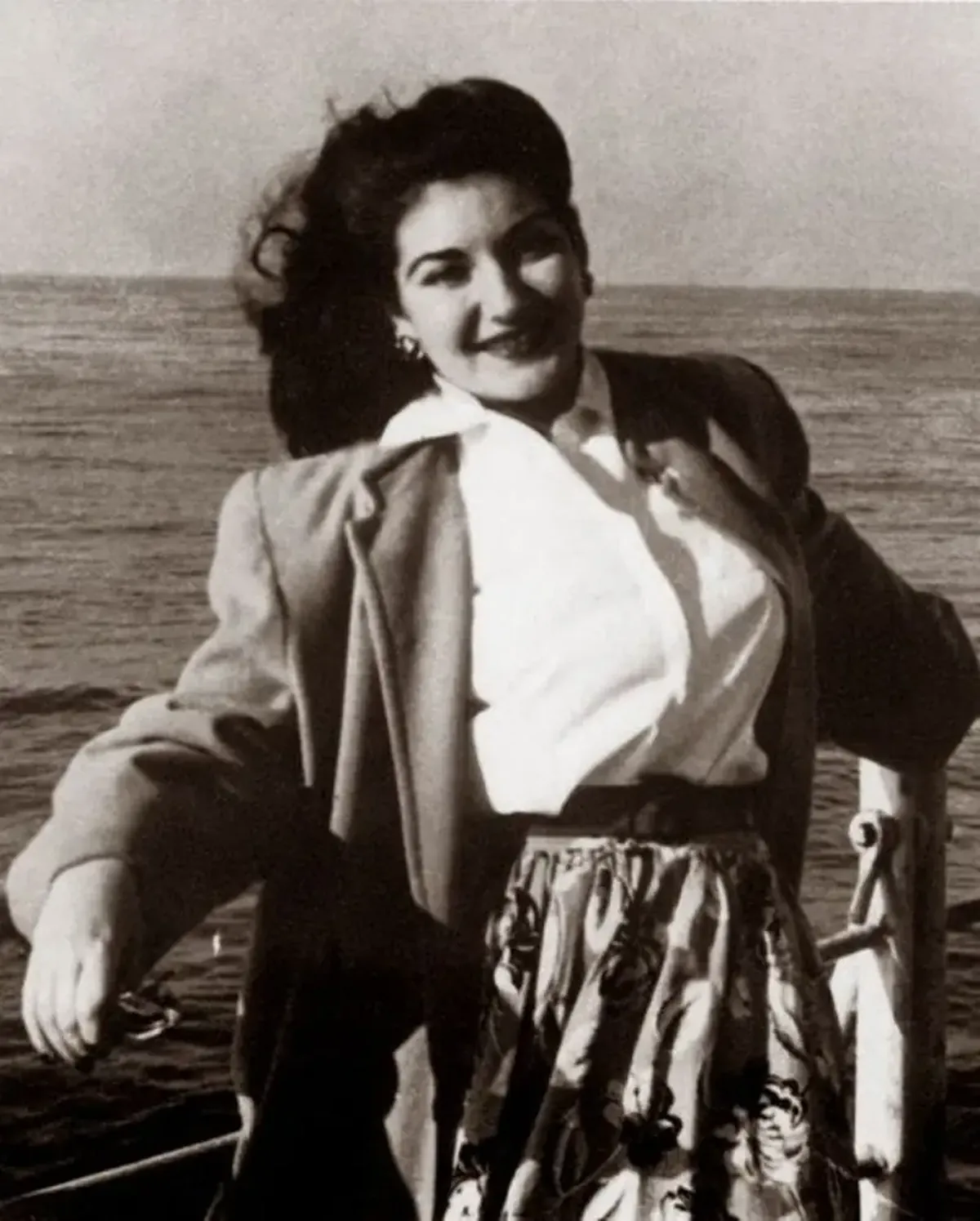
Maria Callas, June 1947, photo by Amilcare Ponchielli
After two years of setbacks with American producers, Maria found a lucky break when she met American-Italian opera singer, vocal coach, and impresario Giovanni Zenatello. The initiator of the Arena di Verona festival entrusted her with the lead role in the opera Gioconda. From 1947, the American-born singer of Greek descent made Italy her base, debuting in the amphitheater under conductor Tullio Serafin, who introduced her to the world of grand opera. In 1948, Callas performed lead roles in Aida and Norma, and a year later she sang both Brünnhilde in Die Walküre and Elvira in I Puritani in the same week. Her equally successful performances of Wagner and Bellini created the phenomenon of a universal singer with a wide vocal palette.
“Four Voices in One Throat”
Throughout her career, Maria Callas excelled in lyric, dramatic, and coloratura roles, performing in various vocal styles: lyric-dramatic soprano, dramatic coloratura, and mezzo-soprano. Critics referred to the versatile vocalist as “four voices in one throat.”
The rise of her career was aided by friendships with people who owned famous recording studios and by the release of records after premieres. Maria Callas’s fan base grew steadily, and one day the singer received a love confession from a millionaire theatergoer in Verona.
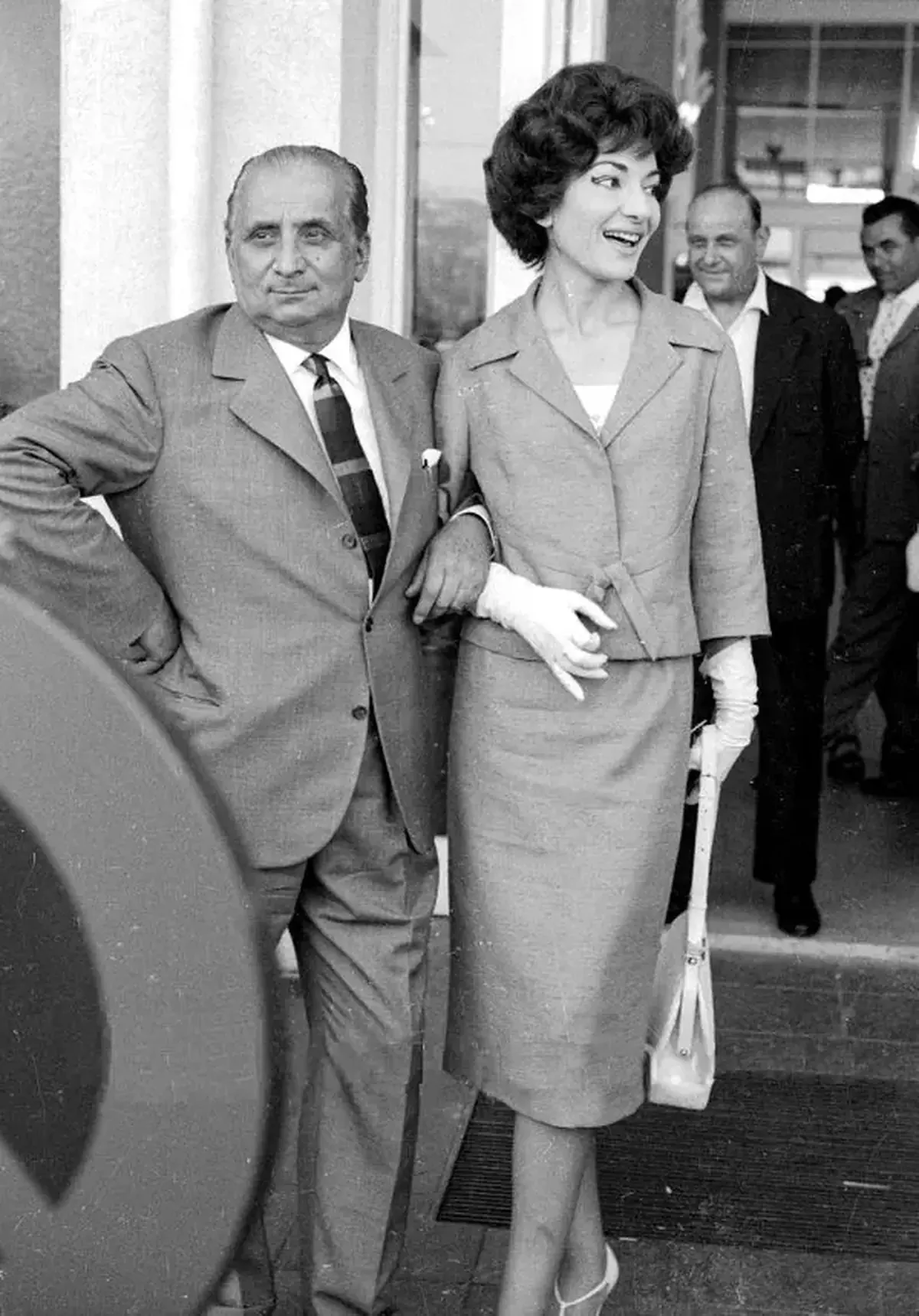
Maria Callas with her husband Giovanni Meneghini at Nice Airport, 1959
Local industrialist Giovanni Battista Meneghini was twice Maria’s age and often spent a lot of time at the opera. The young soloist amplified his interest in the art: every evening during the season, the regular patron showered his favorite performer with flowers and tokens of attention. Then came their public outings and the sale of his business to invest in la divina’s career.
In 1949, the couple married despite a 30-year age difference. Maria Callas gained a loyal friend and skilled organizer. The experienced producer quickly took on the promotion of his protégé, and within a year the world learned of the new star: Callas was invited to perform at Milan’s La Scala, London’s Covent Garden, and New York’s Metropolitan Opera.
A New Image
Over the next twenty years, the singer would change her stage image beyond recognition. The transformation affected both her appearance and her demeanor. Gaining popularity coincided with dramatic weight loss, but the strict diet contributed to nervous breakdowns.
Maria demanded a high level of dedication from everyone she worked with and quickly earned a reputation as a diva. The situation was complicated by high expectations from administrators: Callas was trusted with the most demanding roles, and the prima was expected to maintain consistent excellence. Not being in top form was tantamount to failure for the soloist. When bronchitis prevented her from finishing a role, the decision to interrupt the performance proved disastrous for her career.

Maria Callas’s concert at the Concertgebouw in Amsterdam, 1959
A scandal erupted during a visit to the theater by the president of the republic. The singer had warned the administration about her poor health, but they did not provide a replacement. The attendance of a high-profile guest at the performance of Norma in Rome added to the artist’s anxiety. Because her vocal cords were not closing properly, Callas missed notes several times and refused to go on stage for the second act. The audience was outraged, and critics condemned the “poor character” of the overrated star.
Melpomene’s Revenge
For the next premiere of Bellini’s Il Pirata, the singer arrived after surgery. The recovery was difficult: Maria could neither eat nor sleep. But on the stage of La Scala she performed confidently; the audience received the performance enthusiastically.
However, theater management did not let the artist enjoy her triumph. As Callas took her bow, a suddenly lowered fire curtain separated her from the audience. It was a clear sign of hostility. The artist perceived the gesture as a settling of scores: “It should have been understood as: get lost, the show is over.”

Maria Callas, Bellini’s opera “Il Pirata” (Milan, 1958)
The singer, once exalted, endured a professional downfall. With a heavy heart, Maria left Italy to focus on continuing her career in America. Yet the professional crisis coincided with a personal one. During this turbulent period, the singer realized she needed changes in her family life as well. Soon, a rival would emerge for Meneghini. The subsequent decision would bring Maria Callas unexpected happiness and, at the same time, a great trial. The tigress would meet a man for whom she would be ready to become a house cat. Would it be worth it? Fate doesn’t ask such questions.
Of One Blood
The 15-year romance between opera queen Maria Callas and shipping magnate Aristotle Onassis is one of those love stories that fill books. At the time of their meeting, the 53-year-old father of three had already been living in a lucrative second marriage to a Greek aristocrat for 15 years and had a history of numerous high-profile romances. The charismatic billionaire knew how to impress remarkable women, and Callas was no exception.

Aristotle Onassis, 1967, photo by Pieter Jongerhuis/wikimedia.org
After meetings at the Vienna Ball and social soirées, Maria and her husband were invited to Onassis’s yacht Christina, where dukes and even the Churchills were among the guests. Accompanying her husband on board was Onassis’s wife, Tina. When Tina caught Aristotle kissing the married guest Maria Callas, she immediately made the scandal public. Even Winston Churchill became an unwilling witness to the scene.
Embarrassed, the singer quickly asked to disembark. But a week later, Onassis arrived at her home and offered Maria’s husband a large settlement just to let his wife go to him. That night, Callas, in love like a schoolgirl, left home and flew to Onassis. “Only with him did I learn what it means to be a woman,” she said. For the sake of that love, the star interrupted her opera career. At 43, she became pregnant by the 60-year-old Onassis; the newborn son, Omero, did not survive. The blows of fate for Maria were only beginning.
Greek Tragedy
The freedom Onassis gained after divorcing his previous wife in 1960 gave him the opportunity for a new marriage, but it would not be with Maria. The relationship that Callas later described in interviews as a “sensitive friendship” deteriorated against the backdrop of the singer’s professional losses. What could be worse for an opera star than losing control over her vocal abilities? “I lost my voice in your bed,” Callas would reproach Onassis. She told him bitterly: “The voice that people called divine, you listened to while lazily chewing gum.” Specialists later linked her vocal loss to a disease that affected her muscles, while detractors blamed the decline on a change in lifestyle, claiming she had stopped singing and retreated into a life of leisure surrounded by diamonds.

Maria Callas and Aristotle Onassis, to the music of violins in Paris, France, December 21, 1966
Learning from the newspapers about her beloved’s marriage to another partner, Callas attempted to return to the stage, but her late comebacks were unsuccessful. Meanwhile, Aristotle Onassis entered history as the husband of Jackie Kennedy, the widow of the American president. Onassis died in 1975, and on September 16, 1977, Maria Callas was found dead in her Paris apartment.
Film director Franco Zeffirelli, who worked with Callas late in her career, suggested the singer may have been betrayed by an accompanist friend who was drawn to her wealth. In the end, $12,000,000 from her estate was inherited by Maria’s mother and her ex-husband, who maintained that the 53-year-old had taken her own life. The lack of a clear cause of death continues to fuel interest in her story. In 2002, doctors published a hypothesis suggesting that the heart failure was not due to poisoning but rather a myocardial infarction that may have been a complication of dermatomyositis (the same diagnosis once given by the singer’s doctor as a cause of her vocal problems).
There are no remains of Maria Callas. After ashes were stolen from a Paris columbarium and later recovered, the ashes were scattered over the Aegean Sea; only an empty box remains at Père Lachaise cemetery.
